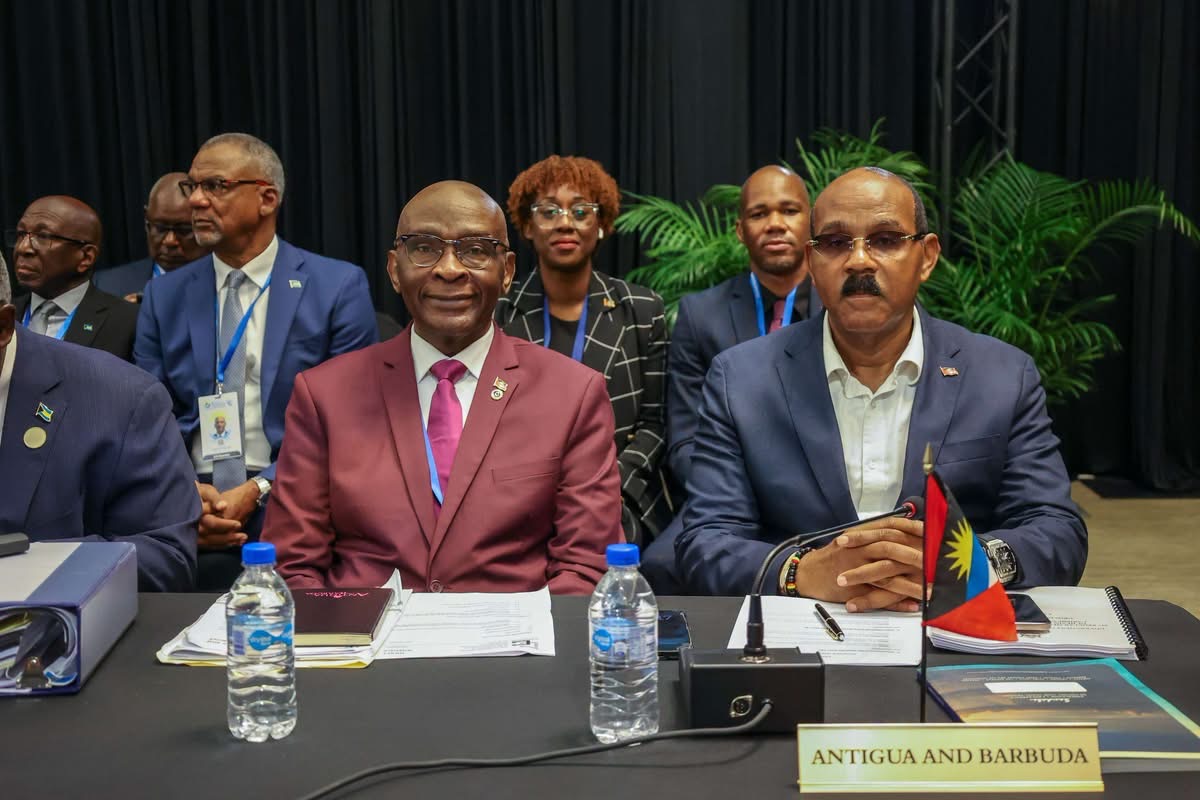
Leader of Caribbean Community (CARICOM) member states gathered for a closed-door caucus of the Conference of Heads of Government, where a broad agenda of regionally critical issues topped with the United States’ proposed memoranda of understanding (MOUs) on third country national (TCN) transit took center stage.
During deliberations, regional leaders centered conversations on shared challenges that disproportionately impact small island and developing nations across the Caribbean: the strain that managing large-scale TCN transit can place on limited national administrative, security, and social resources. Despite these capacity concerns, heads of government made clear their commitment to pursuing solutions that uphold regional stability, pledging that all possible steps would be taken to prevent any transit arrangements from undermining domestic security across the bloc or redirecting public resources away from services that directly benefit local communities and citizens.
In a key clarification for regional publics, CARICOM leaders emphasized that the proposed MOUs are structured to facilitate the safe repatriation of non-criminal TCNs to their countries of origin, rather than enabling permanent resettlement of these individuals in CARICOM member states. This distinction, leaders stressed, is critical for regional citizens to understand to avoid misinformation about the agreements. Moving forward, the bloc agreed to launch broad outreach initiatives to keep CARICOM populations informed and engaged on ongoing discussions around the MOUs.
Leaders also reaffirmed the bloc’s long-standing commitment to foundational migration principles: supporting safe, orderly, regular migration pathways, and upholding the inherent dignity of all migrants regardless of their status.
The gathering also underscored the deep, decades-long cooperative partnership between CARICOM and the United States, with leaders acknowledging the high priority Washington has placed on advancing these transit agreements. Participants noted that the process of engaging on the MOUs is unfolding unevenly across the bloc: a number of CARICOM member states have already signed the agreements, while others are still in active negotiations with U.S. officials. Delegates also highlighted that the TCN transit model is already in practice globally, with more than 30 countries worldwide having already signed similar agreements with the United States.