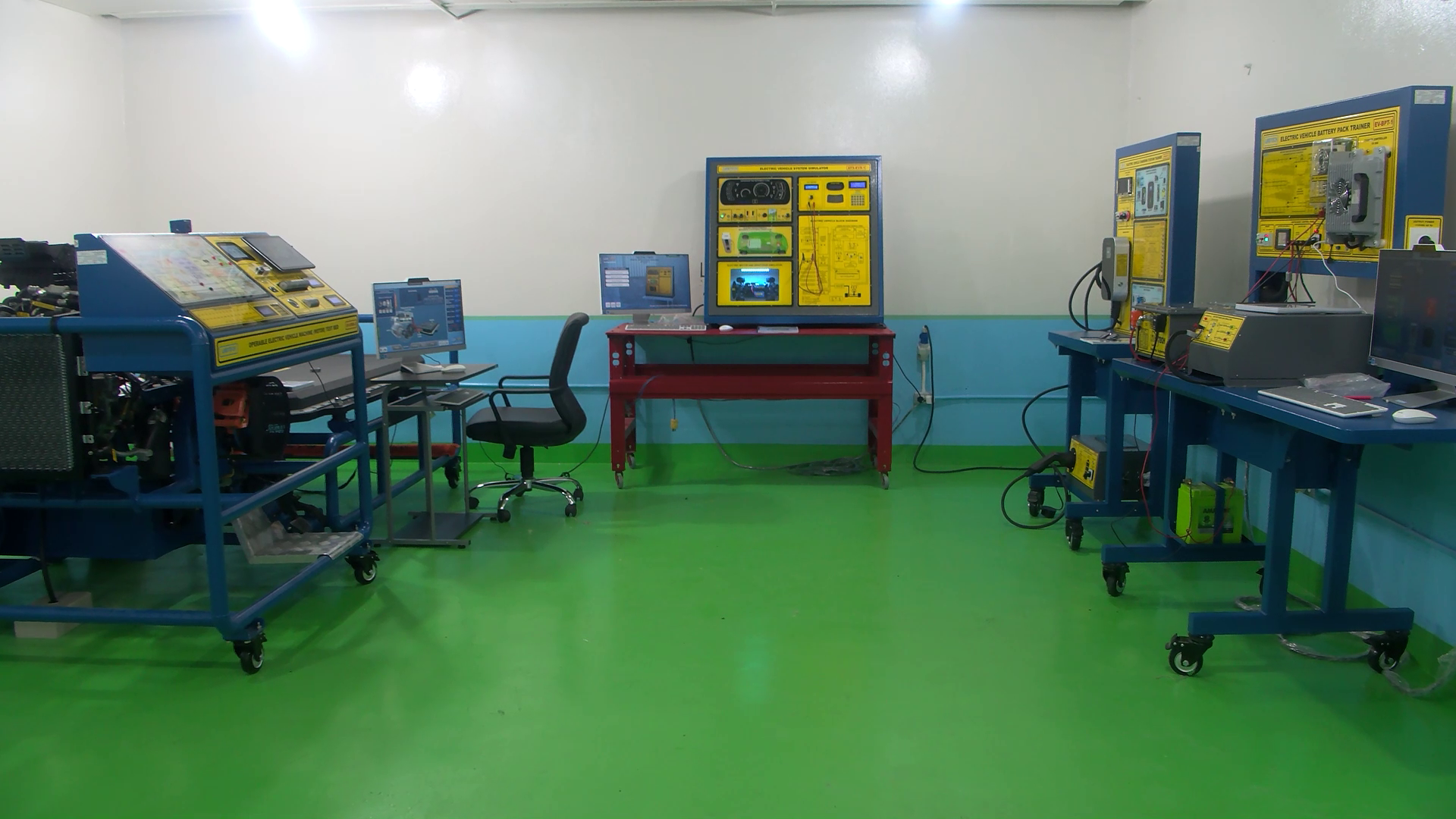
As electric vehicles slowly become a more common sight on Belize’s roadways, the small Central American nation has taken a landmark step to build a local skilled workforce ready to support the transition to cleaner transportation. On July 8, 2026, the country’s first dedicated Electric Vehicle Laboratory opened its doors at the Institute for Technical and Vocational Education and Training (ITVET) in Orange Walk, marking the completion of the final core component of a European Union-funded e-mobility pilot project overseen by the United Nations Development Programme (UNDP).
This new facility is far more than a standard workshop: outfitted with $95,000 in cutting-edge diagnostic and training equipment, it is now the most advanced EV technician training hub in the entire Central America and Caribbean region. Unlike traditional automotive training spaces, the lab features purpose-built training tools including a fully functional deconstructed EV test bed that retains all core operating systems for hands-on practice, an EV powertrain simulator that bridges the gap between conventional internal combustion engine training and new EV technology, and a dedicated charging station maintenance trainer to build practical skills in servicing the full EV ecosystem.
Prior to the lab’s opening, all EV maintenance and repair work in Belize was handled exclusively by a single private dealership, Caribbean Motors, leaving a critical gap in local capacity as the country expands its electric fleet. The pilot project, which already delivered 5 electric public transit buses for Belize City, installed public charging infrastructure, drafted updated EV regulatory legislation, launched a digital trip planning and payment system, has now addressed that gap with accessible local training. Following the lab’s launch, an initial cohort of 15 Belizean technicians completed a two-day intensive foundational training, and ITVET will integrate permanent EV maintenance courses into its official vocational curriculum starting in September 2026, opening the opportunity for any interested Belizean to upskill for the growing green economy.
Stakeholders across government and development partners emphasize the opening of the lab comes at a critical moment for Belize’s clean transportation transition. Neil Hall, E-Transit Coordinator for the Belize City Council, noted that the facility solves one of the most common barriers to widespread EV adoption among consumers: consumer uncertainty about access to affordable, local repair services. “For most people considering buying an electric vehicle, the first question is who will fix it if something breaks,” Hall explained. “This lab removes that barrier entirely.” The training will also directly benefit the Belize City Council’s own municipal EV fleet, allowing in-house technicians to upgrade their skills and service the fleet locally rather than relying on external support.
Technical Training Specialist Arnaud Delvaux, one of the 16 international and local trainers supporting the program, highlighted that the lab’s equipment brings region-leading capability to Belize. “Right here in Orange Walk, you have the most advanced state-of-the-art EV training system in the whole of Central America and the Caribbean,” Delvaux said, noting that the hands-on simulators and test beds allow trainees to build practical experience without the safety risks of working on live, high-voltage vehicle systems.
UNDP Deputy Resident Representative Michael Lund explained that the lab’s opening brings the initial multi-year e-mobility pilot project to its final phase. The pilot has already delivered on all its core commitments: electric transit buses, public charging infrastructure, updated policy frameworks, digital mobility tools, and now local workforce training to sustain the transition. “As the pilot project winds down, we have laid the foundational infrastructure and capacity to grow e-mobility across the country,” Lund said. “Now we look to government and additional private and public partners to build on this foundation and push the transition forward.”