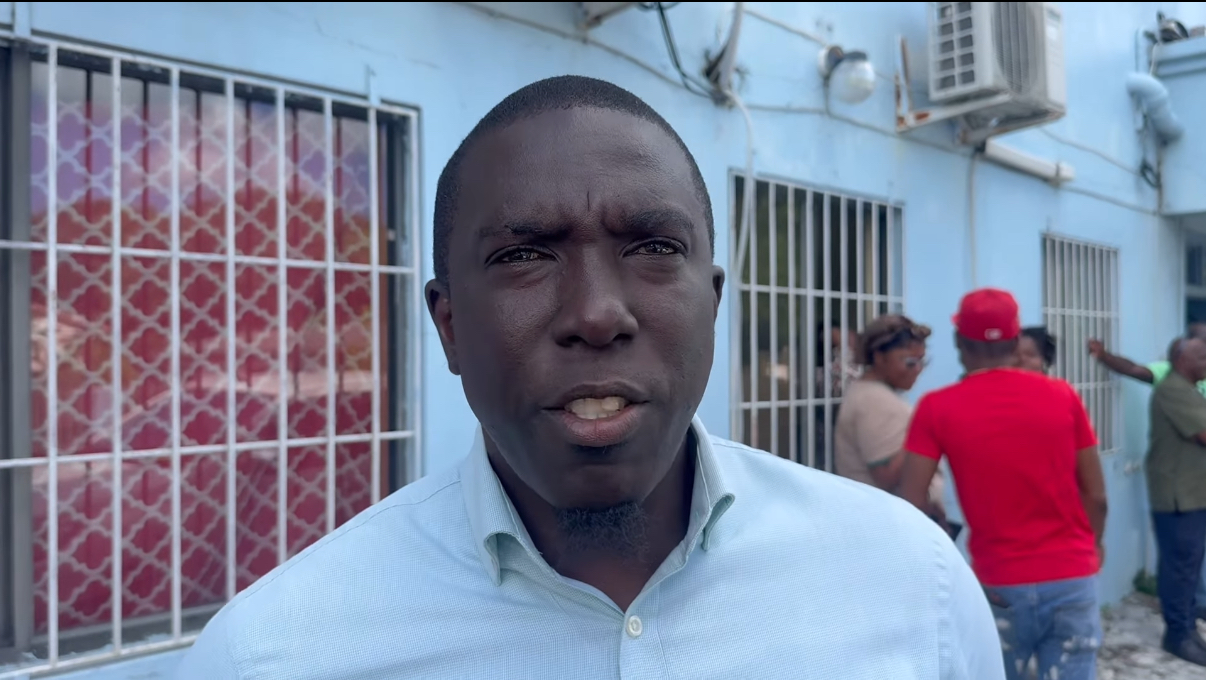
A growing political controversy has erupted in Antigua and Barbuda over the administration’s closed-door negotiations for a potential third-country deportee reception agreement, with Opposition Leader Jamal Pringle launching sharp criticism of the government’s failure to engage in inclusive consultation with lawmakers and the general public ahead of finalizing talks. Speaking during an interview with Observer Radio’s flagship current affairs program *Voice of the People* this Tuesday, Pringle laid out his core argument that the Browne administration violated basic democratic norms by choosing to handle the high-stakes national issue unilaterally, rather than opening dialogue with opposition legislators from the earliest stages of negotiation.
Pringle emphasized that the scope of the proposed agreement carries far-reaching consequences for the entire nation, making public transparency and inclusive input non-negotiable. “When this third-country deportee proposal first emerged, the very first step the government should have taken is to convene opposition members and open a formal dialogue,” Pringle stated during the interview. “There should be full public disclosure of all details surrounding this plan, and wide-ranging consultation with the people of Antigua and Barbuda. This is not an issue that can be decided by the government alone – it will impact every corner of our country, and every citizen deserves a say.”
The opposition leader has doubled down on longstanding demands for the government to publicly release the full text of the memorandum of understanding (MOU) that outlines the terms of the arrangement, and to formally table the document for debate in the national Parliament. Pringle recalled that he first made this request weeks prior, noting that parliamentarians require full access to all relevant details to carry out their oversight responsibilities. He stressed that the agreement must be framed as a collective national decision, not one imposed from the executive branch without broader buy-in. “This process has to be driven by the people,” Pringle said. “It is not the place of Gaston Browne and Ron Sanders to accept this deal on our behalf. They owe it to the nation to come forward, share the full proposal, outline what they hope to achieve, and lay out the details of what they intend to submit to the U.S. State Department.”
Pringle connected the current dispute over the deportee agreement to wider systemic concerns about government transparency in Antigua and Barbuda. He pointed out that opposition legislators have repeatedly attempted to obtain critical government information through parliamentary processes, only to face consistent obstruction. He also criticized the lengthy delays in establishing a fully operational Office of the Information Commissioner, a body designed to facilitate public access to government records, noting that the institution remains unable to carry out its core mandate effectively.
For its part, the government has pushed back against the criticism, defending its handling of negotiations with the United States. Prime Minister Gaston Browne has previously confirmed that talks over the proposed arrangement launched last year as part of broader ongoing diplomatic engagements between the two countries. In response to calls for greater transparency, Browne has stated that the administration intends to present a formal White Paper detailing the full terms of the agreement to Parliament once negotiations are complete.