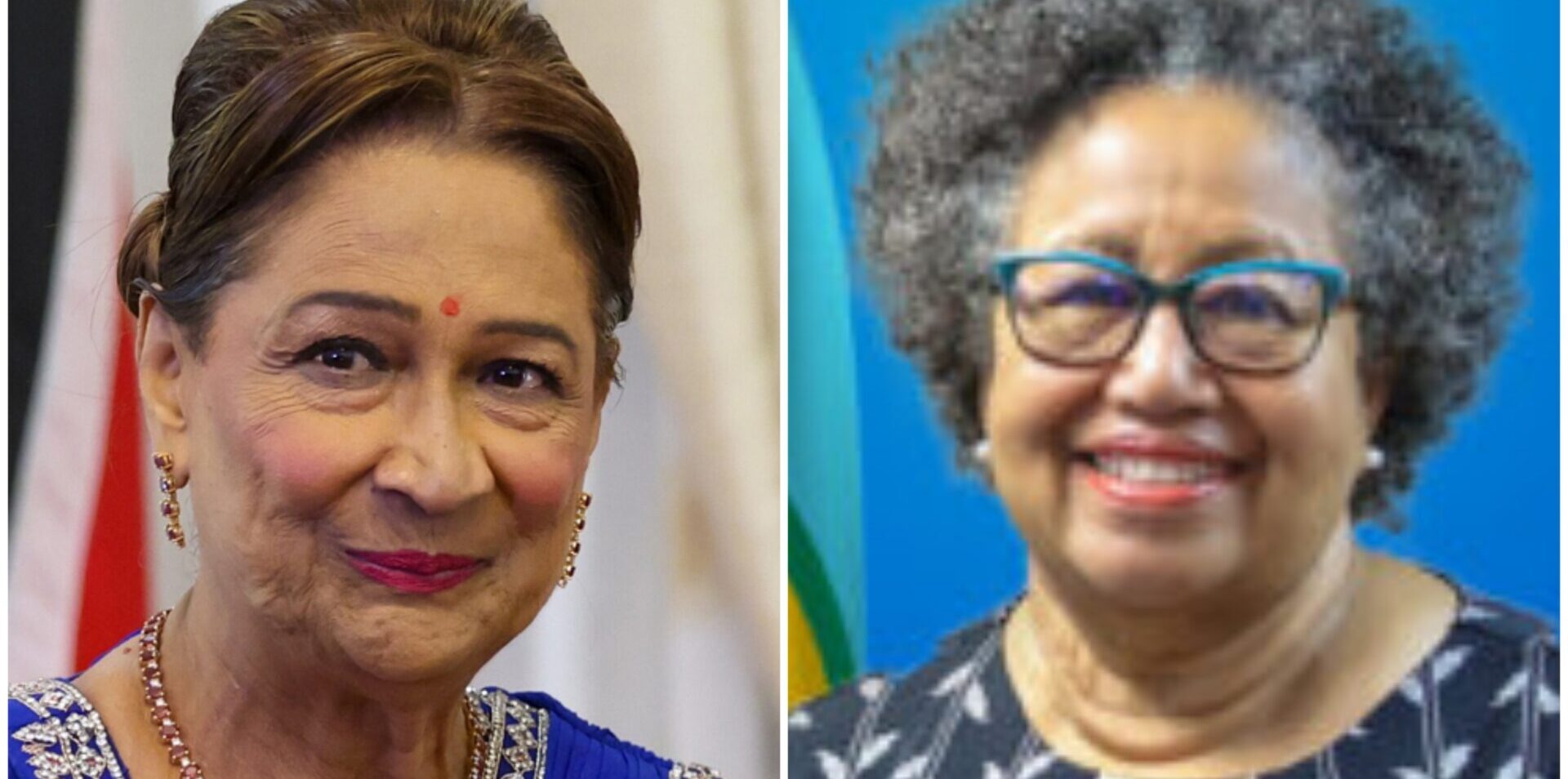
A long-simmering dispute over the reappointment process of CARICOM Secretary-General Dr. Carla Barnett has led regional heads of government to approve a legal path forward, agreeing to request an official advisory opinion from the Caribbean Court of Justice (CCJ) to resolve the impasse. The decision was finalized on July 6, 2026, at a closed-door leadership retreat hosted in St. Lucia, following formal objections raised by the government of Trinidad and Tobago that the existing reappointment procedure violated the Revised Treaty of Chaguaramas, the foundational legal document governing the regional bloc.
Trinidad and Tobago Prime Minister Kamla Persad-Bissessar had laid out her administration’s formal position in a comprehensive 22-page letter circulated to all CARICOM heads on July 3. In the correspondence, Persad-Bissessar argued that the dispute should not be settled through behind-the-scenes political negotiation, but instead through the formal legal mechanisms laid out in the founding treaty. She additionally proposed that all heads commit in advance to abiding by the CCJ’s interpretation of the relevant treaty provisions. Jamaica’s Prime Minister Andrew Holness also added his voice to calls for a formal resolution, penning a July 5 letter to CARICOM Chairman and St. Lucia Prime Minister Philip J. Pierre to express concern over the ongoing lack of resolution for the impasse. “It has become clear that we were not all on the same page. Therefore, it is important that any concerns be addressed in a meaningful manner to restore cohesion, if not unity, which is indispensable to the effective functioning of Caricom,” Holness wrote. According to local outlet T&T Guardian, deliberations over the dispute extended the closed-door retreat by several hours beyond its scheduled adjournment, highlighting the significance of the issue for regional governance.
Per the official joint statement released by CARICOM on July 7, the bloc will initiate formal proceedings under Article 212 of the Revised Treaty of Chaguaramas to request the CCJ’s advisory opinion. The statement notes that interpreting the terms of the founding treaty is one of the core mandated functions of the regional court, making it the appropriate body to resolve the disagreement. Until the CCJ delivers its opinion and CARICOM leaders have time to review the ruling, the current status of Barnett’s reappointment will remain unchanged. CARICOM emphasized that the agreed-upon process offers an amicable route to resolution that will not disrupt the bloc’s ongoing work to address regional challenges.
The dispute resolution process is framed as part of a broader ongoing initiative to strengthen CARICOM’s institutional governance, a mandate that leaders approved during a previous heads of government conference held in St. Kitts and Nevis. In their statement, regional leaders stressed that referring the matter to the CCJ does not call into question the professional or personal integrity of any member state or individual involved in the process. Instead, the move reflects a collective commitment to upholding the rule of law within the bloc, strengthening regional institutions, and maintaining rigorous standards of good governance. Closing the statement, CARICOM heads reaffirmed their shared commitment to the founding ideals and objectives of the regional community, pledging to continue working collaboratively to advance the interests of Caribbean nations and populations amid the multiple complex challenges facing the region.