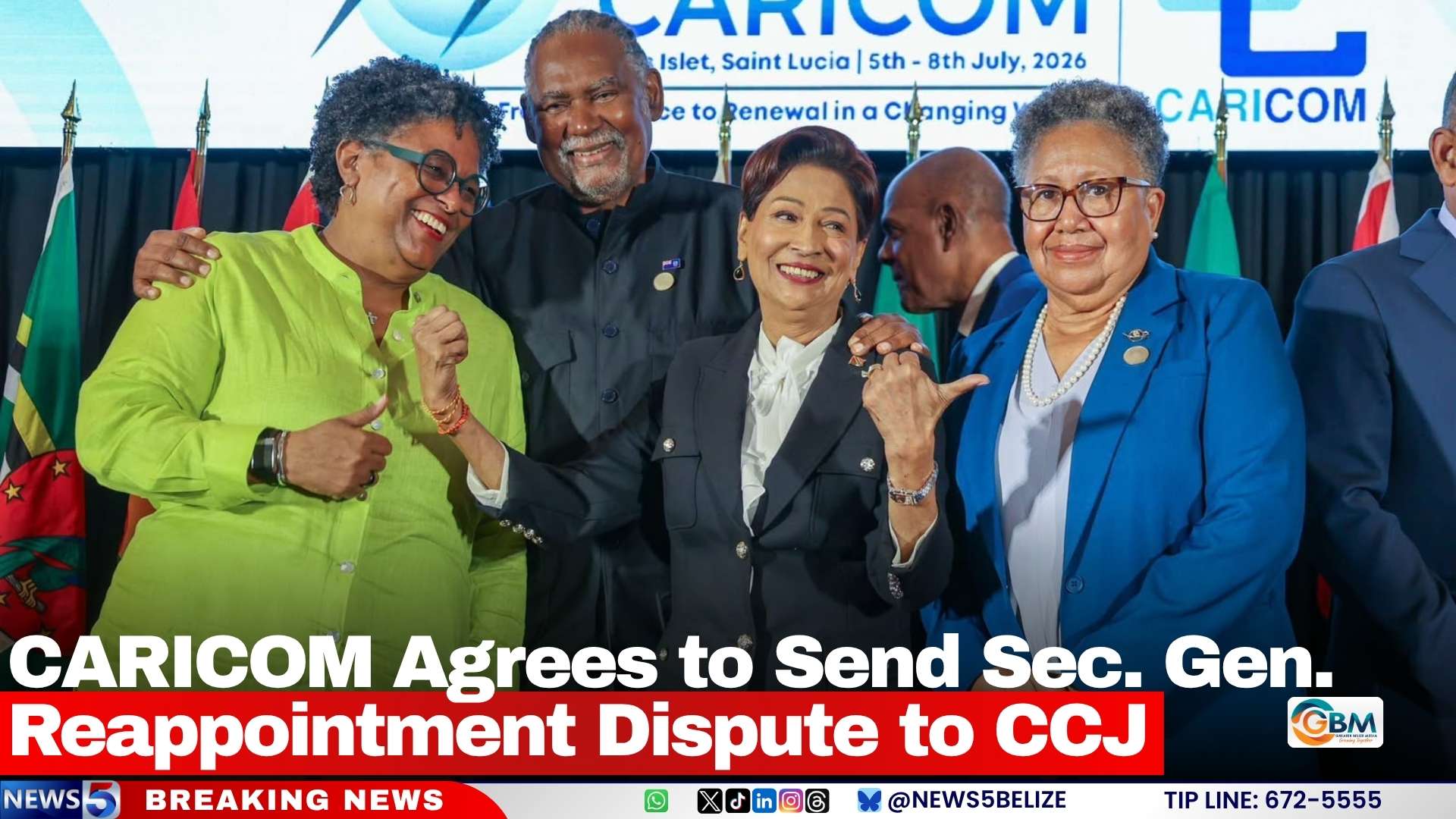
In a landmark decision aimed at resolving a months-long institutional standoff, Caribbean Community (CARICOM) Heads of Government have formally agreed to refer the controversial reappointment of Secretary-General Dr. Carla Natalie Barnett to the Caribbean Court of Justice (CCJ) for binding interpretation. The vote to escalate the legal dispute followed a formal challenge from Trinidad and Tobago, which has repeatedly questioned the legitimacy of the process that extended Barnett’s tenure.
The agreement was reached during the CARICOM Conference’s Retreat held on July 6, 2026, in St. Kitts and Nevis, with an official public statement released by the Conference of Heads of Government one day later. Under the terms of the decision, CARICOM will initiate formal proceedings to request an advisory opinion from the CCJ, acting under Article 212 of the Revised Treaty of Chaguaramas. This treaty provision grants the regional court exclusive jurisdiction to interpret and apply CARICOM’s foundational governing document, making it the ultimate authority for resolving institutional disputes among member states.
Until the CCJ issues its formal ruling, the status quo will remain in place. The official statement confirms that Barnett’s position as Secretary-General will not change “unless and until the Community considers the said Advisory Opinion from the CCJ.” CARICOM leaders have gone to great lengths to frame the dispute as a strictly legal and institutional issue, rather than a personal conflict. The statement emphasizes that the review process does not call into question the integrity of any individual member state or person involved, and positions the move as part of a broader ongoing effort to strengthen regional governance, a priority agreed upon at a prior CARICOM conference also held in St. Kitts and Nevis.
Trinidad and Tobago’s formal objection to Barnett’s reappointment originated in a July 3 letter sent by Prime Minister Kamla Persad-Bissessar to all CARICOM heads of government, including Belize’s Prime Minister John Briceño. In the letter, Persad-Bissessar laid out a detailed case against the reappointment process, centered on multiple alleged violations of CARICOM’s governing treaty.
According to the Prime Minister’s letter, the reappointment was never listed as a standalone agenda item for the 50th Regular Meeting of the CARICOM Conference, held in February 2026 in St. Kitts and Nevis. Instead, the issue was folded into a broader agenda item covering financing and governance. The final decision on reappointment was only discussed during a closed-door Heads Retreat, from which designated ministers — including Trinidad and Tobago’s own Minister of Foreign and CARICOM Affairs, Sean Sobers — were excluded.
Persad-Bissessar argues that this procedure violates Article 11(2) of the Revised Treaty, which guarantees every Head of Government the right to send a representative to all official Conference meetings. The letter further outlines additional procedural flaws: the decision skipped a required recommendation from the Community Council, was never formally confirmed in plenary session as required by CARICOM’s conference rules, and failed to meet the threshold of either a unanimous vote or a three-quarters majority mandated by Article 28 of the treaty. Only 10 of CARICOM’s 15 member states participated in the decision, falling short of the required support.
The letter also raises ethical red flags over Barnett’s personal involvement in organizing the logistical arrangements for the Retreat that approved her own reappointment, as well as the role played by CARICOM’s General Counsel. Trinidad and Tobago is calling for both individuals to step back from any involvement in the process now that the dispute is headed to the CCJ.
As a temporary solution to bridge the gap between the current situation and the court’s ruling, Trinidad and Tobago has proposed that if Barnett’s original term expires before the CCJ delivers its opinion, she remain in office on a month-to-month basis. This arrangement would not be interpreted as legal validation of the original disputed reappointment process. In the interim, the Deputy Secretary-General would take responsibility for all decisions directly related to the court proceedings.