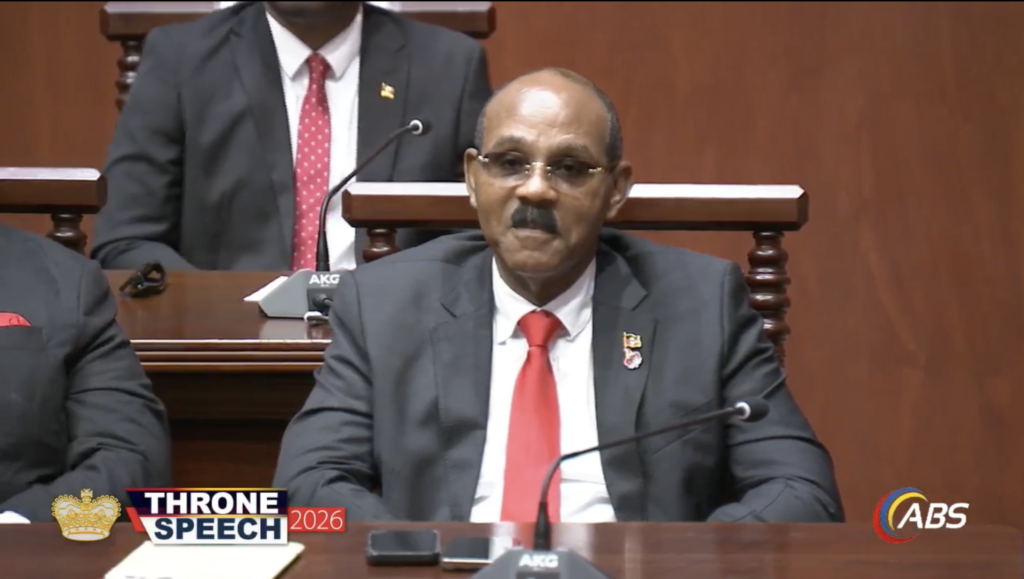
The twin-island nation of Antigua and Barbuda is on track to deliver a landmark annual budget surplus exceeding EC$250 million in 2025, with government revenue collections continuing to outperform results from the previous year, Prime Minister Gaston Browne announced in a public appearance Sunday.
Speaking during an interview on the local *Brown and Brown Show*, Browne explained that the stronger-than-expected surplus forecast stems from robust revenue collection by two key government agencies: the Inland Revenue Department and the Customs and Excise Division. This positive fiscal outcome comes even as the administration maintains a controversial policy holding domestic fuel prices below global market rates, a choice that has carved into projected government earnings.
“Year-to-date, revenue performance has been good, very strong,” Browne told listeners. “We’re quite pleased with the performance of both Inland Revenue as well as Customs. Both of them have actually shown increases over last year.”
The prime minister noted that the upward trend in revenue has put the government in the rare position of delivering a multi-hundred-million-dollar surplus while simultaneously making progress on reducing the country’s overall sovereign debt burden. “We are projecting a surplus of about a quarter of a billion dollars, and the debt-to-GDP is falling down to about 62 percent,” Browne added.
Browne also confirmed that the government has rejected advice from its own Ministry of Finance to scrap the fuel price subsidy, choosing to continue artificially lowering consumer costs at the pump. To maintain the policy, the government compensates the West Indies Oil Company to offset losses from the capped prices, and the administration gives up roughly EC$4 million in monthly tax revenue to keep the subsidy in place.
Even accounting for this recurring monthly revenue loss, Browne confirmed that total year-to-date collections are still higher than the totals recorded during the same period in 2024, defying projections that the subsidy would erase fiscal gains.
The prime minister used the announcement to defend his administration’s track record on fiscal stewardship, pointing out that since his government took office in 2014, national debt has grown only marginally even as the country’s overall economy has expanded substantially. “When it comes to fiscal responsibility, I can say here without any fear of contradiction that my administration has been the most fiscally responsible administration that this country has ever seen,” Browne stated.
Looking ahead, Browne emphasized that the confluence of sustained broad-based economic expansion, improved tax compliance and collection, and careful fiscal planning has put the government in a stronger financial position, allowing it to keep pushing forward with critical infrastructure and development projects across the nation.