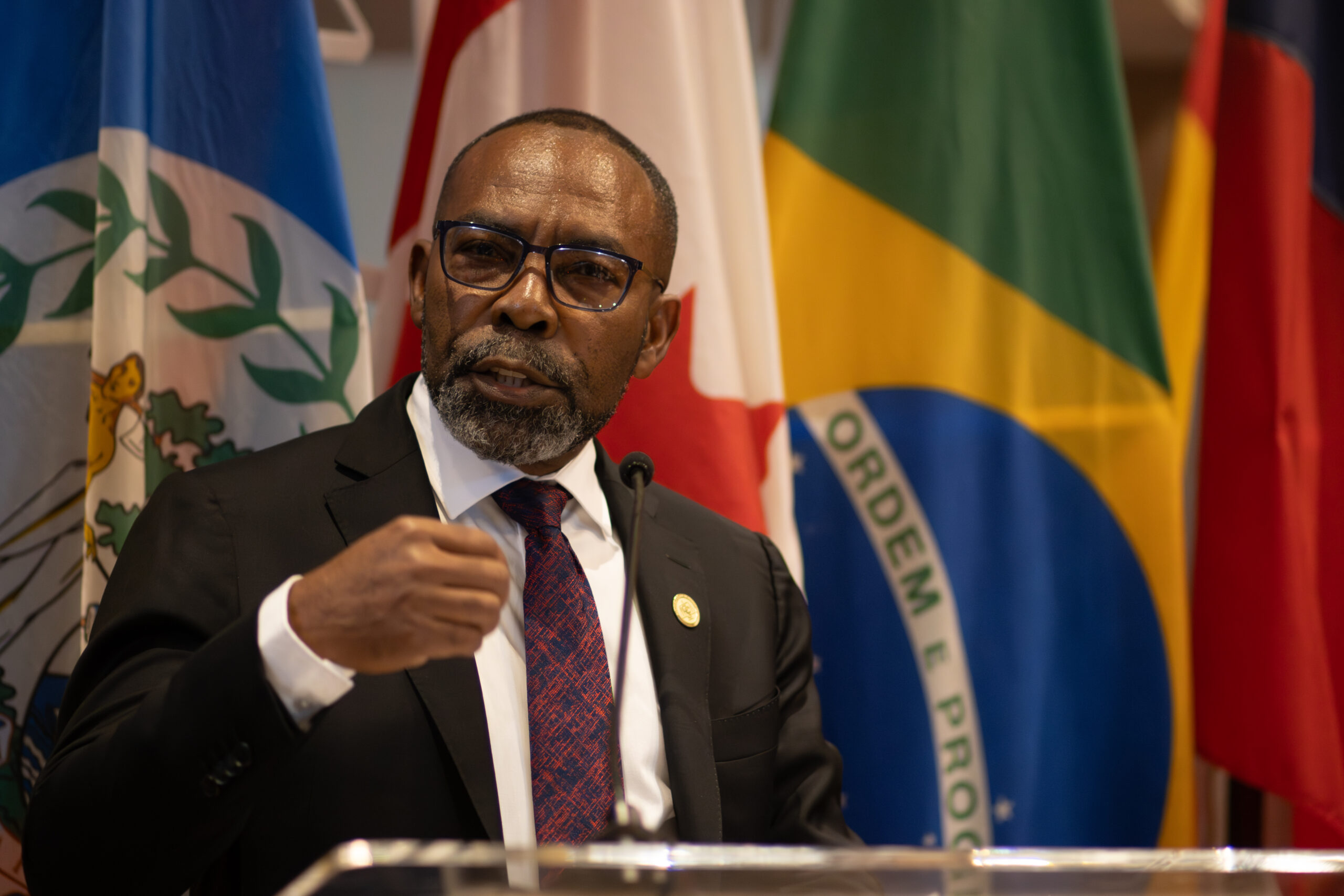
Five years after first raising the question in the *Jamaica Gleaner*, the President of the Caribbean Court of Justice, the Honourable Mr. Justice Winston Anderson, has re-urged Caribbean regional policymakers to make CARICOM Day a universal national holiday across all Caribbean Community member states.
The push centers on July 4, the historic date when the Caribbean Community was founded. In 1973, four transformative regional leaders — Errol Barrow of Barbados, Forbes Burnham of Guyana, Michael Manley of Jamaica, and Eric Williams of Trinidad and Tobago — gathered in Chaguaramas to sign the Treaty of Chaguaramas, formally establishing the Caribbean Community. Vere Bird of Antigua and Barbuda, a key signatory to the earlier Dickenson Bay Agreement, also stands as a foundational figure in the regional integration movement. This date is far more than a historical marker: it marks the birth of the Caribbean’s most ambitious integration project for small developing states, and the origin of the region’s collective identity as one community made of many nations.
Today, the Caribbean Community holds many of the traits of a unified economic and social space: it boasts shared regional institutions, a common legal framework, interconnected education systems, and a steadily integrating economy. Yet what it lacks is a collective, region-wide moment to honor and reflect on that shared project. While the United States marks its national identity every July 4 with widespread public celebration, the Caribbean has not claimed the same date, its own founding day, for collective regional observance. A universal CARICOM Day holiday would fill this gap, Anderson argues.
Communal identity, Anderson notes, is forged not just by borders and institutions, but by shared symbols, traditions and collective rituals. Sustaining a regional community requires intentional moments where citizens can see themselves as part of a shared cross-border enterprise. A yearly CARICOM Day would create exactly that: a shared moment in time, separate from daily life, where Caribbean people can reflect on the regional integration journey and the shared aspirations that continue to drive it forward.
Integration, Anderson emphasizes, is an intergenerational project. The founding leaders of 1973 knew from the start that building regional unity would take decades, not years, and that the work would pass from one generation to the next. The foundational progress of the 1970s was expanded by subsequent leaders including P.J. Patterson, Basdeo Panday, Owen Arthur, and Bharrat Jagdeo, who deepened economic integration and strengthened regional institutions. In more recent years, leaders such as Kenny Anthony, Patrick Manning, Ralph Gonsalves, and Mia Mottley have carried the mission forward, adapting the integration project to meet modern global challenges.
Decades of work have yielded tangible, impactful achievements that have benefited all Caribbean people. The Caribbean Community has persisted through political transitions, economic volatility, devastating natural disasters, and shifting global power dynamics, proving the core idea of regional cooperation remains vital: by uniting across borders and diverse backgrounds, Caribbean nations can deliver greater well-being, security and prosperity than any can achieve alone.
Key milestones include the ongoing expansion of free movement for CARICOM nationals across the region, a reform that enshrines the principle that every citizen of a member state is also a citizen of the broader Caribbean Community, a identity symbolized by the regional CARICOM passport. Regional institutions have also become core pillars of Caribbean progress: the University of the West Indies has educated generations of leaders, professionals and public servants; the Caribbean Examinations Council offers qualifications recognized globally; the Caribbean Development Bank funds critical development projects across member states; the Caribbean Public Health Agency coordinates collective public health responses; and the Caribbean Disaster Emergency Management Agency leads coordinated disaster relief. Even in sport, regional bodies like Cricket West Indies and the CARIFTA Games have united Caribbean people and become enduring symbols of shared regional pride.
Anderson stresses that these gains should not be taken for granted, and a universal holiday would do far more than honor the past. If July 4 falls on a weekend, the holiday would be observed the following Monday, matching the arrangement already used for many public holidays globally. The annual observance would create space for schools to teach regional integration history, for governments to highlight the work of regional institutions, for businesses and civil society to celebrate Caribbean innovation, and for ordinary citizens to reflect on the shared inheritance that binds the region together.
Currently, only two member states — Antigua and Barbuda, and Guyana — already recognize CARICOM Day as a formal public holiday, proving the policy is practical and achievable. Anderson urges policymakers not to delay action for another five years, as they did after the 2021 call. Every July 4, he says, Caribbean people should pause to celebrate how far the region has come, reflect on the work still ahead, and reaffirm their commitment to the regional integration project. “In the end, we are all we have. Warts and all,” Anderson writes.