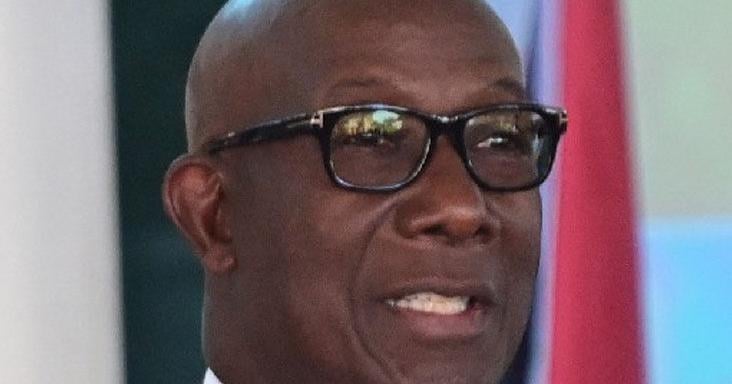
Trinidad and Tobago’s Prime Minister Kamla Persad-Bissessar has announced sweeping corrective changes to the country’s controversial diplomatic passport system, revealing that systemic abuse has left hundreds of ineligible people holding the high-privilege documents. As part of the new policy framework, two former top leaders — ex-prime ministers Dr Keith Rowley and Stuart Young — have been ordered to surrender their diplomatic passports and will receive official passports in their place, the head of government confirmed this week.
The announcement came in response to public pushback from Young, who had publicly criticized the move after receiving an unexpected notification to turn in his diplomatic passport. In a social media video released Thursday, Young framed the order as ongoing political victimization, arguing that diplomatic passports are a standard entitlement for former prime ministers. Issued his document in May of last year without any request from him, Young said he was blindsided by the sudden demand to surrender the credential. “Get a call out of the blue: return the passport,” he described the interaction.
Persad-Bissessar pushed back sharply against Young’s complaints in an interview with the Express on Monday, dismissing the former leader as a “cry baby” while laying out the catalyst for the policy review. She confirmed that the review was launched after a foreign government formally requested Trinidad and Tobago examine its loose diplomatic passport issuance practices, which an internal investigation found had resulted in 985 people holding diplomatic passports — most of whom do not meet the official eligibility criteria.
Under international and domestic rules, Persad-Bissessar explained, diplomatic passports are reserved exclusively for individuals acting as official representatives of the Trinidad and Tobago state on international assignments. Official passports, by contrast, are designated for non-cabinet parliamentarians and government staff carrying out state technical, administrative, or departmental work abroad. While both passport types carry special travel benefits, only diplomatic passports grant potential diplomatic immunity, a privilege that is strictly granted by receiving nations in line with the Vienna Convention on Diplomatic Relations.
Young, who no longer holds a qualifying office for a diplomatic passport, will be switched to an official passport under the new rules, Persad-Bissessar confirmed. He is not the only one affected: the policy overhaul will reclassify many current diplomatic passport holders to official passports, move some entirely to standard ordinary passports, and allow a small number of eligible holders to retain their diplomatic status. The prime minister stressed that the reclassification is not a punishment or a reflection of wrongdoing for any affected individual, but simply a long-overdue correction of past abuses.
“When some people get used to preferential treatment, equal treatment seems like discrimination to them. Stuart should stop his cry baby, beh-beh behaviour. It’s unbecoming,” Persad-Bissessar said, pushing back on claims the move is politically motivated.
Addressing the status of former prime minister Keith Rowley, Persad-Bissessar confirmed he will also be required to surrender his diplomatic passport. Per existing regulations, all diplomatic passport holders must return their documents to the Ministry of Foreign and Caricom Affairs once their overseas posting ends, they retire from public office, or they leave a political position that qualifies them for the credential. Rowley is retired from office and no longer represents Trinidad and Tobago in any official capacity, so he does not qualify to retain the document, she said.
Ministry staff will contact Rowley in the coming weeks to coordinate the surrender and issue him an official passport, which will retain most of the travel benefits of a diplomatic passport but will not include eligibility for diplomatic immunity, Persad-Bissessar added. Rowley had not issued any public response to the announcement as of Monday, when reached for comment by the Express.
In addition to the passport policy announcement, Persad-Bissessar confirmed she will travel to St. Lucia tomorrow to attend the 51st Regular Meeting of the Conference of Caricom Heads of Government, scheduled to run from July 5 to 8. She will be joined on the trip by Foreign and Caricom Affairs Minister Sean Sobers and Prime Minister’s Office Minister Nicholas Morris.
The conference will also oversee an upcoming leadership transition for the regional bloc: St. Lucia Prime Minister Philip J Pierre will assume the Caricom chairmanship on July 1, 2026, and will hold the role through the end of the year, replacing current chairman Dr Terrance Drew, the prime minister of St Kitts and Nevis. Persad-Bissessar noted she has already held preliminary discussions with Pierre ahead of the formal meeting.