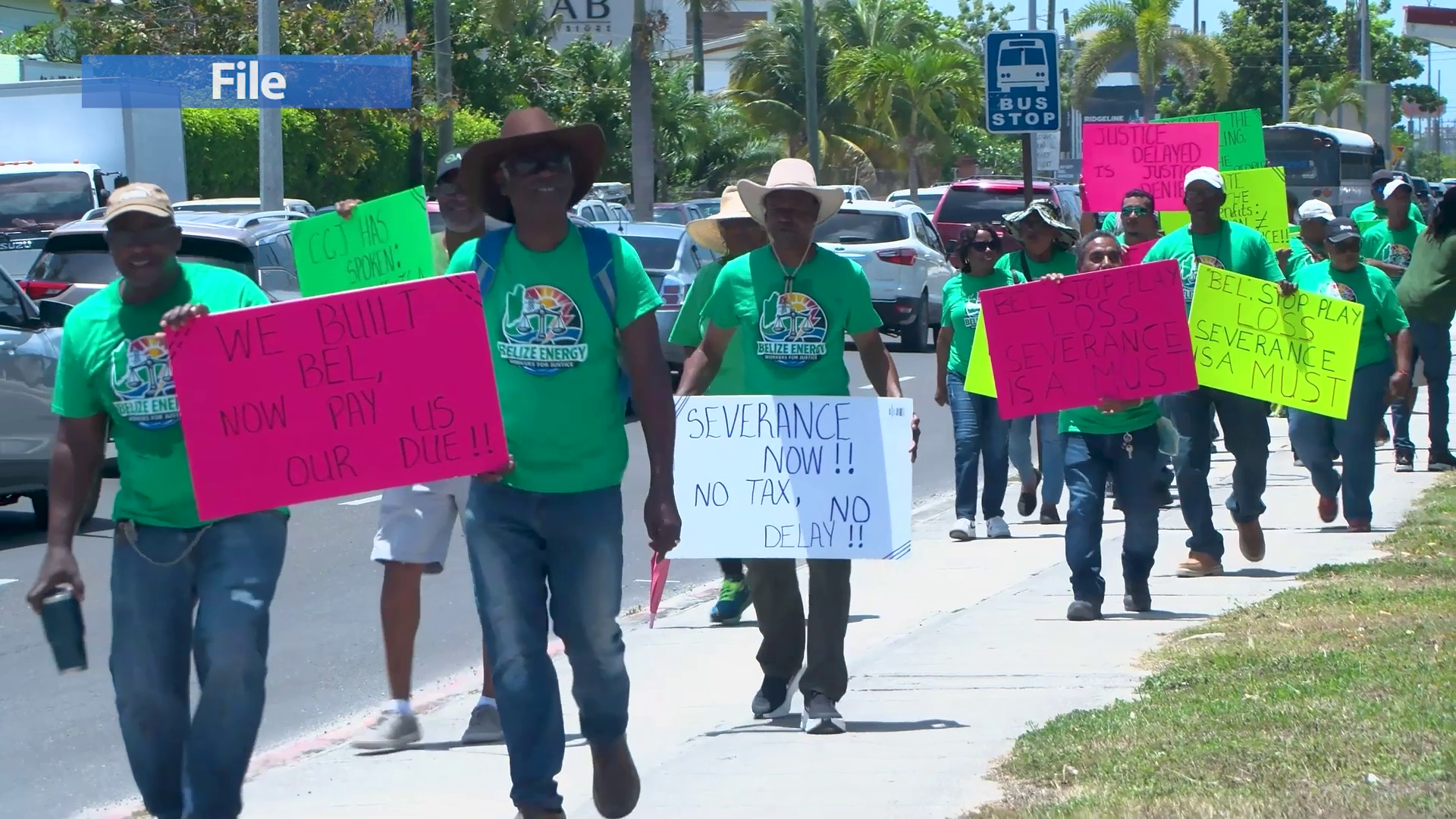
A long-running disagreement over unpaid severance pay for former staff at Belize Electricity Limited (BEL) is set to be resolved through the national court system, following a landmark regional ruling that has sent ripples through all pension-backed firms across Belize.
The dispute emerged after the Caribbean Court of Justice (CCJ) issued a defining ruling in a separate case involving Belize Telemedia Limited (BTL), which stated that severance pay must be provided in addition to pension benefits if a pension plan’s governing documents do not explicitly state that the plan already covers severance obligations. This judgment opened the door for former BEL employees to reactivate their claims for extra severance pay, with many staging public pickets to press their demands.
However, BEL leadership maintains that its pension plan is structured differently from BTL’s. In comments on the ongoing conflict, BEL Executive Chairman Lynn Young — himself a former employee of the firm — acknowledged the frustration of the claimants, many of whom are personal friends. He expressed sympathy for the financial hardships some former workers face, noting that the company would be willing to provide support if it were legally and financially responsible to do so.
Young emphasized that BEL’s pension plan was specifically founded using the company’s already-calculated severance obligations to former employees. According to Young, the company’s official pension deed explicitly states that the plan covers severance commitments, meaning paying additional severance on top of existing pension benefits would be financially reckless, not only for BEL but for the broader industry. The CCJ’s ruling, he argued, is specific to the BTL case, and the unique contractual terms of each company’s pension plan must be considered independently. The ruling also has potential implications for all major Belizean institutions with pension plans, including Social Security, the Central Bank of Belize, and Belize Water Services Limited, making clarity on the legal interpretation critical.
To resolve the ambiguity and confirm that its existing framework meets legal requirements, BEL has initiated court proceedings to seek formal clarification. Young confirmed that the company has completed drafting the required legal documentation, which will be formally filed with the court in the near future. The court’s final ruling will not only settle the dispute for BEL but will also set a binding precedent for how severance and pension obligations are interpreted across the country’s private and public sector pension plans.