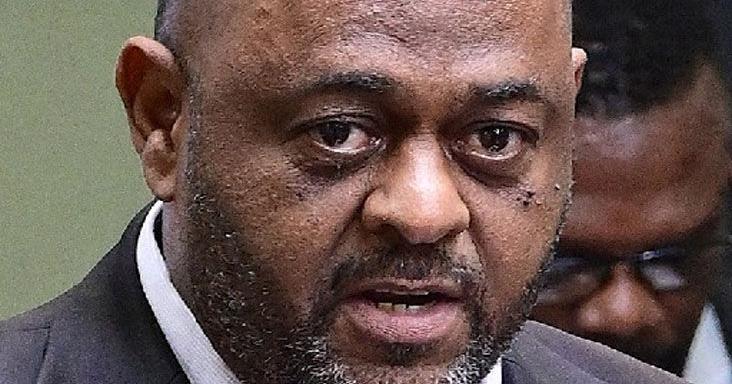
Trinidad and Tobago’s Defence Minister Wayne Sturge has formally confirmed that the Military-Led Academic Training Programme (MiLAT), a long-standing initiative aimed at rehabilitating at-risk young people, has been temporarily paused. The confirmation came this week following swirling public speculation after all contracted teachers and civilian administrative staff attached to the programme were sent off-site on Monday, leaving nearly 100 junior trainees in limbo and sparking widespread questions about the initiative’s long-term future.
Contrary to circulating reports that the programme had been permanently shut down, Sturge emphasized that the suspension is only a temporary measure while the government carries out a full-scale structural and financial restructuring of MiLAT. Speaking to local media outlet the Express, Sturge outlined that two key factors drove the decision: mounting financial pressures on the state and the programme’s current unsustainable business model.
“The programme has not been closed down but temporarily suspended pending ongoing structural reform,” Sturge explained. “It was necessary to suspend at this time having regard to severe financial constraints coupled with the fact that it was not economically viable in its present form.”
The minister added that the government deliberately timed the suspension to follow the completion of Caribbean Secondary Education Certificate (CSEC) examinations for the current Form Five cohort, minimizing disruption to students who were already close to finishing their academic cycle. Currently, government agencies are collaborating to redesign the programme to address its shortcomings: the Ministry of Defence is working in lockstep with the Trinidad and Tobago Defence Force Reserves and the Ministry of Tertiary Education to develop a revised framework that will allow remaining Form Four students to resume their training as quickly as possible.
A core critique of the current MiLAT model laid out by Sturge is its disproportionately high operating costs. He noted that official data shows the per-student cost of the programme is significantly higher than the cost of educating a student at a public university, a gap that has made the current model unfeasible for continued state funding.
Since its launch, MiLAT has been framed as a key public safety intervention: it combines military-style discipline, formal academic instruction, and practical life skills training for vulnerable youth, with the explicit goal of reducing youth engagement in crime and supporting rehabilitation for at-risk young people. Opposition critics have already raised alarms that pausing the initiative will remove a critical crime prevention tool and lead to a spike in criminal activity among disconnected youth.
Sturge pushed back firmly against these claims, rejecting the opposition’s narrative outright. He argued that the link between MiLAT’s suspension and rising crime is unfounded, pointing out that even when the programme operated at full capacity under the previous national administration, crime rates surged to unprecedented historic highs. “I am firmly of the view that temporarily suspending the programme will have little to no effect on crime and criminality, given that the last administration had these programmes yet crime skyrocketed to record levels previously unseen. I don’t buy that narrative which has become a trademark of the Opposition,” he said.
The minister declined to address two key outstanding questions raised by reporters: he did not directly confirm or deny reports that the contracts of all non-military staff would not be renewed, leaving the employment status of these workers unclear. He also declined to provide a specific timeline for when the restructured programme will resume operations, only stating that the government is committed to completing the restructuring process “in the shortest possible time.”