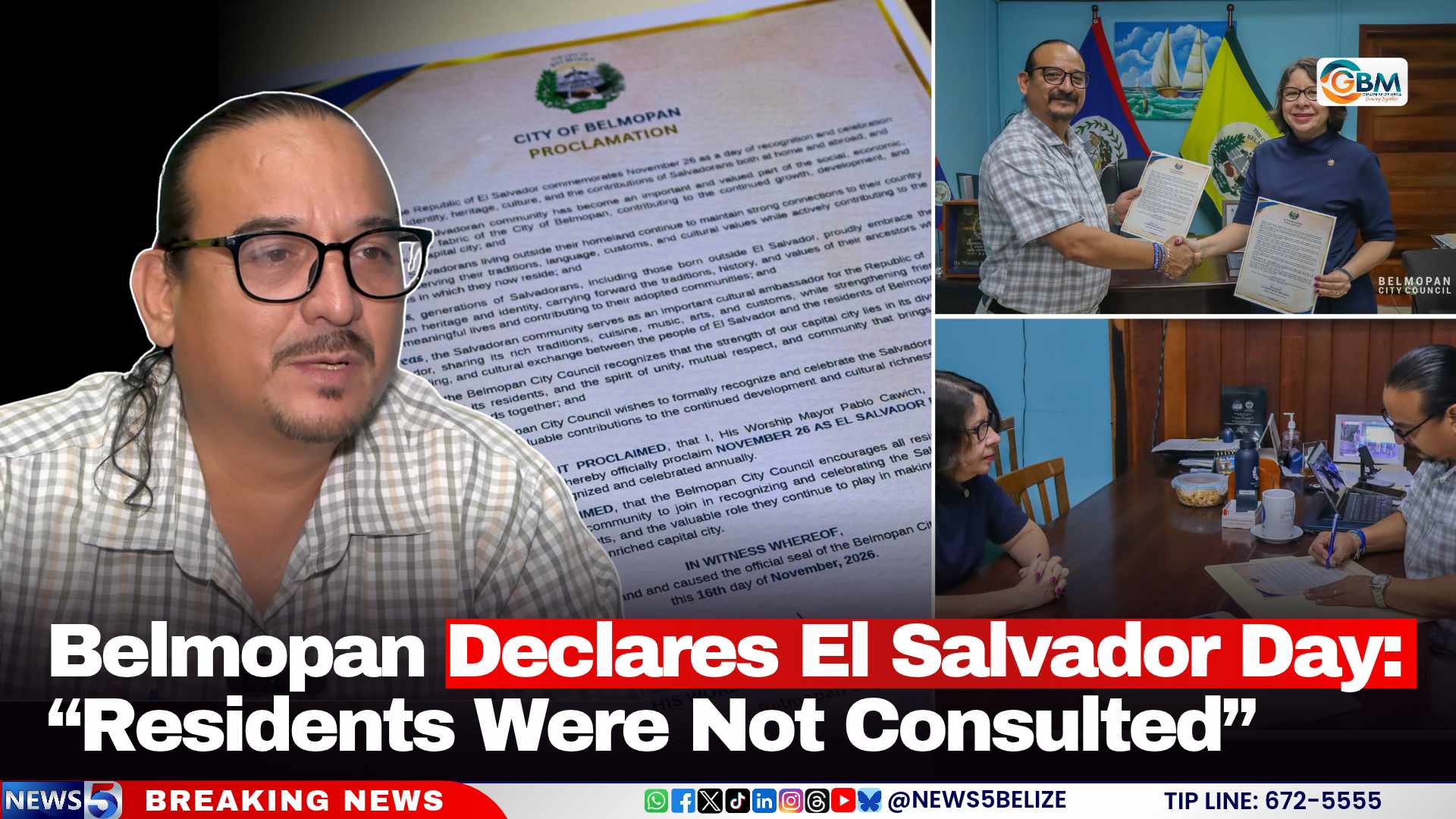
BELMOPAN, Nov 17, 2026 — A recent unilateral proclamation by the Belmopan City Council designating November 26 as official El Salvador Day has ignited fierce, divided public pushback, with hundreds of local residents decrying the move as exclusionary for longstanding Indigenous and native Belizean cultural groups that have never received comparable formal commemorative recognition. The controversial measure was formally signed by Mayor Pablo Cawich, who framed it as a gesture honoring the Salvadoran diaspora’s decades-long contributions to the capital’s social and economic fabric, marking the first ever country-specific cultural observance in Belmopan’s municipal history. The initiative was not drafted with any public input, but rather emerged behind closed doors in July, during a sister-city partnership signing between Cawich and La Libertad Sur, El Salvador Mayor Henry Flores. That broader bilateral agreement outlines planned cross-border collaboration spanning public safety upgrades, digital technology sharing, tourism promotion, cultural exchange, youth sports programming and community development initiatives. November 26 was selected deliberately to align with a 2005 Salvadoran federal designation that honors the contributions of Salvadoran expats and refugees living abroad, a demographic that first settled in Belize in large numbers fleeing the 1980s Salvadoran civil war, founding the well-established Salvapan neighborhood within Belmopan city limits. The city council’s public notice of the proclamation also confirmed that multiple other foreign embassies based in Belmopan have already reached out to municipal leaders to negotiate their own similar national heritage commemorative days, setting the stage for a growing roster of foreign cultural observances in the capital. But the lack of pre-proclamation public consultation has left a large segment of Belmopan’s native population frustrated, pointing out that no official municipal commemorative days exist for the city’s longstanding Maya, Creole, Garifuna and Mestizo communities that predate the arrival of most migrant groups. One lifelong Creole resident told local outlet News 5, “We were born and raised here, we built this city from the ground up, and we don’t even have an official day to celebrate our own heritage. Why are foreign communities getting priority?” A Maya community leader echoed that concern, noting that the Maya people are the original indigenous inhabitants of the land Belmopan is built on, yet have never been granted formal municipal recognition for their centuries of cultural stewardship. A smaller contingent of residents has pushed back against the criticism, arguing that honoring the Salvadoran community’s contributions does not preclude the city from rolling out formal recognition programs for local cultural groups in the near future. When contacted for comment by News 5, Mayor Cawich defended the process, noting that the proclamation was a pre-agreed term of the sister-city diplomatic negotiations that also included follow-up consultations with Salvadoran Ambassador to Belize Graciela Perez Zeledon. He added that the original planned date for the observance was late April, before being adjusted to November 26 to align with El Salvador’s national expat recognition framework, framing the move as a standard diplomatic courtesy for the city’s growing international partner network. Cawich also confirmed that the city is currently in preliminary sister-city talks with multiple other global municipalities, and that future negotiations will likely include parallel discussions for additional cultural recognition programs for both foreign diaspora groups and local Belizean communities.