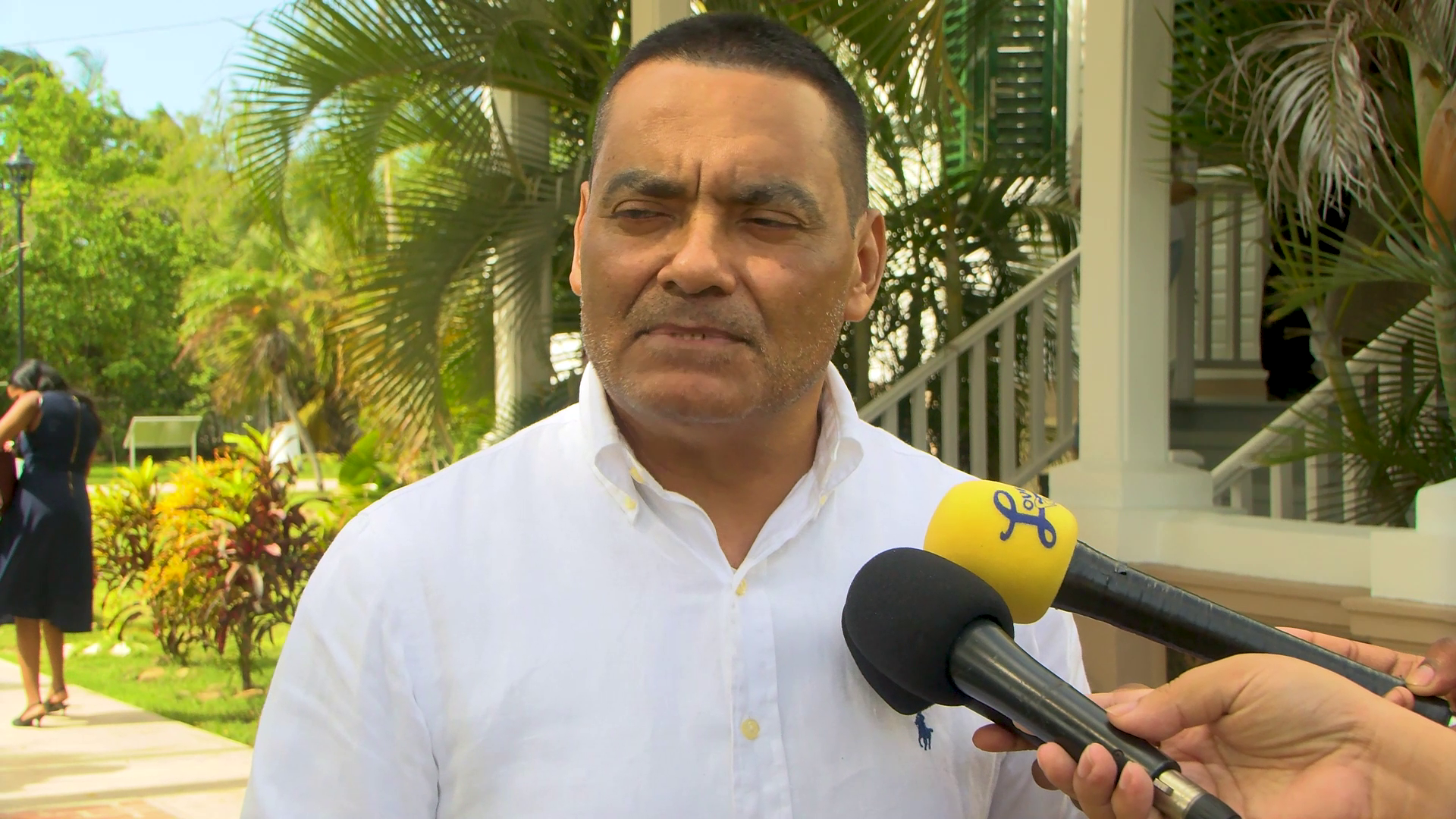
On July 1, 2026, Belizean Foreign Affairs Minister Francis Fonseca stepped back into his office after a period of absence, immediately confronting a wave of pressing questions from reporters over the growing controversy that has already sidelined two of his fellow Cabinet members.
Oscar Mira and Florencio Marin Jr., the two ministers currently placed on administrative leave, are the subjects of ongoing official audits and internal investigations centered on questionable financial practices, including the controversial method of split payments. The unfolding situation has sparked public speculation about whether similar irregularities permeate other government agencies, including Fonseca’s own portfolios of foreign affairs and education.
When asked directly to confirm whether split payment schemes have ever been used in either of the ministries he oversees, Fonseca denied any personal involvement or awareness of such practices. “As the minister responsible for both the Ministry of Foreign Affairs and the Ministry of Education, that is not a practice that I certainly am involved in or engaged in,” he told reporters. “I have always made it very clear that my role is a policy role. I do not get involved in the work of finance officers, nor do I interfere in spending decisions or contract negotiations within the ministries. That is not part of my remit.”
Reporters followed up by asking if the unfolding controversy amounts to a full-blown crisis for the current administration, a claim Fonseca quickly pushed back on. While he acknowledged the seriousness of the allegations, he emphasized that the government is handling the situation in a transparent and responsible manner.
“No, I don’t think it is a crisis. Obviously, it is a serious matter, and I think it is being treated with a great sense of gravity,” Fonseca explained. “I think the prime minister is doing the right thing. He has ensured that the ministers who are responsible for those ministries are on leave while a comprehensive audit is being done of those ministries. Whatever the outcome is of those audits will determine what future actions have to be taken. So I think that is the right approach: let’s get all the information, all of the data, and then decisions can be made. I don’t think it’s a crisis. I think it is being handled responsibly, and then we see where we go from there.”
This report is adapted from a transcript of an evening television news broadcast, with all dialogue reproduced accurately as captured during the live interview.