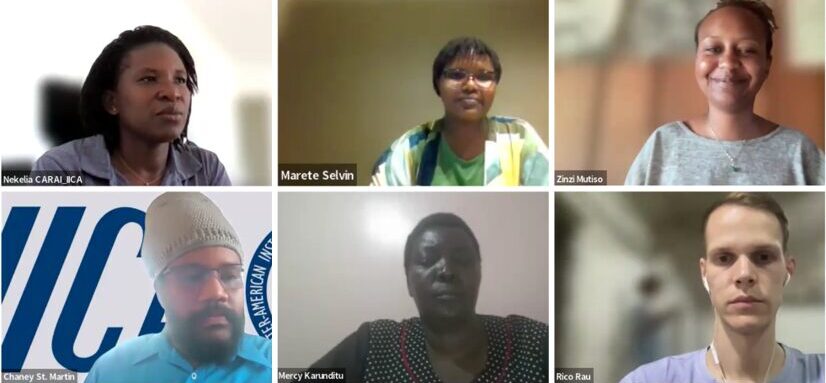
Against a backdrop of rising climate vulnerability and growing global food insecurity, a groundbreaking cross-continental knowledge-sharing initiative centered on climate-resilient agriculture has officially launched, connecting a diverse community of experts, policymakers, researchers, and smallholder farmers to reframe soil as a cornerstone of climate adaptation, sustainable development, and food system stability.
Organized by the Caribbean Climate Responsive Agriculture Forum (CCRAF) in partnership with the Inter-American Institute for Cooperation on Agriculture (IICA) and environmental advocacy group The Allure of Soil, the new Africa-Caribbean Connect Knowledge Exchange Initiative opened with its first public webinar on June 2, 2026. Titled “Why Soil Changes Everything: Reframing Soil as the Foundation of Climate, Food and Water Systems and Development,” the online event drew more than 350 live attendees spanning the Caribbean, Africa, and other global regions.
Unlike traditional climate discourse that often overlooks below-ground ecosystems, the webinar positioned healthy soil as far more than inert growing medium, framing it as a dynamic, living foundation that underpins climate regulation, global biodiversity, freshwater security, agricultural output, and rural livelihoods across the world. Discussions were led by a cross-regional cohort of specialists spanning soil science, agroforestry, climate policy, and sustainable land management, bringing together on-the-ground experience and academic expertise from two regions disproportionately impacted by climate change but rich in indigenous and practical agricultural knowledge.
In her opening remarks, Nekelia Gregoire Carai, IICA’s Technical Specialist in Soil and Water Management and CCRAF Coordinator, emphasized that the new initiative marks a critical milestone in strengthening collaborative ties between the two regions. “The launch of the CCRAF Africa-Caribbean Connect Initiative represents an important milestone in building stronger bridges between Africa and the Caribbean. Both regions are rich in agricultural knowledge, innovation, and resilience. Through collaboration and practical knowledge exchange, we can strengthen food systems, empower communities, and accelerate climate action across both regions,” she said.
Established in 2015, CCRAF has operated for over a decade as a leading regional platform for knowledge sharing and climate action across the Caribbean. Coordinated through IICA, the forum already supports a wide portfolio of activities designed to advance climate-resilient agriculture, including regional training programs, youth engagement projects, knowledge-to-action networks, and international partnerships. The Africa-Caribbean Connect Series marks the forum’s first formal, sustained cross-continental collaboration focused on soil health.
Marete Selvin, founder of The Allure of Soil, noted that the dialogue filled a longstanding gap in global climate and development planning. “Soil is often invisible in many climate and development conversations, yet it sustains every major system we depend on. This session challenged participants to rethink soil not as dirt, but as living infrastructure essential to climate resilience, food security, water systems, biodiversity, and economic development. The Africa-Caribbean dialogue demonstrated the incredible opportunity we have when communities and regions learn from one another,” she explained.
Chaney St Martin, IICA’s International Specialist in Water and Soil Management, unpacked the scientific case for prioritizing soil health during his presentation, outlining how healthy soil functions as a self-sustaining ecosystem that sequesters carbon, regulates hydrological cycles, supports beneficial microbial life, and boosts agricultural resilience to extreme climate events. He illustrated that degraded soils undermine the effectiveness of common agricultural investments, from irrigation infrastructure to synthetic fertilizers, drastically limiting the impact of climate adaptation efforts. “Soil is not simply a growing medium; it is living infrastructure that underpins climate stability, water systems, food production, and ultimately human survival,” St Martin emphasized.
Attendees also received on-the-ground insights from East Africa, where regenerative soil practices have already delivered transformative results for smallholder communities. Mercy Karunditu, Director of External Relations and Advocacy at Trees for the Future, shared case studies of the organization’s Forest Garden Approach, an integrated model that combines tree planting, intercropping, composting, and regenerative farming techniques to reverse land degradation while boosting crop yields and household income. She highlighted a successful project in Tanzania, where coordinated soil restoration turned extensive degraded farmland back into a productive, biodiverse ecosystem. “Healthy soils are not just environmental assets, they are economic assets that improve livelihoods, stabilize communities, and strengthen long-term food security,” Karunditu noted.
From a global policy perspective, Rico Rau, Policy and Research Consultant for the international Save Soil movement, outlined the systemic changes required to scale regenerative agriculture worldwide. Rau explained that widespread soil restoration offers a cost-effective, scalable solution to overlapping global crises, from food insecurity and biodiversity collapse to freshwater scarcity, while also generating long-term economic opportunity for rural farming communities. He stressed that a coordinated multi-sector effort is required to drive the transition, with critical roles for national governments, local communities, financial institutions, and educational systems. “Restoring soil is not only an environmental necessity, it is one of the most practical and scalable solutions available for climate adaptation and strengthening global food systems,” Rau said.
Post-webinar audience polls found that attendees overwhelmingly identified food systems and freshwater systems as the two areas facing the greatest risk from ongoing soil degradation. Participants across the Caribbean, Africa, and other regions contributed actively to the event via live chat and question-and-answer sessions, praising the webinar for combining rigorous scientific insight, indigenous knowledge, narrative storytelling, and actionable, on-the-ground solutions to address shared climate challenges. Organizers noted that the high level of engagement reflects growing global momentum around soil restoration and regenerative agriculture as core components of effective climate action. The initiative is set to host additional events and collaborative projects in the coming year to continue building cross-regional capacity and advancing shared goals for climate-resilient development.