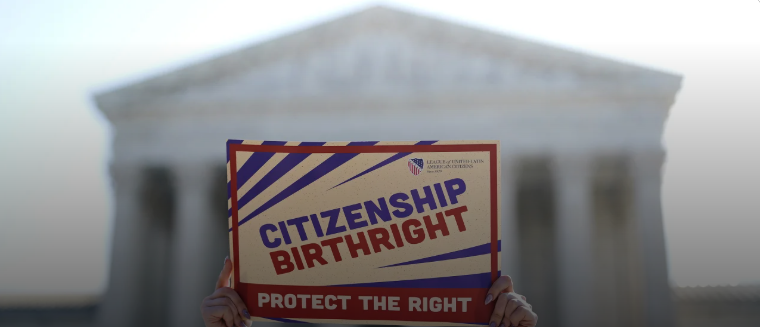
On a landmark Tuesday ruling that reverberated across American political and immigration circles, the US Supreme Court struck down a signature executive order from former President Donald Trump that sought to upend decades of established legal interpretation around birthright citizenship. The policy, which was a core plank of Trump’s presidential agenda even as legal experts widely questioned its constitutionality from its inception, has now been formally invalidated by the nation’s highest court.
This outcome marks a notable political defeat for Trump, who centered much of his election campaign on curbing so-called “birth tourism” and made restrictive immigration policy — targeting both unauthorized and legal immigration — a defining priority of his second term in office. The court’s ruling leaves intact the long-standing legal principle that has guided American citizenship for more than a century: any person born within the territorial boundaries of the United States automatically qualifies for citizenship, regardless of the immigration status of their parents.
Chief Justice John Roberts penned the majority opinion for the court, which drew bipartisan support from both conservative and liberal justices. Three prominent conservative members of the bench — Justices Clarence Thomas, Samuel Alito, and Neil Gorsuch — broke with the majority to issue a dissent against the ruling.
In his authoritative opinion reflecting the court’s majority position, Roberts emphasized the foundational role of citizenship in American democratic life. “Citizenship, then and now, was the right to have rights — to freely participate in our political community,” Roberts wrote. “The Framers of the Fourteenth Amendment extended that promise to ‘every free-born person in this land.’ We keep that promise today.”