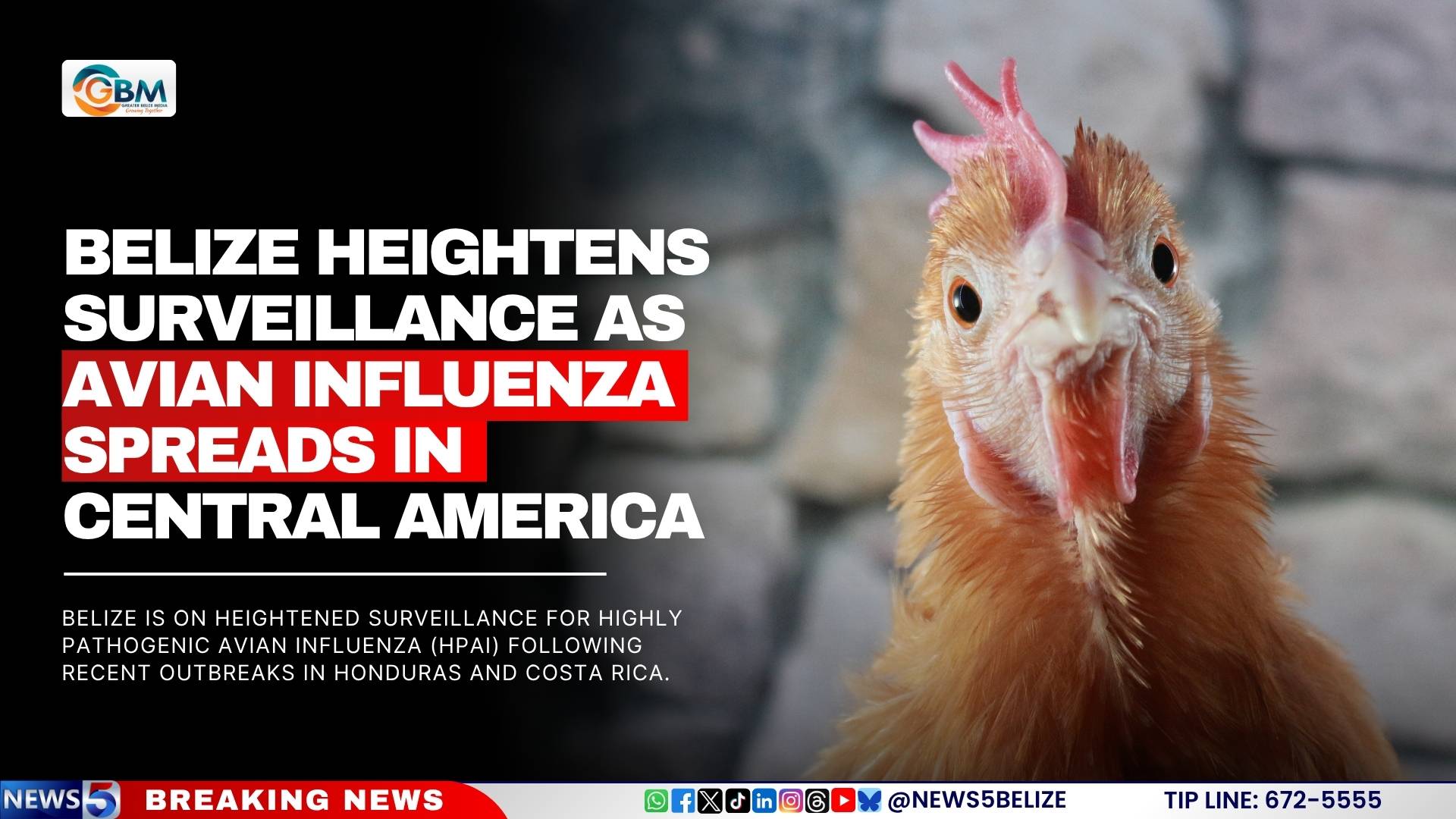
As Highly Pathogenic Avian Influenza (HPAI) continues to spread across neighboring Central American nations, Belize has activated enhanced monitoring protocols to block the virus from entering its borders, the Belize Agricultural Health Authority (BAHA) announced in an official statement this week.
Recent confirmed outbreaks in Honduras and Costa Rica have pushed Belize’s agricultural and public health bodies to raise their risk alert, despite the country currently reporting zero confirmed HPAI cases. BAHA officials emphasized that the threat of incursion remains exceptionally high, driven by two key factors: Belize’s shared geographic proximity to the affected countries, and the natural migration patterns of wild birds that cross regional boundaries throughout the year.
To prepare for potential exposure, BAHA has issued clear guidance for three key groups: commercial poultry producers, small-scale backyard livestock owners, and the general public. All residents and visitors are instructed to immediately report any instances of sick or deceased birds—whether wild or domestic—to one of three relevant agencies: BAHA itself, the Ministry of Agriculture, or the national Forest Department. The public has also been advised to minimize contact with ill or dead birds, only handling or moving the animals when absolutely necessary, while farm operators have been ordered to strengthen on-site biosecurity protocols to reduce contamination risk.
For context, HPAI is an extremely contagious viral pathogen that primarily impacts avian species, including common commercial poultry such as chickens, turkeys, ducks, geese and quail, as well as wild bird populations. While the virus overwhelmingly targets birds, BAHA confirmed that rare spillover infections have been documented in both mammals and humans. Infected birds typically display recognizable symptoms, BAHA noted, including sudden unexplained death, lethargy, loss of appetite, nasal discharge, impaired coordination, swelling of the head and legs, and unusual discoloration of combs and wattles.
Beyond wild bird migration, BAHA also highlighted a persistent man-made risk: the illegal cross-border movement and importation of live birds and unregulated avian products. This illicit activity, the authority said, continues to pose a critical threat to Belize’s animal health status and broader national food security. If HPAI were to gain a foothold in Belize, BAHA warned, the consequences would be severe, threatening commercial poultry output, the livelihoods of thousands of people dependent on the industry, regional trade relationships, and the country’s ability to maintain a stable domestic food supply.