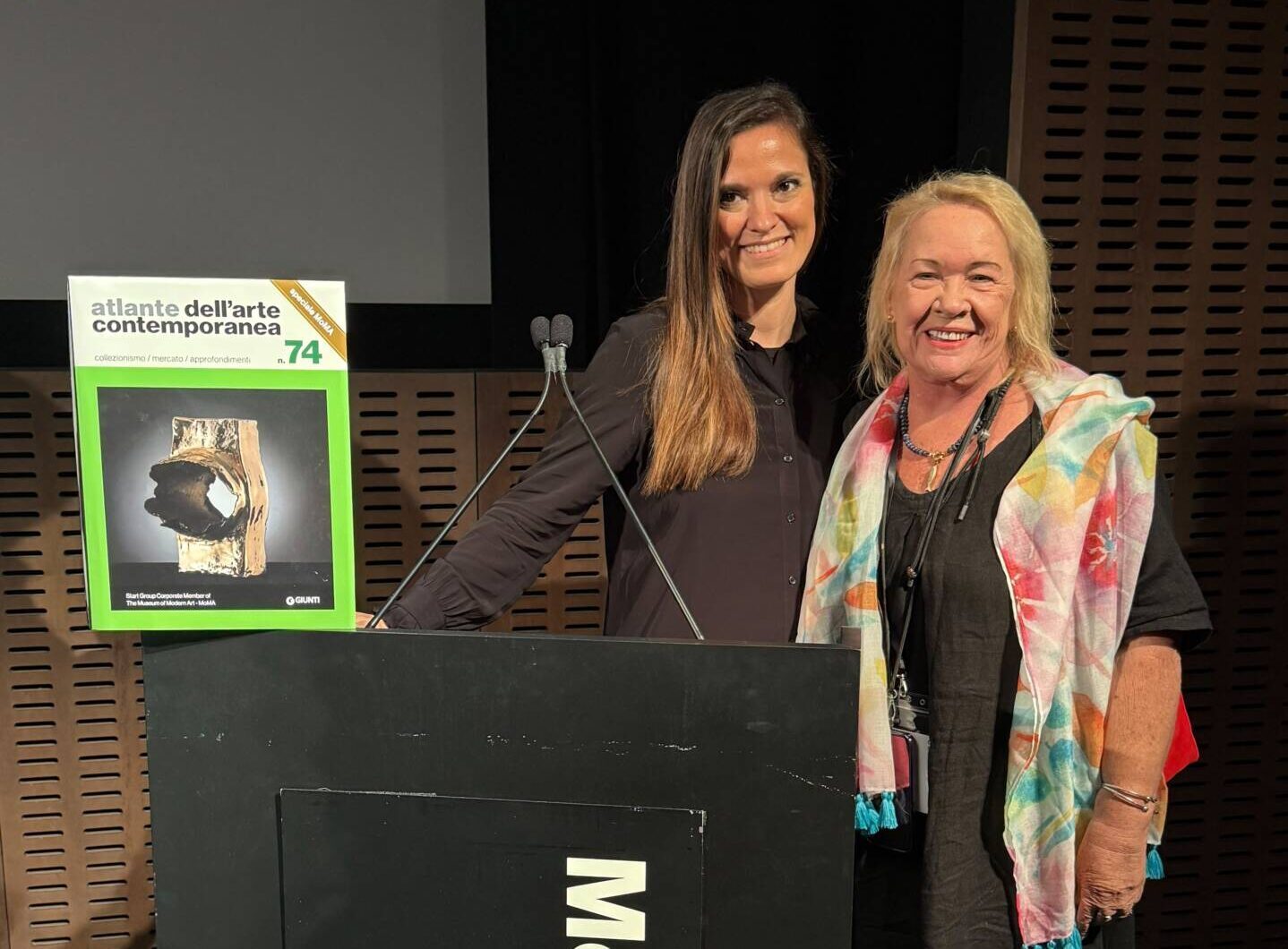
Last week, a landmark moment for Caribbean cultural outreach unfolded at New York City’s iconic Museum of Modern Art, where Dr. Susan Mains, Commissioner of the Grenada Pavilion at the Venice Biennale, took the stage to share the small island nation’s groundbreaking success on one of the global art world’s most prestigious stages. The event marked the official launch of *Atlante Dell’arte Contemporanea*, a definitive, comprehensive compendium curating the most significant works and voices in Italian and international contemporary art, that includes coverage of the Grenada Pavilion’s contributions to the global art ecosystem.
In her address at the launch, Dr. Mains reflected on how intentional cross-sector strategic partnerships have transformed the Grenada Pavilion from a simple national exhibition space into a dynamic hub for inclusive international cultural dialogue. For years, Grenada’s participation in the Venice Biennale has served as a critical conduit to center Caribbean creativity, academic insight, and artistic innovation before an international audience of curators, collectors, scholars, and art enthusiasts.
At the core of the pavilion’s rising international profile is the curatorial leadership of Daniel Radini Tedeschi, who has balanced global artistic context with deep respect for the specific historical and cultural experiences of the Caribbean. Under his direction, the pavilion has not only elevated its standing in the global art community but also created tangible, long-lasting opportunities for Grenadian and regional Caribbean artists to participate in global contemporary art discourse, extending their reach far beyond the limited run of the Biennale exhibition itself.
Dr. Mains emphasized that the success of the Grenada Pavilion would not have been possible without its core collaborative partnership with START, a multifaceted cultural organization far more impactful than a traditional publishing house. START’s team of seasoned cultural professionals brings cross-cutting expertise spanning scholarly publishing, exhibition curation, strategic communications, and international cultural programming, work that ensures the Grenada Pavilion’s contributions are not just displayed temporarily, but permanently documented, studied, and preserved for future generations.
A key unsung contributor to the pavilion’s success highlighted by Dr. Mains is Stefania Pieralice, whose exceptional organizational skill, relentless dedication to cross-cultural exchange, and meticulous attention to detail have turned ambitious creative visions into actionable, successful outcomes. Her work coordinating complex cross-border initiatives, nurturing durable relationships with leading cultural institutions, and overseeing the countless operational details required for high-profile exhibitions and publications has been instrumental in building the Grenada Pavilion’s reputation for professionalism and impact.
The broader START team’s collaborative mission aligns directly with the core vision of the Grenada Pavilion: their commitment to editorial and creative excellence has produced authoritative catalogues and scholarly publications that serve as permanent public records of Grenada’s participation in the Venice Biennale, making the work of the nation’s artists accessible to researchers, curators, collectors, and young creatives for decades to come.
The benefits of these long-term collaborative partnerships extend across every dimension of the pavilion’s work, including amplified international visibility for participating artists, peer-vetted scholarly documentation that preserves the pavilion’s legacy, expanded professional networks connecting Caribbean creators to leading global cultural institutions, robust critical and curatorial frameworks that deepen the impact of artistic presentation, sophisticated project management that advances cultural diplomacy goals, and lasting cultural impact that endures long after the Biennale concludes each edition.
As Grenada enters its next phase of participation in the Venice Biennale, with multiple successful editions under its belt and a growing global footprint, these collaborative partnerships remain central to the project’s mission. The pavilion’s steady growth demonstrates that small island developing nations can make outsized, meaningful contributions to global contemporary culture when they center strategic collaboration, intellectual rigor, and unwavering commitment to artistic excellence.
The ongoing partnership between the Grenada Pavilion, its curatorial leadership, and the START team represents a shared investment in inclusive cultural exchange, rigorous scholarship, and boundary-pushing artistic innovation. Together, the collaborators continue to build a platform that not only elevates Grenadian and Caribbean artists at the Venice Biennale, but also adds unique, vital perspectives to the global conversation around contemporary art and culture.