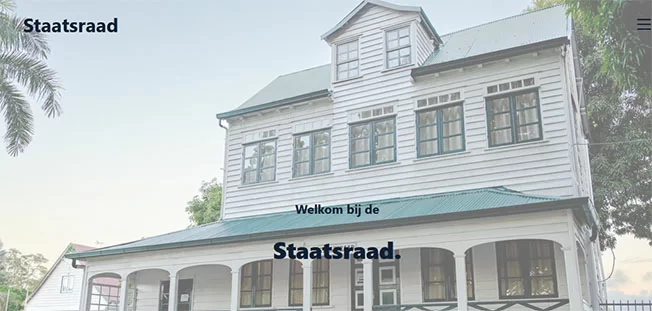
As Suriname prepares to welcome major new oil and gas revenues that stand to reshape its national economy, the country’s highest advisory body has issued a stark call for proactive long-term planning, warning against the risk of overreliance on the fossil fuel sector that has plagued resource-rich nations globally.
In a strategic advisory report presented Friday to President Jennifer Simons by Vice Chair Amzad Abdoel, the Suriname Council of State argues that annual budget deliberations currently underway in the National Assembly must extend beyond short-term spending allocations for the coming year. Instead, policymakers must center discussions on how the country can position itself to leverage both the opportunities and mitigate the inherent risks of the impending oil revenue influx. The report, the second of its series from the Council, draws on consultations with multiple government ministries, public agencies and independent economic experts to deliver approximately 30 targeted recommendations, united by a core message: expected oil revenues must be used to build structural economic resilience, not deepen dependence on a single volatile industry.
The Council highlights that decades of international experience demonstrate that resource-dependent economies that fail to pursue broad diversification remain extremely vulnerable to global oil price volatility and sudden external economic shocks. To guard against this so-called “resource curse”, the advisory body is pushing for immediate strategic investments in non-oil sectors including agriculture, manufacturing, tourism and export-oriented industries, which will allow Suriname to build a diversified economy anchored in multiple robust pillars.
Beyond diversification, the report identifies food security, public healthcare, education, national security, currency and price stability, and energy security as foundational priorities for long-term sustainable development that require enhanced policy focus and public resourcing. The Council also emphasizes that headline gross domestic product growth alone is not enough to deliver lasting shared prosperity for Suriname. To improve outcomes, the government must strengthen policy implementation efficiency and allocate public funds more strategically, by tying annual budget allocations directly to measurable social and economic outcomes, so the public can clearly track what impact public spending delivers.
The timing of the advisory comes as the National Assembly enters its deliberation phase for the new national budget. The Council stresses that this is a critical window to make bold policy choices that prioritize long-term economic resilience over quick short-term gains, as the country transitions into a new era of oil-led revenue flows.