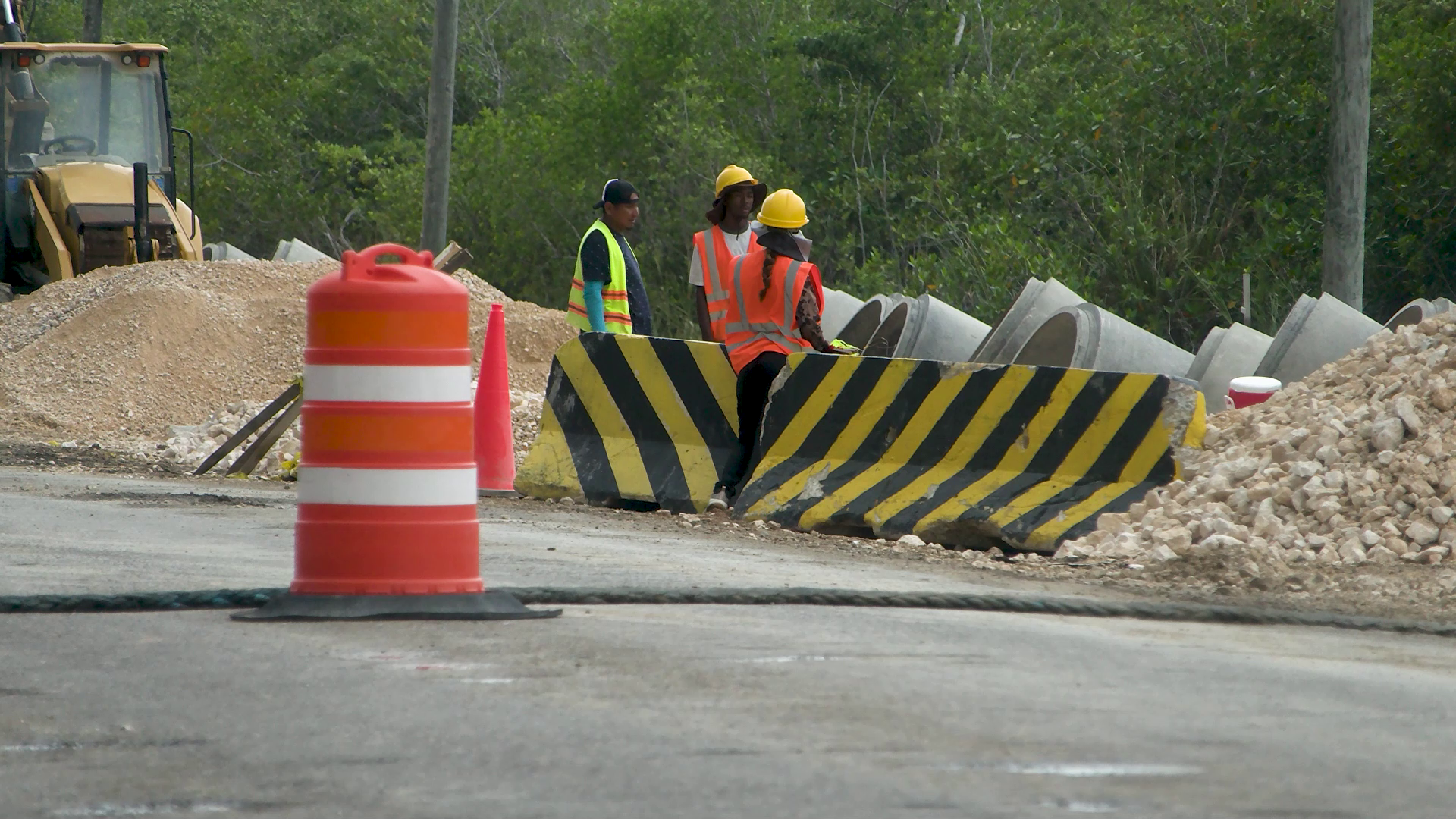
As vehicle ownership and traffic volumes climb steadily across Belize, a troubling upward trend in deadly head-on collisions has put intense public focus on whether the nation’s aging road infrastructure can keep pace with growing demand. The crisis has reignited calls for a transformative shift to modern, four-lane divided highways with physical medians that separate opposing traffic streams, a design widely proven to cut fatal crash rates. Right now, the Belizean government is funneling millions of dollars into rehabilitation work on the country’s two busiest corridors, the George Price Highway and Phillip Goldson Highway, leading safety advocates to question why full safety upgrades are not on the immediate agenda.
On Belize’s current two-lane highways, where one narrow lane serves traffic in each direction, even a small driver error or misjudgment during risky overtaking maneuvers can end in tragedy. Close calls and near-misses are now a daily occurrence for regular commuters, prompting road safety advocates to push for sweeping infrastructure changes. They argue that installing four-lane highways with median dividers would eliminate the risk of head-on collisions by keeping opposing traffic fully separated, directly saving dozens of lives each year.
But government officials say full conversion to four-lane highways is not a simple matter of political will, balancing competing demands of public demand, infrastructure costs and current traffic volumes. Julius Espat, Minister of Infrastructure Development, explained that international financial and technical bodies require rigorous traffic analysis to justify large-scale infrastructure investments. “When a highway is designed, you can’t just automatically decide you want a six-lane highway,” Espat noted. “Financial experts and technical experts assess whether current traffic flow, based on the country’s population and usage, justifies a project of that magnitude.”
Espat pointed out that Belize’s relatively small population makes the massive cost of a full four-lane conversion difficult to justify economically. “If we are already complaining that current highway costs are too high — and we have every right to question costs — imagine how tremendous the cost would be for four full lanes across the network,” he said.
Instead of full four-lane expansion, the government is rolling out a targeted, lower-cost alternative: adding dedicated passing lanes in high-traffic or high-risk stretches along the two major highways. “On certain sections of the George Price Highway, you will see dual lanes on one side for passing, and on other stretches you will see passing lanes on the opposite side,” Espat explained of the incremental approach. He framed infrastructure improvement as a long-term, generational process: “It’s a gradual process. When our term ends, we hope to have achieved a solid baseline of improvements, and the next administration — whether from the same party or another — can build on that work to improve infrastructure further over time.”
Newly released 2025 traffic data underscores the urgency of the road safety debate. Officials recorded more than 3,000 traffic accidents across the country last year, 94 of which were fatal. For many ordinary road users, these grim statistics make the case for immediate safety upgrades: they argue that divided lanes would directly prevent most head-on fatal crashes along the busy George Price and Phillip Goldson corridors.
For the current administration, near-term policy priorities remain focused on expanding connectivity rather than full conversion to four-lane highways, particularly opening new routes to improve access for rural communities and agricultural producers that drive Belize’s economy. But as traffic volumes continue to climb and fatalities hold steady, the core question looms large: as Belize’s population and economy grow, can its road network keep up not just with demand for greater connectivity, but with the growing need for life-saving road safety? This report was prepared by Paul Lopez for News Five.