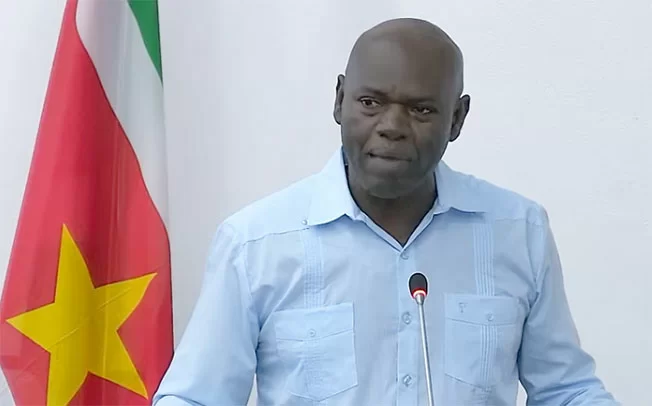
PARAMARIBO, SURINAME – June 26 – Ronny Asabina, leader of the BEP political faction in Suriname’s National Assembly, has launched a urgent call for the development of a formal national music policy, aiming to professionalize the country’s vibrant music sector and unlock its untapped social and economic potential.
Asabina laid out his multi-point plan during parliamentary budget debates, outlining concrete initiatives to expand access to music education, preserve Suriname’s unique cultural heritage, and support working artists across the country. His proposals have already earned broad cross-party support in the legislature.
One of Asabina’s core priorities is expanding the reach of the national People’s Music School, which currently operates only from a single central location. He argues that this outdated structure excludes talented young people in working-class neighborhoods, interior communities, and outlying districts. To address this gap, he is pushing for the establishment of new branch campuses in underserved areas including Combé, Domburg, and Brownsweg, ensuring that children and young people from all regions can access formal music training close to home. “We must bring opportunity for talent development directly to the people,” Asabina told the assembly.
A second key proposal calls for the creation of a dedicated chair in Surinamese music at Anton de Kom University of Suriname. Asabina emphasized that the long and diverse history of Surinamese music deserves systematic academic research, digital documentation, and long-term preservation for future generations. This institutional investment would not only protect Suriname’s cultural legacy but also strengthen the overall quality of music education across the country, he added.
To directly support working artists, Asabina has also proposed the establishment of a national music fund. The fund would provide financial support for critical career needs including studio recording, music video production, marketing, professional management, and international promotion. Complementing this fund, he called for the launch of a centralized national music platform that would bring artists, producers, venue operators, and media outlets together to collaborate on growing the domestic music industry.
Beyond supporting local creators, Asabina argued that Surinamese music should be leveraged more strategically as a tool for cultural tourism and cultural diplomacy. He called for greater promotion of Surinamese music through the country’s global embassies and at major international cultural events, raising the nation’s profile on the world stage.
Asabina stressed that music is far more than just leisure entertainment for Suriname. He framed the country’s rich musical tradition as a core pillar of national identity that unites diverse communities, supports public social well-being, and creates significant untapped economic opportunities for the nation. “Suriname has an incredibly rich musical tradition and a dynamic living cultural heritage, but the sector still does not receive the structural support it needs to thrive,” he said.
The BEP leader noted that the Surinamese music industry has survived and grown to date not because of government support, but despite a lack of government investment. He called on the national administration to develop a concrete action plan with clear timelines to implement the proposed reforms and strengthen the sector on a long-term, structural basis.
Asabina’s proposals have already garnered broad backing across the National Assembly. Speaking on behalf of the opposition NDP party, legislator Tashana Lösche confirmed her party’s support for the call to increase investment in talent development, expand music education access, and strengthen legal protections for the rights of Surinamese artists.