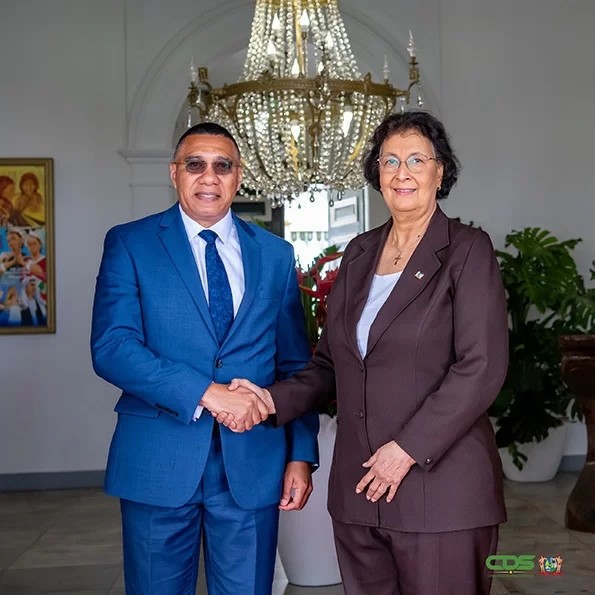
During an official visit to Suriname to attend the 6th Suriname Energy, Oil & Gas Summit & Exhibition (SEOGS 2026), Jamaican Prime Minister Andrew Holness has laid out a comprehensive vision for deepened bilateral collaboration between Jamaica and Suriname across four key sectors: energy, tourism, agriculture, and climate finance. In an exclusive interview with Suriname’s Communication Service (CDS) held Wednesday, Holness expressed deep honor for the invitation extended by Suriname’s President Jennifer Simons to address the regional conference, noting that SEOGS has grown into the Caribbean region’s premier gathering for oil and gas industry stakeholders.
Holness emphasized that the two Caribbean nations hold large amounts of untapped bilateral cooperation potential that has remained under-explored due to insufficient targeted investment in relationship-building to date, a gap he says is now set to be closed through renewed diplomatic and economic engagement.
At the top of the cooperation agenda is energy sector collaboration. Holness argued that regional energy security encompasses far more than just access to crude oil and natural gas reserves; sufficient refining capacity and streamlined systems to bring energy products to regional and global markets are equally critical components of a resilient energy system. While the foundational elements for a coordinated regional energy strategy already exist, he noted that fragmented policy and infrastructure across regional states require better alignment to unlock shared benefits.
Beyond energy, Holness highlighted untapped opportunities in the tourism sector. He pushed back against narrow framing of tourism as limited to coastal beach vacations, noting that every Caribbean nation holds unique tourism value rooted in its local population, natural landscapes, and one-of-a-kind cultural experiences. For Suriname specifically, Holness pointed to ecotourism as a clear differentiator that can set the country apart in a crowded regional tourism market. Combined with the rich cultural diversity both nations possess, Holness said the two sides can develop unique, high-demand tourism products that appeal to global travelers. To fully realize this potential, he noted, Suriname will need a robust legal and fiscal framework for tourism investment alongside a pipeline of skilled industry professionals, and Jamaica stands ready to share its decades of expertise and experience in the tourism sector with Suriname.
Agriculture represents another promising area for strategic partnership, Holness added, complementing planned collaboration in energy and tourism.
On the climate front, Holness sees significant room for joint action to secure international climate finance. He noted that access to global climate funds is becoming increasingly accessible for small island developing states like Suriname and Jamaica, though accessing these resources requires well-designed project proposals and strong administrative capacity to manage funded initiatives. With Jamaica building out robust expertise in climate finance access and Suriname expected to develop similar capacity in the coming years, the two nations can coordinate to pursue shared funding opportunities and strengthen their collective climate action.
Closing his remarks, Holness offered an optimistic outlook for Suriname’s economic trajectory: “Suriname stands on the cusp of accelerated economic growth. All the preconditions for broad-based development are already in place. Jamaica is positioned to be a strategic partner for Suriname across oil and gas, agriculture, and tourism, and we are ready to move forward together.”