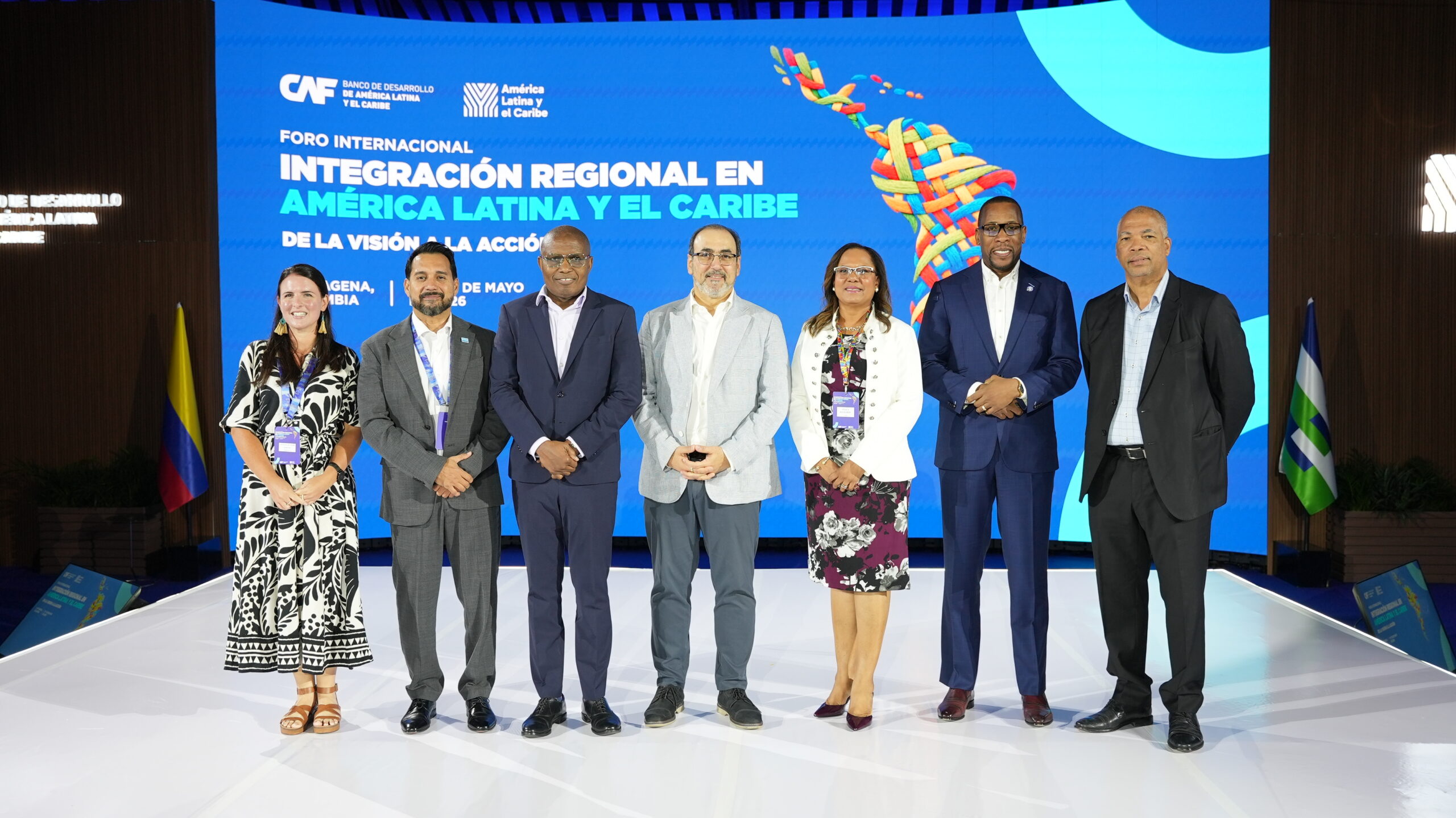
Against a backdrop of shifting global geopolitics and rising economic fragmentation, the Development Bank of Latin America and the Caribbean (CAF) has unveiled a landmark $10 billion investment pledge set to run through 2031, designed to speed up cross-regional integration and strengthen collective economic resilience across the bloc. The announcement was delivered by CAF Executive President Sergio Díaz-Granados at the conclusion of the high-profile International Forum on Regional Integration, hosted in the Colombian coastal city of Cartagena.
The multi-billion-dollar investment package will target seven high-priority sectors that are widely seen as foundational to deeper interconnectedness: cross-border physical and digital infrastructure, the global energy transition, expanded intra-regional trade, food system security, sustainable tourism development, and streamlined regional logistics. At its core, the initiative seeks to close persistent socio-economic gaps between member nations and elevate the entire region’s global competitive standing at a time when global trade systems are increasingly fractured.
In his address to forum attendees, Díaz-Granados emphasized that deeper integration is not an optional policy goal, but a non-negotiable imperative for advancing development, boosting competitiveness, and strengthening Latin America and the Caribbean’s position in the global economy. He called on member nations to deepen cross-border collaboration to counter growing global trade fragmentation and widespread financial market volatility. “Regional integration has already delivered important progress across the region, but it must now enter a far more ambitious phase of tangible implementation,” Díaz-Granados said. “Fewer barriers, more infrastructure. Fewer diagnoses, more tangible projects.”
The forum drew robust participation from senior Caribbean political and institutional leaders, reflecting a growing unified commitment to cross-regional development cooperation. High-level keynote contributions and insights came from a roster of top regional figures, including CARICOM Assistant Secretary-General Ambassador Wayne McCook, Eastern Caribbean Central Bank Governor Timothy Antoine, and Ian Durant, Director of Economics at the Caribbean Development Bank. Additional key dialogue participants included Martín Portillo from the Caribbean Catastrophe Risk Insurance Facility Segregated Portfolio Company (CCRIF SPC), the regional development insurer specializing in climate disaster risk, and Natalie McGuire of the Barbados Museum & Historical Society, all of whom joined discussions to map out practical, actionable pathways for greater regional alignment.
In a parallel move to streamline overlapping development efforts across the region, 15 leading regional institutions signed a historic “Declaration on the Convergence of the Processes and Mechanisms of Integration of Latin America and the Caribbean” during the forum. The agreement is designed to coordinate institutional capabilities, align long-term strategic priorities, and eliminate costly duplication of efforts across existing regional bodies. High-profile signatories to the declaration include the Economic Commission for Latin America and the Caribbean (ECLAC), the Amazon Cooperation Treaty Organisation (OTCA), the Organisation of Ibero-American States (OEI) and the Latin American Energy Organisation (OLADE).
This new $10 billion pledge builds on CAF’s 30-year track record of investment in regional integration. Over the past three decades, the bank has approved 118 dedicated credit operations totaling $16.73 billion for cross-regional integration initiatives across the bloc. This new investment envelope marks a major scaling up of CAF’s operations over the next eight years, with a clear focus on shifting from long-term policy dialogue to concrete deployment of infrastructure projects, ecosystem preservation initiatives, and broad-based digital transformation across the region.