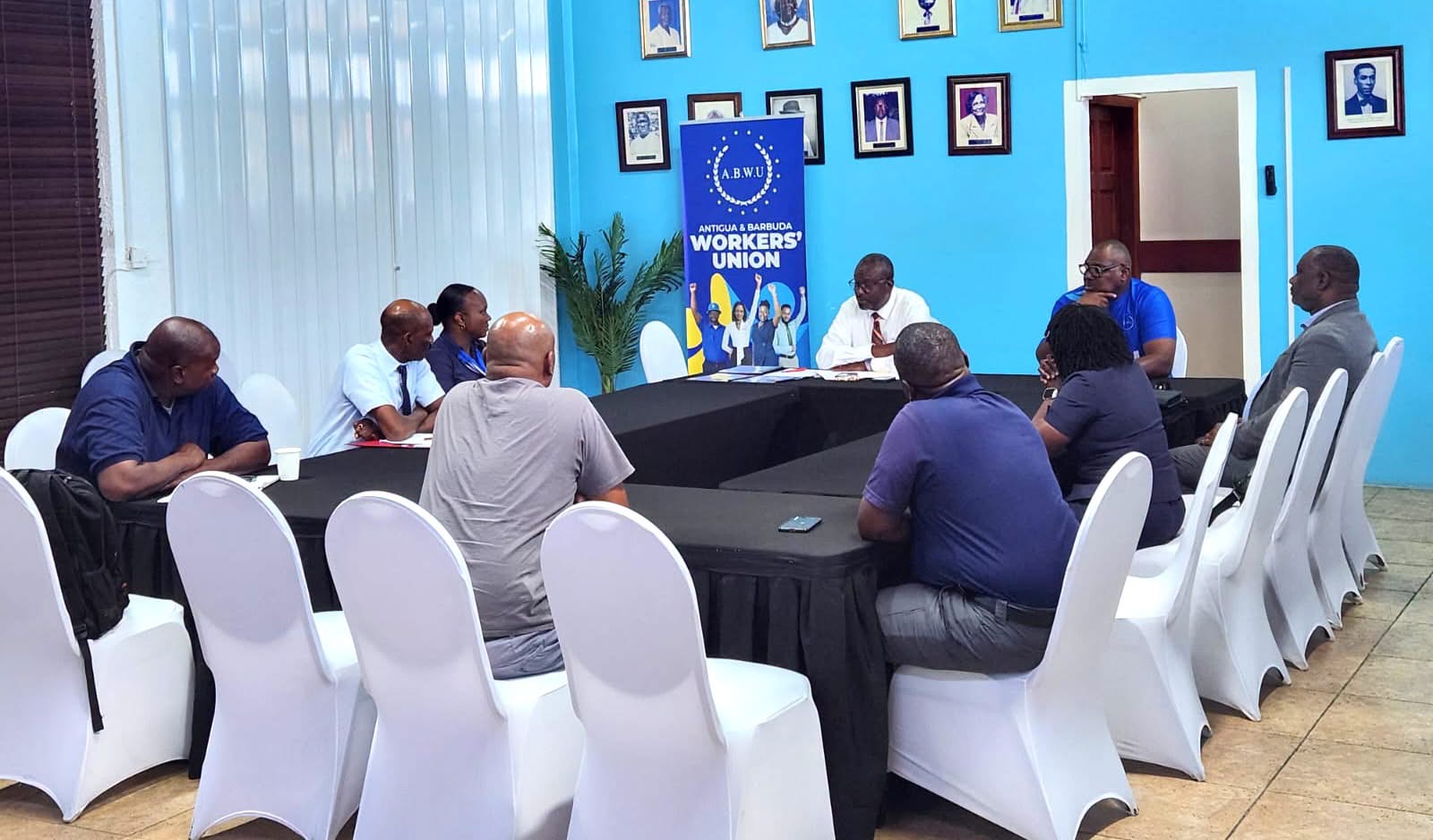
A recent gathering of the Airlines and Aviation Section of the Antigua and Barbuda Workers’ Union (ABWU) has shone a spotlight on two pressing workplace issues: unfair forced leave policies and underrepresentation of aviation workers, prompting union leadership to commit to targeted action for employee protections.
The meeting, which brought together top union officials and frontline shop stewards, served as a collaborative space for delegates to surface on-the-job grievances, review shifting dynamics across the country’s aviation sector, and map out collective strategies to advance worker rights. The most heated grievances centered on two vacation-related violations by one unidentified aviation employer: unjustified vacation blackouts and coercive forced leave.
Workers reported that the company blocks employees from taking leave during their preferred time blocks, even when staff submit formal requests with ample advance notice. In addition, multiple delegates shared accounts of workers being forcibly removed from company premises and ordered to take unscheduled leave against their will.
Responding to these allegations, ABWU General Secretary David Massiah made a public commitment to push back against what he calls the company’s unlawful, one-sided policy. He emphasized that the Antigua and Barbuda Labour Code explicitly requires mutual consent from both employers and employees when finalizing vacation scheduling, meaning the company’s current practices violate national labor legislation.
Beyond addressing immediate labor violations, the meeting also prioritized a long-term goal: growing union density across the entire local aviation sector. Section Chair Steveroy Phillip outlined that expanding membership is critical to ensuring more aviation workers can access the robust protections and benefits locked in through collective bargaining agreements.
“Our core priority right now is unionizing the ground handling staff at the airport, so they can secure the same fair terms and protections that the rest of us already enjoy,” Phillip said in remarks during the meeting. “We are calling on every current member to reach out to an unorganized colleague, talk to them about the value of our union, and help us build a stronger collective voice for all aviation workers.”
Phillip also addressed a third ongoing grievance: some employers have refused to grant workers scheduled time off to participate in official union activities, a practice he confirmed constitutes a clear violation of existing collective bargaining agreements between the union and sector employers.
Despite the range of challenges laid out during the meeting, Phillip struck an optimistic tone about the section’s growth trajectory. He noted that participation in union activities has been steadily increasing as the organization prepares for its 59th Annual General Conference, set to take place this coming September, and expects this upward trend to continue in the coming months.