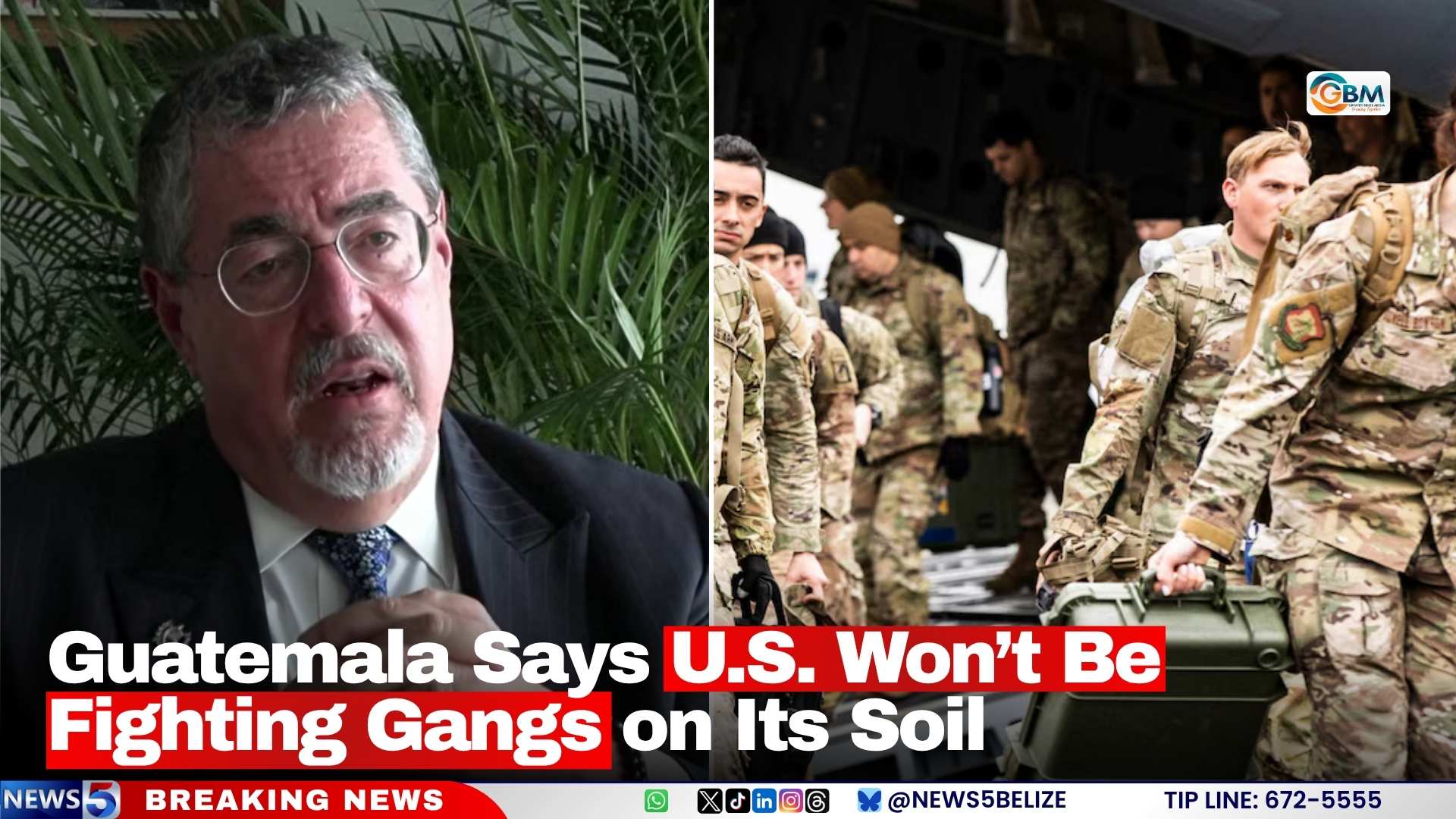
In a firm rebuke of proposed U.S. military action within its borders, Guatemalan President Bernardo Arévalo has publicly ruled out allowing American troops to conduct anti-gang and counter-narcotics operations on Guatemalan territory.
Arévalo made the clarification in an interview with Agence France-Presse on the sidelines of the Organization of American States summit held in Panama, confirming that while Guatemala actively seeks and welcomes international collaboration on security issues, its national constitution explicitly prohibits joint military operations with foreign armed forces.
The president’s statement was issued in direct response to recent remarks by U.S. Defense Secretary Pete Hegseth, who told CBS News that the U.S. was considering launching targeted strikes against transnational criminal gangs and drug trafficking networks in both Guatemala and Ecuador.
While Arévalo did not challenge the existence of existing bilateral security cooperation between the two nations, he emphasized clear legal and operational boundaries to that partnership. According to the Guatemalan leader, Washington’s involvement is restricted to three core areas: training for local security personnel, tactical planning support for anti-criminal raids, and cross-border intelligence sharing. All armed operations against domestic criminal organizations, he stressed, remain the exclusive responsibility of Guatemala’s own national security forces.
The exchange comes amid a broader expansion of U.S. military activity across Central and South America under the Trump administration’s renewed anti-drug offensive. Earlier this month, U.S. forces carried out a cross-border raid in Venezuela that resulted in the death of Hector Rusthenford Guerrero Flores, leader of the violent transnational Tren de Aragua gang, who carried a $5 million U.S. bounty on his head. President Trump later publicly shared footage of the operation on his social media platforms.
Beyond targeted raids on gang leaders, the U.S. has also launched a series of airstrikes against suspected drug smuggling vessels in the Caribbean Sea and Pacific Ocean. Official data from regional security sources indicates that more than 200 people have been killed in these air operations to date.