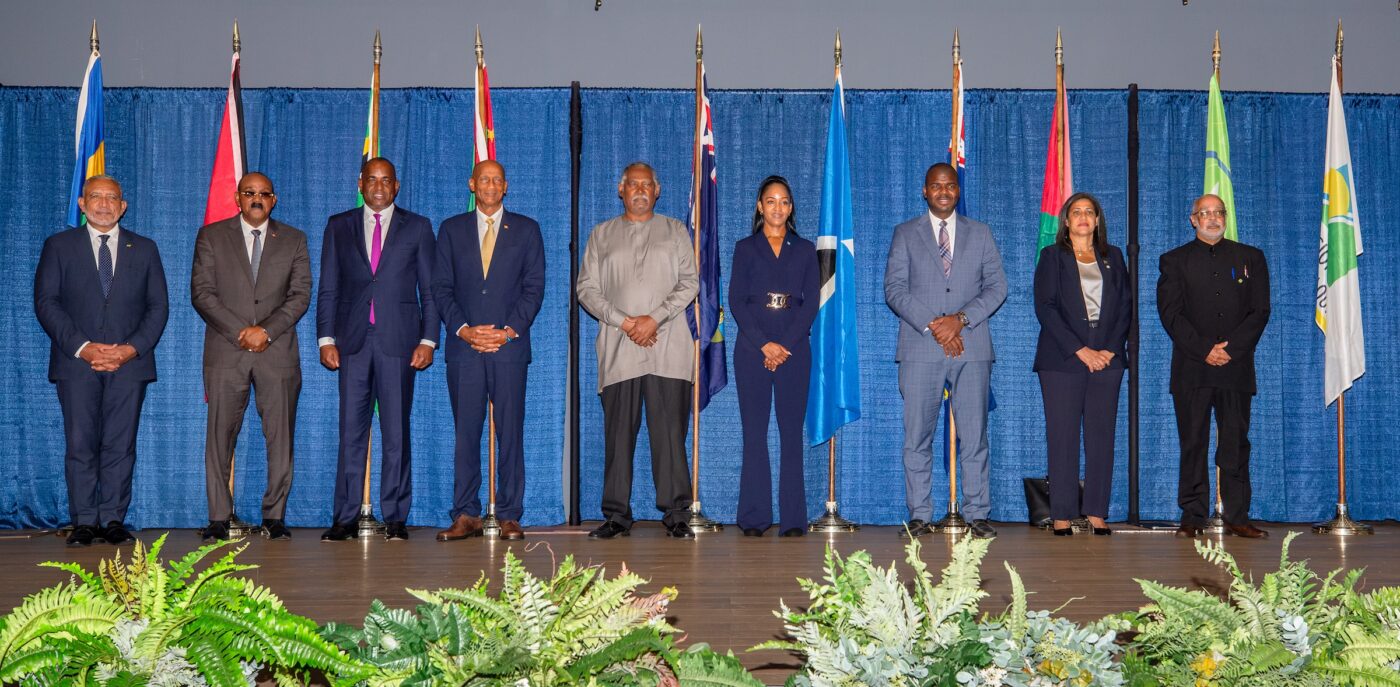
Amid rising geopolitical tensions and growing global uncertainty, leaders from the Organisation of Eastern Caribbean States (OECS) have greenlit the creation of a specialized high-level advisory team to coordinate regional negotiations with the United States over Washington’s controversial request to accept third-country deportees. This landmark decision was unveiled during the official opening of the 78th OECS Authority Meeting, hosted at the Royalton Resort in Deep Bay, where outgoing OECS Chairman and Prime Minister Godwin Friday formally passed the leadership gavel to incoming chair Gaston Browne.
In his opening remarks to the assembly of regional leaders, Friday framed the U.S. request as one of the most pressing policy challenges the Eastern Caribbean bloc has confronted in decades, emerging at a moment of unprecedented global instability that already strains the region’s critical systems. “We are navigating an era of profound geopolitical uncertainty, the most impactful our region has seen in a generation,” Friday told delegates. “Broader tensions across our hemisphere send ripples that touch every part of our collective life: our national security, energy security, household living costs, migration patterns, and diplomatic standing.”
The U.S. proposal, first brought to OECS member states early this year, asks small Caribbean nations to take in migrants deported from the United States who do not hold citizenship in the receiving countries. Friday emphasized that the bloc has approached the request with extreme caution, as its potential ramifications cut to core national interests across the sub-region. To date, the matter remains under active review, with leaders flagging serious risks to public safety, strained limited national budgets, threats to long-term economic stability, and compromises to national sovereignty that could come from accepting additional non-citizen deportees.
“We are still working through this issue with great care because it carries serious implications for our economy, the personal safety of our citizens, the allocation of already scarce public resources, and our sovereign autonomy,” Friday explained. In response to the complexity of the negotiations, regional leaders voted unanimously to form the cross-bloc advisory body, which will bring together technical experts and senior representatives from all OECS member states to coordinate unified negotiating positions, whether members engage with Washington individually or as a collective group.
Beyond the immediate deportation issue, Friday used the platform to reaffirm the unique vulnerability of small island developing states to external global shocks. “What register as mere small tremors for large, powerful nations are felt as catastrophic earthquakes for us,” he noted. “As small island developing states, we end up bearing the worst, and longest-lasting, consequences of international events we had no hand in creating.”
For Caribbean governments across the region, the challenge of third-country deportations has grown increasingly urgent in recent years. Leaders are forced to strike a precarious balance between upholding long-standing diplomatic ties and humanitarian obligations, and protecting their limited institutional capacity, national security frameworks, and sovereign right to control entry into their territories.