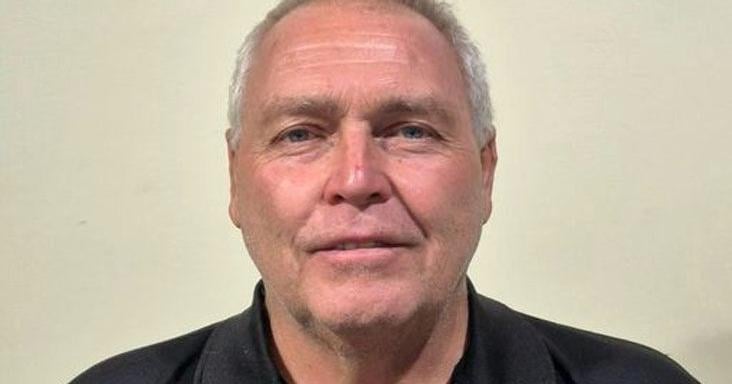
As the Tobago House of Assembly (THA) prepares to unveil its 2027 budget, key industry leaders across Tobago’s business and tourism sectors are sounding urgent calls for targeted intervention, warning that the island’s core tourism industry has spent decades in stagnation and now teeters on the edge of collapse. Reginald MacLean, head of the Tobago Hotel and Tourism Association, has painted a bleak picture of the current state of the island’s tourism economy, saying he holds little expectation for meaningful change from the upcoming budget address.
MacLean argues that Tobago’s tourism sector, which has failed to grow for more than 30 years, is “extremely dead” in its current state, and would be faring even worse without consistent visitor traffic from neighboring Trinidad. To reverse decades of decline, he outlined three non-negotiable priorities the THA must advance immediately: restarting operations at shuttered major hotel properties, approving a long-pending loan guarantee requested by tourism industry stakeholders, and restoring pre-pandemic air connectivity between Trinidad and Tobago. Pointing to stark long-term trend data, MacLean noted that international visitor arrivals plummeted from more than 90,000 in 2005 to just over 11,000 today, a drop that underscores the sector’s chronic stagnation. He also called for the reinstatement of 24 daily round-trip flights between the two islands, a service level that existed before the COVID-19 pandemic, and pushed for administrative reforms to cut red tape in land approval processes, which he says have repeatedly delayed and discouraged new investment in tourism infrastructure.
MacLean’s warning is echoed by Curtis Williams, chairman of the Tobago division of the Trinidad and Tobago Chamber of Industry and Commerce, who confirms that widespread financial strain is already pushing local businesses to the brink. Williams notes that multiple businesses across the island are struggling to meet payroll obligations amid weak economic activity, including one major resort that has gone four months without paying its staff. West Mount Irvine Bay Resort has confirmed the wage arrears but declined to offer further comment on the situation. Williams explains that the resort’s crisis is not an isolated case, saying many businesses are shifting funds between accounts just to keep their doors open.
While tourism remains the island’s long-term economic backbone, Williams says the construction sector offers a viable short-term avenue to stimulate economic activity while tourism recovery takes root. During pre-budget consultations with the THA’s Finance Secretary, Williams’ group called for targeted public funding to launch a new island-wide development program that would inject momentum into the sluggish construction sector, which is currently operating far below capacity.
The 2027 THA budget is structured around the administration’s newly launched “Pathway for Prosperity: Blueprint for Tobago 2026–2030,” a long-term strategic framework that lists sustainable tourism, food security, digital transformation, public sector strengthening, climate resilience, infrastructure development, and social inclusion for vulnerable groups as core policy priorities. The budget process launched in February 2026 with a planning circular sent to all THA divisions, followed by stakeholder consultations that ran from April 20 to June 2, 2026. The consultation process included input from eight distinct stakeholder groups, a final session with faith-based organizations, and more than 110 online public submissions. The 2027 budget will also incorporate four new administrative divisions into its framework: Legal Affairs; Strategic Planning and Development; Youth Empowerment and Sport; and Environment, Climate Resilience and Energy.
As of the third quarter of 2026, the THA has received 70% of its allocated parliamentary funding from central government, and 67% of its earmarked development budget. The original 2026 fiscal allocation set aside $2.742 billion for recurrent expenditure and $201.5 million for development programs, with $9.2 billion allocated to the Community-Based Environmental Protection and Enhancement Programme (CEPEP) and $18 million allocated to the Unemployment Relief Programme (URP). To address an underfunding gap in the development program, the THA reallocated $164.473 million from its recurrent budget, bringing total available 2026 funding to $2.577 billion for recurrent spending and $365.973 million for development projects. As of May 2026, approximately $1.51 billion in recurrent spending has been disbursed, with an estimated $130 million in development spending already allocated (final figures are still being compiled). Roughly $186.5 million in development funding has been released to THA divisions, while unspent balances totaling approximately $101 million were used to settle outstanding contractor payments dating back to 2021, as well as funding for CEPEP, URP, and the Island-Wide Road Improvement Programme. Despite ongoing fiscal pressures, the Finance Secretary has confirmed that the THA has no plans to implement layoffs, salary cuts, or reductions in contract employment for the coming fiscal year.