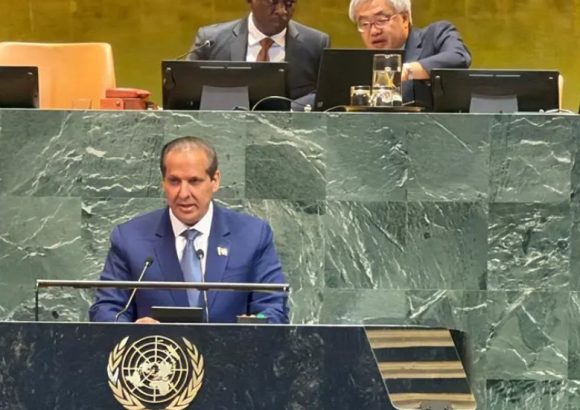
During a high-stakes United Nations High-Level Meeting on HIV/AIDS hosted at UN Headquarters in New York, the Dominican Republic has publicly restated its dedication to advancing a sustainable, cross-sector integrated, and community-focused approach to addressing the global HIV crisis. Health Minister Víctor Atallah, who represented the Caribbean nation at the 90th Plenary Session of the gathering, delivered a pragmatic address that balanced acknowledgment of global progress with a candid assessment of unmet goals.
Atallah noted that while the global fight against HIV/AIDS has yielded notable gains over the past decades, the internationally agreed 2025 treatment and prevention targets have not been reached on schedule. This shortfall, he emphasized, makes it urgent for the global community to confront deep-seated challenges that continue to hinder progress. Among the most pressing barriers he outlined are shrinking international financial contributions to global HIV initiatives, systemic inequities in access to high-quality HIV care and treatment services across different income groups and regions, and the ongoing societal stigma and legal discrimination that prevent many at-risk people from seeking testing and care.
The minister stressed that an effective, long-term response requires an honest accounting of both the victories already secured and the gaps that remain unaddressed. Only through this balanced assessment, he argued, can nations build a more equitable global response that leaves no community behind.
Shifting to the Dominican Republic’s domestic action plan, Atallah laid out the three core pillars of the nation’s updated national HIV strategy. First, the country is prioritizing the full elimination of vertical transmission of HIV, syphilis, and hepatitis B from mother to child, a key milestone for ending generational spread of the viruses. Second, the government is working to integrate all essential HIV services into national primary healthcare systems, as part of a broader push to expand universal health coverage for all Dominican residents. Third, the strategy targets gaps across the entire HIV care continuum, with the goal of improving patient retention in care and increasing rates of viral suppression among people living with HIV.
In closing, Atallah reaffirmed the Dominican Republic’s unwavering commitment to meeting the widely adopted international 95-95-95 targets. These global benchmarks are designed to ensure that 95% of people living with HIV know their status, 95% of those diagnosed receive sustained antiretroviral treatment, and 95% of people on treatment achieve durable viral suppression, a key marker of individual health and reduced transmission risk.