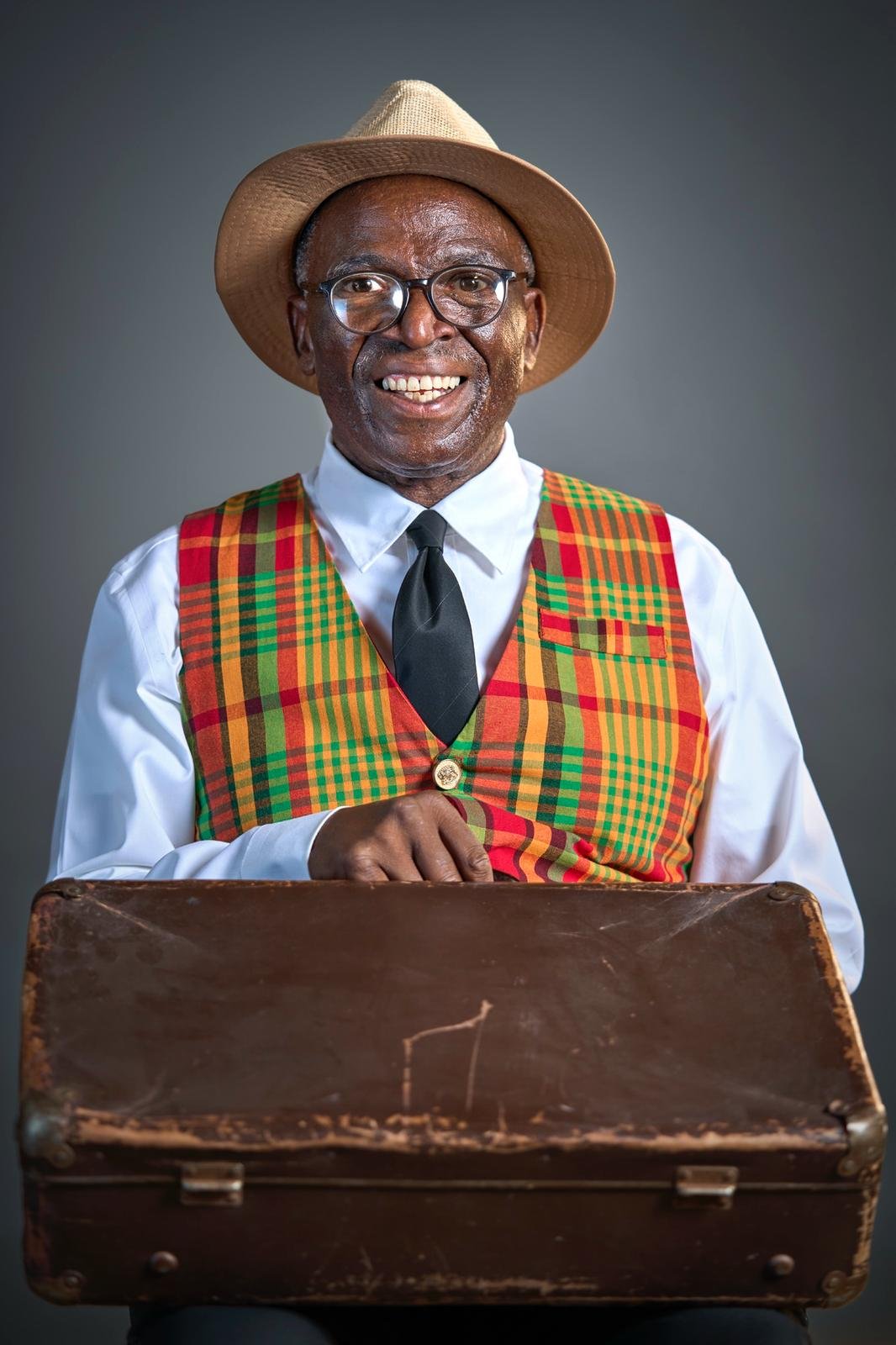
On June 20, 2026, London’s Jacksons Lane Arts Centre opened its doors to the 78th Windrush commemoration, hosting a special exhibition and event titled *Windrush Stories: Portraits & Voices* inside the venue’s Studio 1 in Highgate. At the gathering, established Antiguan and Barbudan author William took the stage to share a raw, deeply personal account of how his experience of migration, familial separation and fractured belonging has shaped every layer of his literary work to this day.
William’s journey begins in the small New Winthropes Village of Antigua and Barbuda, where he spent his entire childhood without any connection to his parents. As part of the mid-20th century Windrush migration wave that saw thousands of Caribbean citizens move to the United Kingdom to fill post-war labor gaps, William’s parents had relocated to Britain years before he was born. It was not until 1970, when William was just an unaccompanied minor, that he made the transatlantic crossing to reunite with them – a meeting that marked the first time he had ever laid eyes on the people who gave him life. Growing up, he had never even seen a photograph of his parents or heard the sound of their voices, making the transition to a new life with strangers in an unfamiliar country all the more disorienting.
In his address to attendees, William unpacked the layered emotional weight of that life-altering journey, while also pushing back against gaps in how the Windrush generation is often historicized. He pointed out that mainstream narratives around Windrush almost exclusively center the pioneers who made the initial voyage to Britain, leaving the lived experiences of their children and subsequent descendants unacknowledged and sidelined.
“Our voices matter too, and it is long past time they got the same attention as those of the first generation,” William told the crowd. He explained that every piece of his writing is crafted specifically to reframe the Windrush story through the lens of the descendants who came after the initial migration.
This mission is embodied in his published work *Betwixt 2 Shores*, a book centered entirely on the unique perspective of Windrush descendants. The text dives deep into themes of fractured identity, forced displacement, and intergenerational cultural memory, seeking to expand public understanding of the Windrush legacy beyond the common focus on arrival stories. For William, the most important story to tell is that of generations who grew up caught between two distinct cultural worlds, navigating the everyday realities of belonging to neither fully.
A tangible, evocative symbol of William’s decades-long journey is the worn small suitcase, called a “grip”, that he carried with him when he left Antigua more than 50 years ago. Today, the tattered case is preserved as a personal historical artifact, one that William says carries every ounce of his experience: the pain of leaving his childhood home behind, the struggle to adapt to a new country, and the quiet resilience that carried him through.
“The grip holds everything I went through,” he shared. “It is proof of what it means to leave one entire life behind and build another from scratch.”
The 78th Windrush celebration and accompanying *Windrush Stories: Portraits & Voices* exhibition are part of a broader, ongoing push to protect and amplify under-told Windrush narratives. Through visual portraiture, firsthand testimony, and creative literary expression, organizers work to ensure that both the original Windrush pioneers and their descendants are formally recognized as core parts of Britain’s ever-evolving cultural history.
For William, the 2026 commemoration was more than a moment to look back on his own story. It was another step forward in his lifelong mission: to pull the voices of Windrush descendants out of the margins of history and place them firmly at the center of the full Windrush narrative.