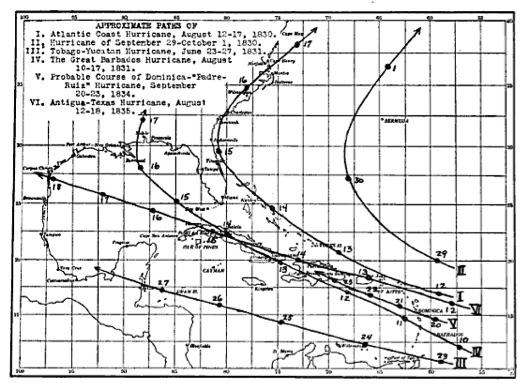
On June 23, 1831, a rare and destructive hurricane made an unexpected landfall across the southern Caribbean, bringing widespread devastation to the islands of Trinidad, Tobago, and Grenada while upending long-held local knowledge of Atlantic storm season patterns. Every child growing up in Grenada learns a traditional rhyme that outlines the expected window of hurricane risk: “June, too soon / July, stand by / August, a must / September, remember / October, all over!” This 1831 storm shattered that conventional wisdom, arriving far earlier than any major hurricane in living memory, and striking well south of the typical Atlantic hurricane belt that historically has been the primary zone of storm activity.
Residents of Grenada awoke on the morning of Thursday, June 23 to a series of unsettling, unseasonable signs that something extraordinary was unfolding. The sea grew unusually turbulent, emitting a low, unnerving roar that clashed sharply with the dead stillness of the surrounding air, leaving locals with a vague, unexplainable sense of dread. The sky overhead was heavy and dark from dawn, but the full force of the hurricane did not begin to build until close to midday. The storm reached its peak intensity between 3 and 4 o’clock in the afternoon, before gradually weakening and moving off the island. While the damage to infrastructure, agriculture, and property across Grenada was crippling, historical accounts note that only one life was lost on land during the event.
The storm’s fury was far more dangerous for vessels caught at sea off the Grenada coast. Captain Charles Cooper, commander of the mail schooner *Friends*, which operated a regular route between Trinidad, Grenada, and St. Vincent, recorded that his ship encountered a catastrophic gale just five leagues south of Grenada. The storm raged without pause for five full hours, forcing the vessel almost onto its beam ends at the height of the tempest. On board were Captain J. M‘Gregor of the British Royal Regiment, along with multiple other passengers. Cooper later reported that every person on the vessel—passengers, master, and crew alike—fully expected to be swallowed by the churning, foaming ocean and perish at sea.
Across Grenada, the hurricane wiped out nearly all standing crops and family provision grounds, including agricultural holdings at the Lataste Estate in the island’s northern St. Patrick Parish. At the time, the estate depended on enslaved labor, and the destruction of food supplies left enslaved people in a state of desperate hunger. Historical records note that with no other food available, enslaved workers were forced to eat unripened crops, which caused widespread illness, and ultimately left them dependent on overpriced rations of imported grain to survive.
Contemporary observers across the region recorded that the 1831 hurricane was the most severe storm to hit the southern Caribbean since the devastating Great Hurricane of October 1780, one of the deadliest Atlantic hurricanes in recorded history. While rarely hit by hurricanes, Trinidad sustained only minor damage from the 1831 storm, but neighboring Tobago suffered extensive destruction, with particularly severe damage to ships anchored in Scarborough Bay. The nearby island of St. Vincent also escaped with only minimal harm, leaving Grenada and Tobago to bear the brunt of the unprecedented early-season storm.
This report was originally published as part of the A-Z of Grenada Heritage series by John Angus Martin, with content attribution to the contributor and disclaimer of editorial responsibility by NOW Grenada.