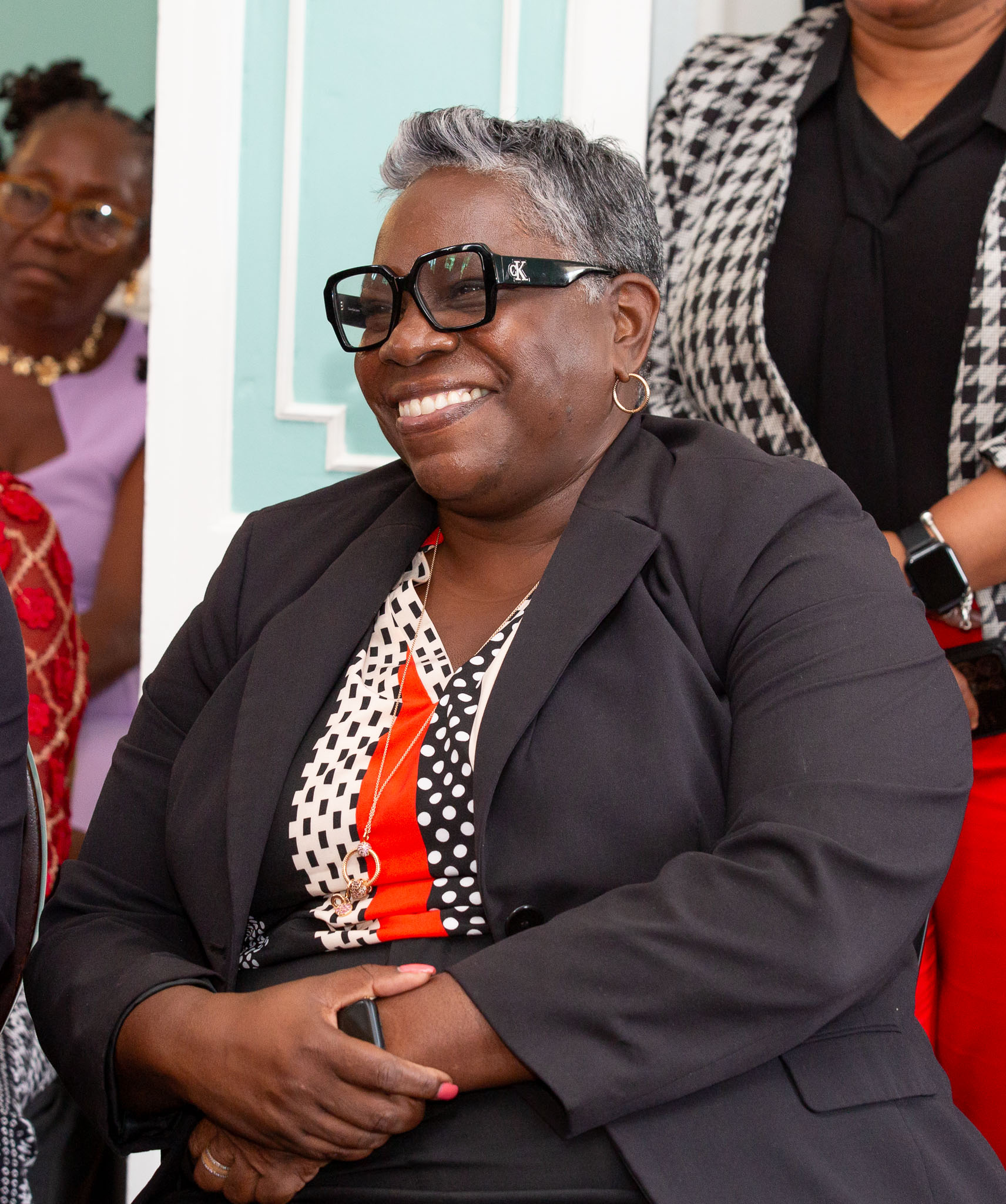
A former government minister and attorney from Antigua and Barbuda is pushing back against critics of the administration’s landmark education policy, framing free first-degree tertiary education as a foundational long-term investment rather than a hollow political gesture. Samantha Marshall, who made the case for the policy in a recent detailed statement, has drawn a parallel between current pushback against the reform and historical opposition to the establishment of the University of the West Indies (UWI) Five Islands Campus at its current location.
Marshall pointed out that despite loud objections to the campus’s site selection when it was founded in 2019, the institution has already delivered tangible, impactful results: it has produced nearly 500 local graduates to date, all of whom have strengthened the country’s human capital and advanced national development. “The site they deemed unsuitable has since produced nearly 500 graduands,” Marshall noted, highlighting that past naysayers have been proven wrong by measurable progress.
The former minister emphasized that the new policy of eliminating tuition fees for first-degree programs, alongside cutting costs for the Bachelor of Laws program by 50%, should not be mischaracterized as charity or a superficial move to win political support. Instead, she argued, it is a deliberate strategy to cultivate the next generation of skilled professionals, entrepreneurs, and public servants that will drive sustainable economic and social growth across the islands. Removing financial barriers to higher education, Marshall contended, does not only benefit individual students — it empowers entire communities, strengthens domestic institutions, and lays the groundwork for decades of future prosperity.
Marshall also called out opposition critics for failing to propose alternative policies to address the country’s education accessibility gaps, recalling a similar dynamic from last year when the government introduced fully state-funded CXC exam fees for public school students. On that occasion, members of the opposition United Progressive Party (UPP) admitted they had been personally covering fees for struggling families out of pocket, but never advanced a formal policy solution to the crisis, Marshall said. The current government, by contrast, listened to public concerns and implemented systemic change.
She also highlighted a striking irony in the current debate: many of the most vocal opponents of free tertiary education have family members who will directly benefit from the policy, with their children, nieces, and nephews set to access tuition-free training at the UWI campus. Marshall argued that opportunistic opposition for opposition’s sake is an irresponsible luxury that a developing nation like Antigua and Barbuda cannot afford.
Reaffirming the policy’s core purpose, Marshall emphasized that expanding access to the globally respected UWI system is a transformative step for the country. “When we remove the financial barrier to education, we do not simply put certificates and degrees in the hands of individuals — we place tools of transformation in the hands of an entire generation,” she explained. An educated population drives more robust civic participation, stronger economic output, and more effective implementation of national development agendas. Closing with a sharp rebuke to claims that the country cannot afford the reform, Marshall said the real question facing the nation is not whether the policy is affordable, but whether Antigua and Barbuda can afford to skip investing in its people’s future: “The question is not whether we can afford to do this. The question is whether Antigua and Barbuda can afford not to.”