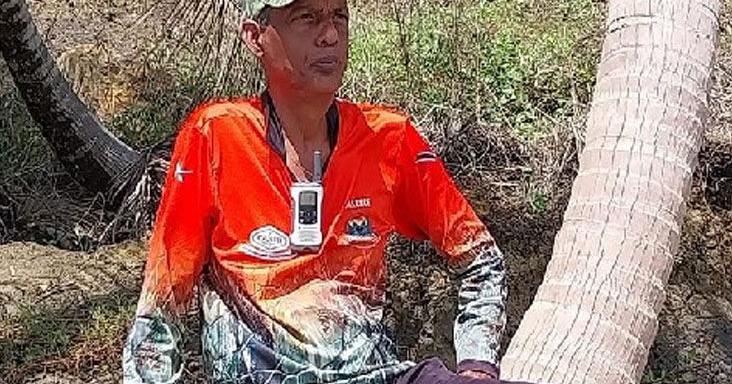
As the Caribbean Secondary Education Certificate (CSEC) examinations wrapped up on June 19, the head of one of Trinidad and Tobago’s leading volunteer search and rescue organizations is sounding a warning: historical data points to an upcoming uptick in reported cases of missing teenage girls, even as overall missing person statistics have dropped sharply so far this year.
Vallence Rambharat, leader of the Hunters Search and Rescue Team (HSRT), shared his analysis in an interview with the Sunday Express from Chase Village last month, noting that recurring patterns around major public holidays, seasonal events, and school break periods have consistently shaped missing person case volumes. From Christmas and Carnival to Point Fortin Borough Day and the annual August school vacation, Rambharat explained, these post-event periods almost always see an increase in young people leaving difficult home environments.
Current data already shows a dramatic downward shift in the share of missing person cases involving runaway teenage girls. In 2022, this group made up 38% of all missing person reports across Trinidad and Tobago. Through the first part of 2026, that share has fallen to just 14%, Rambharat said. The overall volume of missing person reports has also dropped significantly, averaging only 22 new cases per month this year compared to higher numbers in previous years.
But despite these encouraging trends, Rambharat emphasized that teenage girls who go missing remain the most widely misunderstood group of missing persons in the country. He pushed back against the widespread public perception that most of these young people run away from home simply to pursue romantic relationships, a harmful stereotype he said leads to premature judgment and underinvestment in resolving cases.
“Most people just say they run away with a man, and that is not the full story,” Rambharat explained. “While that may sometimes be the outcome, the root cause is almost always severe instability and hardship at home. These girls are dealing with chaotic, unsafe home environments, and they are just looking for a way out.”
Rambharat detailed the core underlying issues that drive many teenage runaways: physical, emotional, and sexual abuse, chronic neglect, incest, and persistent socio-economic hardship that makes home life untenable for minors as young as 16 and 17. In many cases, he added, vulnerable teenagers who leave home end up falling for manipulative relationships outside the home that compound their original problems, leaving them in far more dangerous situations than they left behind.
Because of these complex underlying issues, the HSRT often partners with the Children’s Authority and Child Protection Unit to conduct deeper investigations into cases of missing teenage girls, rather than treating them as routine runaways. Rambharat noted that many of these young people open up to rescue team members once they are located, confirming the pattern of domestic hardship that led them to leave.
Beyond teenage girls, Rambharat highlighted two other high-priority groups that require more public awareness and systemic support. The HSRT’s most concerning caseload involves adults between the ages of 20 and 50, the majority of whom are women who intentionally leave toxic situations and do not want to be located by family or authorities. When the HSRT locates these individuals, Rambharat said the team honors their requests for privacy, keeping their location confidential to allow them to build new, safe lives.
The second most misunderstood group, Rambharat added, is elderly adults, particularly those living with undiagnosed dementia. He urged family members to educate themselves on the early warning signs of cognitive decline and to seek regular medical check-ups for all relatives over the age of 60. Catching dementia early, he explained, can help families put safeguards in place to prevent elderly adults from wandering off and becoming lost.
When asked if Trinidad and Tobago is facing a hidden crisis of missing persons, Rambharat framed it as a manageable but underaddressed problem, not a full-blown crisis. He credited the HSRT’s widespread use of social media to publicize missing person cases with helping to bring broader public attention to the issue in recent years.
To improve the country’s overall response to missing person cases, Rambharat is calling on the Trinidad and Tobago government to establish a dedicated, centralized missing persons unit that unifies search and rescue resources across the Police Service, Fire Service, Coast Guard, and Defence Force. Currently, Rambharat argued, different agencies operate in isolated silos, creating unnecessary coordination delays and slowing response times for critical cases.
He also called for increased public investment in specialized search and rescue equipment, including upgraded drones, advanced sonar technology, purpose-built utility vehicles, and a dedicated emergency response helicopter. Rambharat pointed to a recent high-profile extraction of a hiker with a broken leg from a remote trail to illustrate the gap in current resources: it took the Defence Force 48 hours to deploy assistance, a delay that could have been avoided entirely if a dedicated helicopter was available for emergency response.
A dedicated unified unit and upgraded equipment, Rambharat said, would drastically cut response times and improve outcomes for the most urgent missing person and search and rescue cases across the country.