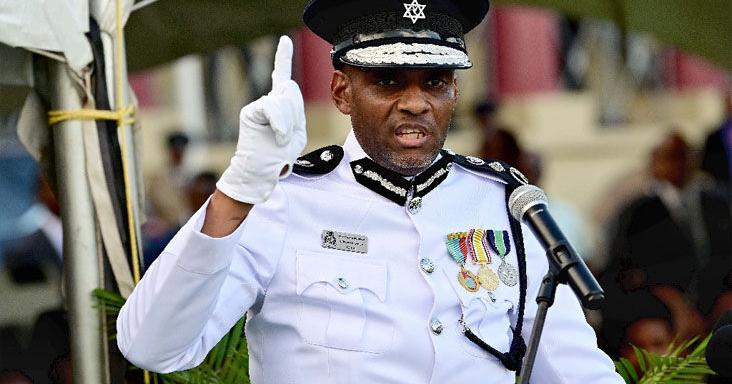
One year after taking the helm of the Trinidad and Tobago Police Service (TTPS), Commissioner Allister Guevarro has reflected on a turbulent 12 months marked by notable crime reduction progress, unanticipated financial challenges, and ongoing efforts to modernize the national law enforcement agency. Appointed on June 17, 2025, with his term officially launching the following day, Guevarra is currently serving a one-year probationary period, and as of his first anniversary press briefing, no official confirmation regarding his permanent appointment has been released by the Police Service Commission.
In a wide-ranging interview held at the Police Administration Building in Port of Spain, Guevarro opened by acknowledging the public and internal support that greeted his appointment, before turning to one of the most debated policies of his tenure: the national state of emergency (SoE) enacted to combat rising violent crime. Shortly after he assumed office, the SoE became the center of national discourse, with critics questioning whether the TTPS had grown over-reliant on extraordinary emergency powers to address persistent criminal activity. Rejecting these claims, Guevarro emphasized that the TTPS has relied on structured, long-term strategic crime-reduction plans since the early 2000s, framing the SoE not as a replacement for existing strategies, but as an additional set of tools to amplify ongoing work.
Two emergency provisions, he noted, delivered particularly tangible value: preventive detention orders and the authority for officers to conduct warrantless entries to search for suspects or contraband. These measures added a critical new layer to the TTPS’s crime-fighting capabilities, Guevarro said, enabling the service to regain better control over widespread criminal activity. The results, he argued, are visible in official crime statistics: September 2025 recorded just 20 homicides, marking the lowest monthly murder count the country has seen in roughly 15 years. For the full year 2025, the national homicide total fell to 369, down from a 2024 high of 629 – a 41% reduction that Guevarro called a landmark achievement. He also reported a roughly 30% drop in all categories of serious crime, adding that the downward trend in criminal activity has continued into 2026. The Commissioner credited the hard work of rank-and-file officers across the country for these gains, rather than attributing the progress to his own leadership.
Despite these statistical gains, Guevarro acknowledged a key gap between data and public experience: many residents still report not feeling safer, and the widespread perception that crime remains unaddressed has not shifted alongside falling crime rates. “I know the public will say that they are not feeling safe and there is a public perception that crime is still high. But the statistics do speak for themselves,” he said.
Beyond crime policy, Guevarro revealed a major unaddressed challenge facing the TTPS: an internal financial audit uncovered approximately $500 million in outstanding debt owed to private suppliers and service providers. The liabilities span a wide range of operational needs, from information technology infrastructure and specialized equipment to general support services. The Commissioner confirmed that a full report on the debt has been submitted to Minister of Homeland Security Roger Alexander, noting that constrained government budget resources will force the TTPS to implement strict spending prioritization moving forward. Even with fiscal constraints, Guevarro reaffirmed that key priorities including overtime pay for officers and the rollout of body-worn cameras for frontline staff remain on the agency’s agenda.
Modernization and internal institutional reform remain core long-term objectives for Guevarro, with digital transformation of the TTPS topping his priority list. To cut costs and avoid unnecessary external spending, he said the service will leverage existing technical expertise already present within the TTPS workforce rather than relying on expensive third-party outsourcing. Guevarro also plans to revive in-house technical capabilities that the service previously maintained, including on-site vehicle repair and body shop operations. Beyond cutting costs, he noted that these in-house programs could create new employment pathways for trade school graduates across the country while helping the TTPS maintain its large fleet of patrol and operational vehicles. Looking further ahead, Guevarro aims to attract recent university graduates to fill specialized roles in information technology and crime scene investigation, and has outlined an ambition to establish Trinidad and Tobago as a regional hub for specialized law enforcement training for the Caribbean.
Guevarro also addressed the most high-profile criticism of his first year in office: controversy over his decision not to suspend officers connected to the high-profile police-involved incident involving Joshua Samaroo and Kaia Sealy. Standing by his original decision, the Commissioner argued that administrative discipline could not be fairly implemented before independent investigators completed their work. Given the information available to him at the time, Guevarro said he could not in good conscience move forward with suspensions prematurely. The case is currently before the national courts, with the state set to present 30 witnesses and a large collection of evidence, and Guevarro noted that due process must be allowed to run its course. He acknowledged that the TTPS cannot meet every public expectation, but reaffirmed the service’s commitment to fair, professional law enforcement across all communities.
Addressing longstanding public complaints about officer conduct and customer service during interactions with community members, Guevarro admitted that the TTPS continues to receive regular reports of poor treatment. To address this gap, he said the service has rolled out ongoing mandatory customer service training for all officers, with the goal of improving positive engagement between law enforcement and the public.
When asked to rate his own performance over his first year in office, Guevarro declined to score himself, emphasizing his role as a public servant. “I am a public servant. I work for you,” he said. “Despite whatever else, you are the ones who have to say how you rate me. It is not up to me to say how I would have functioned during the year.”