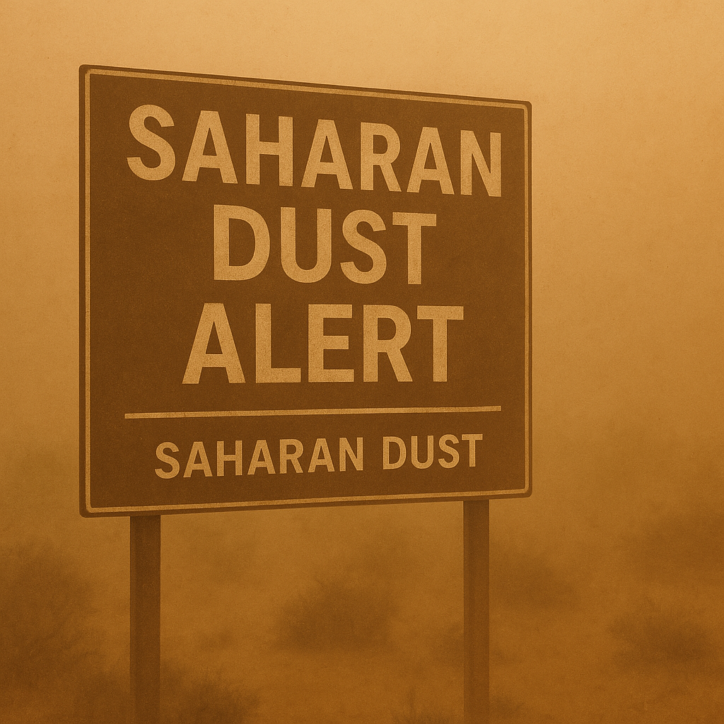
Residents of Antigua and Barbuda are bracing for three days of reduced air quality after national weather officials issued an official alert for an incoming surge of Saharan dust, set to impact the islands from Thursday morning through Saturday. The warning, published by the Antigua and Barbuda Meteorological Service at 9:45 p.m. local time on Wednesday, marks the 13th significant Saharan dust event to reach the twin-island nation so far this year. The incoming dust cloud is projected to drive up concentrations of fine particulate matter, pushing the country’s Air Quality Index into the moderate range, between 51 and 70 on the standard measurement scale. This reading activates the national Alert Level II for air quality.
While the overall public health risk remains low for the general population, vulnerable groups face increased potential for mild to moderate health impacts, meteorologists have emphasized. At-risk populations include individuals living with chronic respiratory conditions such as asthma, those with pre-existing heart disease, older adults, and young children. Health and weather officials are urging people who fall into these sensitive categories to keep a close watch on updated air quality forecasts, and to take proactive steps to limit exposure during the event.
Even though moderate air quality is still classified as broadly acceptable for most residents, a small subset of people with heightened sensitivity to air pollution may still experience adverse health effects, the bulletin clarified. Official guidance advises active children and adults, along with anyone diagnosed with a respiratory illness, to cut back on extended outdoor physical activity for the duration of the dust event.
Saharan dust surges are a predictable annual occurrence for Caribbean nations, including Antigua and Barbuda, during the Northern Hemisphere summer months. Large plumes of fine desert dust are carried westward across the Atlantic Ocean by steady trade winds, and when they reach the Caribbean basin, they often bring widespread hazy skies and temporary dips in regional air quality. Seasonal monitoring systems track these events as they travel across the ocean, allowing local officials to issue advance warnings to at-risk communities.