Jamaica’s main opposition party is ratcheting up public pressure on Prime Minister Andrew Holness, calling for the immediate removal of a sitting Cabinet minister who has been recommended for criminal prosecution on charges of illicit enrichment.
The target of the pressure campaign is Dr Andrew Wheatley, who currently holds the role of minister without portfolio in the Office of the Prime Minister, overseeing the science, technology and special projects portfolio. The controversy ignited this week after Jamaica’s Integrity Commission (IC) tabled a damning investigative report in Parliament, which formally recommended that Wheatley face criminal charges for unlawful gain as a public official. Since the report’s release on Wednesday, the opposition People’s National Party (PNP) has mounted a sustained push for his ouster.
During a press conference held Thursday, PNP leaders challenged the prime minister’s decision to reappoint Wheatley to Cabinet, pointing to a long history of unresolved controversy surrounding the St Catherine South Central Member of Parliament. Wheatley’s first tenure in Holness’ Cabinet ended in July 2018, when he stepped down as energy minister amid sprawling scandals tied to state agencies under his oversight. After seven years on the backbenches, he was reappointed to Cabinet following the ruling Jamaica Labour Party’s (JLP) 2025 general election victory.
In a 2022 exclusive interview with the Jamaica Observer, Wheatley framed his 2018 resignation as a formative learning experience. “To be quite honest, I am just going with the flow. I am always willing to serve, and I have been serving while outside the Cabinet,” he told the outlet at the time. “There are definitely things that I could have done differently, and, as a student of life, I believe that every experience is a learning process, and I believe that God afforded me the opportunity to experience these challenges to learn to be a better person.”
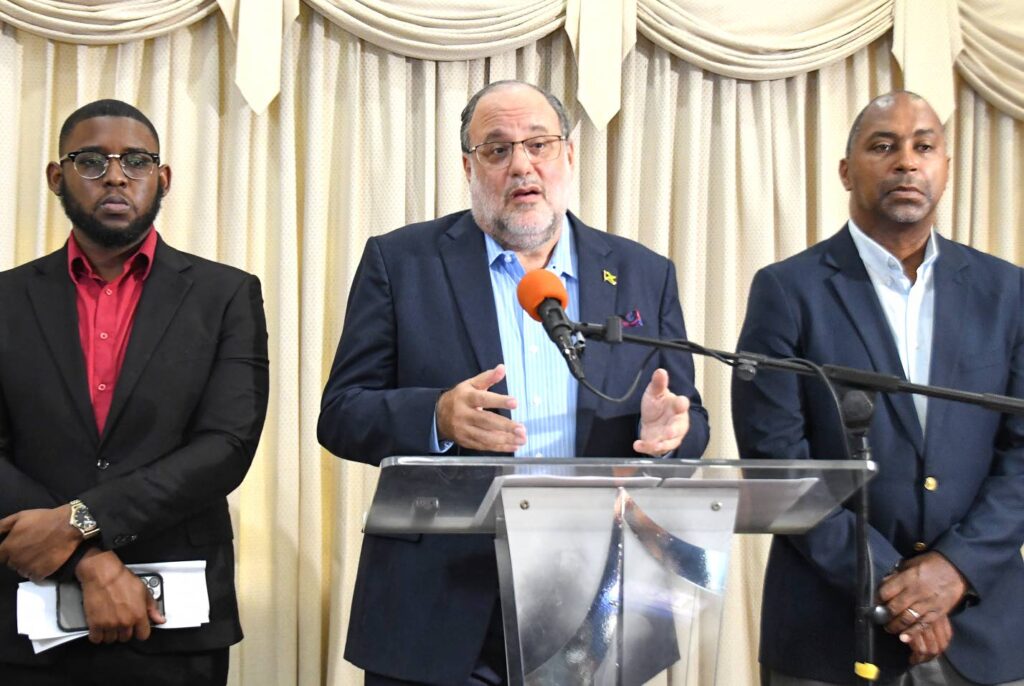
Opposition Leader Mark Golding laid out his party’s position Thursday, drawing a distinction between minor missteps by public officials and serious, unresolved corruption allegations. Golding acknowledged that some politicians who have made genuine mistakes can return to office after making amends, but argued that individuals facing unproven serious corruption claims should not hold executive power.
“I think each case has to be assessed on its own merit,” Golding explained. “There are situations where somebody who holds a ministerial position may do something that is not quite right and, because we are trying to set a standard of good behaviour and proper governance, that cannot be ignored, but it may not be so egregious as to warrant permanent exclusion. On the other hand, there are some things that are sufficiently serious and that person really should not be a public figure any longer, should not be responsible for any aspect of the affairs of the nation.”
PNP officials went public Thursday with key damaging details pulled directly from the IC’s 100-plus page investigative report. The most serious claim centers on a 2013 transaction where Wheatley sold his private medical business, Western Medical Centre, for JMD $13 million, reportedly receiving payment via incremental cash installments. Wheatley named an individual as the buyer, but failed to produce any receipts or transaction documentation. Independent IC investigations found the named individual had already been deported or extradited from Jamaica three years before the sale was supposed to take place, making the transaction impossible as described.
PNP finance spokesperson Julian Robinson called Wheatley’s 2025 reappointment to Cabinet deeply ironic, noting he was first forced out over 2018 corruption, nepotism and cronyism allegations tied to his energy portfolio. Robinson questioned whether Holness knew of the ongoing IC investigation into Wheatley when he decided to bring the MP back to Cabinet, and also called on eight to nine other sitting MPs under investigation for illicit enrichment to publicly disclose their cases.
Robinson outlined a pattern of alleged non-disclosure and inconsistent testimony laid out in the IC report. For example, Wheatley told investigators he received returns from a high-yield investment scheme to explain his unexplained wealth, but no evidence of the scheme’s existence has ever been found. He also failed to mention the investment in any of his statutory declarations over the course of more than a decade, only raising the claim during the 2024 investigation.
The report also details an undeclared $143 million in claimed rental income. When IC investigators asked for tenant names, receipts and other proof of the income, Wheatley initially argued the information was protected under Jamaica’s Data Protection Act. Even after he was pressed to release the information, he only provided partial names and limited documentation, failing to substantiate the full $143 million claim, according to Robinson.
Additional allegations include five separate personal loans taken from the Bank of Nova Scotia between 2013 and 2021 that were never disclosed in statutory declarations, and 14 subdivided land lots sold from a property Wheatley owns in East Kirkland Heights, St Andrew, none of which were declared to the IC until years after the sales were completed. Robinson said the full extent of the land subdivision was only uncovered when investigators obtained independent records from Jamaica’s National Land Agency, marking a repeated pattern of evasion by the minister.
“Anyone who operates like this, whose credibility cannot stand the test of scrutiny, should not be a member of Cabinet,” Robinson insisted. “We are reiterating our call for Dr Wheatley to be removed immediately from the Cabinet.”
Wheatley has forcefully pushed back against the IC’s findings, denying any wrongdoing and accusing commission investigators of deliberately ignoring exculpatory evidence that he says would upend the report’s conclusions. His legal team has reportedly sent a formal letter to the IC outlining what they describe as material inconsistencies in both the investigation process and the final report’s conclusions.