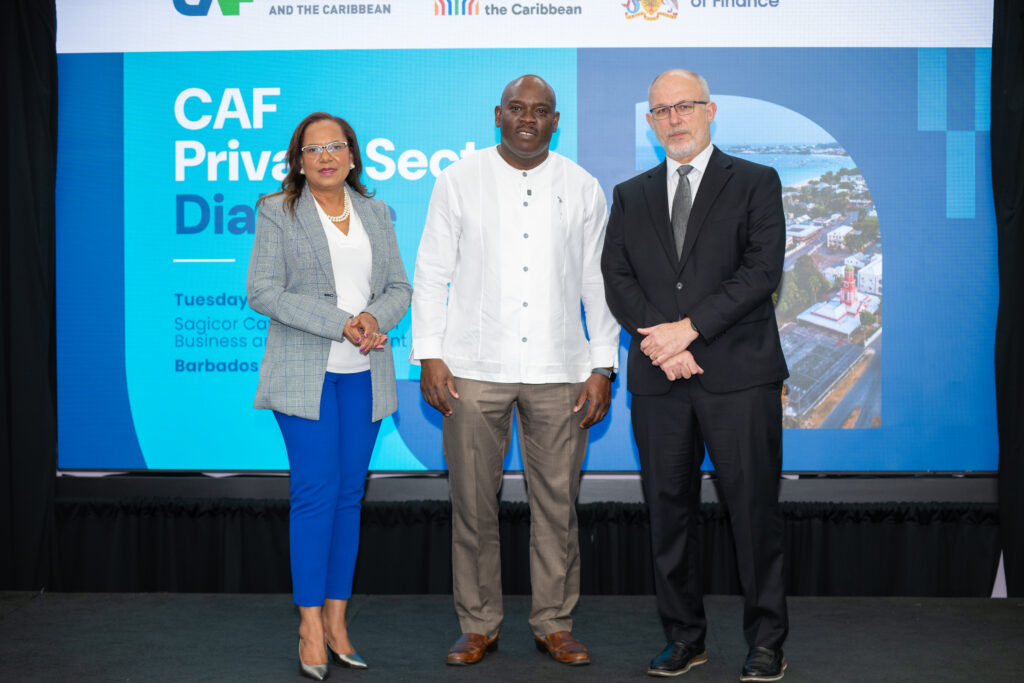
Barbados is stepping into a pivotal economic transition, with government officials and regional development leaders partnering to position the private sector at the heart of a new export-focused growth strategy. CAF – Development Bank of Latin America and the Caribbean has announced it will expand its support for private sector expansion and public-private partnerships (PPPs), opening the door for Barbadian firms to access expanded financing options and break into untapped regional markets.
The collaborative agenda was the centerpiece of a high-level private sector dialogue co-hosted by CAF and Barbados’ Ministry of Finance, which brought together C-suite business leaders, senior financial institution executives and top government officials. Attendees explored how innovative financing mechanisms can help local companies scale production capabilities, enter new cross-border markets and accelerate broad-based national economic growth.
The talks come just weeks after Prime Minister Mia Mottley framed Barbados’ current moment as a “critical historical crossroads”, stressing that an urgent shift to an export-led economic model is non-negotiable for long-term prosperity. Mottley emphasized that for sustainable growth to be achieved, local businesses must look beyond the small domestic market and pursue international opportunities.
Minister of Finance Ryan Straughn doubled down on this vision, making clear that the private sector will not play a supporting role in this transition – it will lead it. “Export-led growth is not a government project with the private sector as cheerleaders on the sideline. It requires investment, risk and the kind of bold commercial decision-making that only you in this room can make,” Straughn told attendees. He added that after eight years of fiscal consolidation that put Barbados on a stable financial footing, the next phase of national development hinges on the private sector driving the country to new economic strength. “What we are asking now is for the private sector to help make Barbados economically formidable,” he said.
Straughn also outlined the multifaceted value CAF brings to the table beyond direct capital. The bank’s extensive regional network across Latin America and the Caribbean, he noted, can connect Barbadian enterprises to new export markets, attract cross-border investment and forge strategic partnerships that would otherwise be out of reach for many local firms. This regional connectivity, he added, is critical to helping Barbados earn more foreign exchange, compete more aggressively in global markets, and build homegrown businesses capable of generating wealth across the Caribbean region.
Dr Stacy Richards-Kennedy, CAF’s regional manager for the Caribbean and country representative for Barbados, explained that the high-level dialogue was intentionally structured to tackle practical, actionable solutions to unlocking private sector potential. “If we are serious about economic growth, jobs, exports and resilience, then the private sector cannot be on the margins of development. It has to be at the centre,” she said. “The question before us is how do we work together to unlock more of its potential.”
Richards-Kennedy highlighted that Barbados’ current economic landscape offers significant untapped opportunities across three high-impact sectors: infrastructure development, renewable energy deployment, and tourism-related investment. These segments, she noted, are primed to create new jobs and expand the country’s overall productive capacity. She also emphasized that PPPs are uniquely valuable for small island developing states like Barbados, as these collaborative models align public development priorities with private sector capital to accelerate project delivery in sectors critical to national growth.
Antonio Silveira, CAF vice-president for private sector, detailed the full suite of financing tools the bank has available to support private companies and PPP projects across the country. These instruments include non-sovereign guaranteed loans, dedicated lines of credit, structured finance arrangements, risk mitigation guarantees, equity investments, and hands-on technical assistance to help businesses bring projects to completion.
Silveira noted that CAF’s private sector-focused strategy aligns directly with the government of Barbados’ BERT 3.0 economic framework, which positions the private sector as the lead driver of national development. “We are keen to engage with Barbados on initiatives that can be developed in a sustainable way,” he said.
CAF data shows its private sector division approved $10.3 billion in total operations across the region in 2025, accounting for 55% of the bank’s total project approvals for the year. The institution confirmed it is already ramping up support for small and medium-sized and large enterprises across the Caribbean, and is working closely with regional partners to develop additional tailored financing tools to help companies expand their export footprint and compete effectively in new markets.