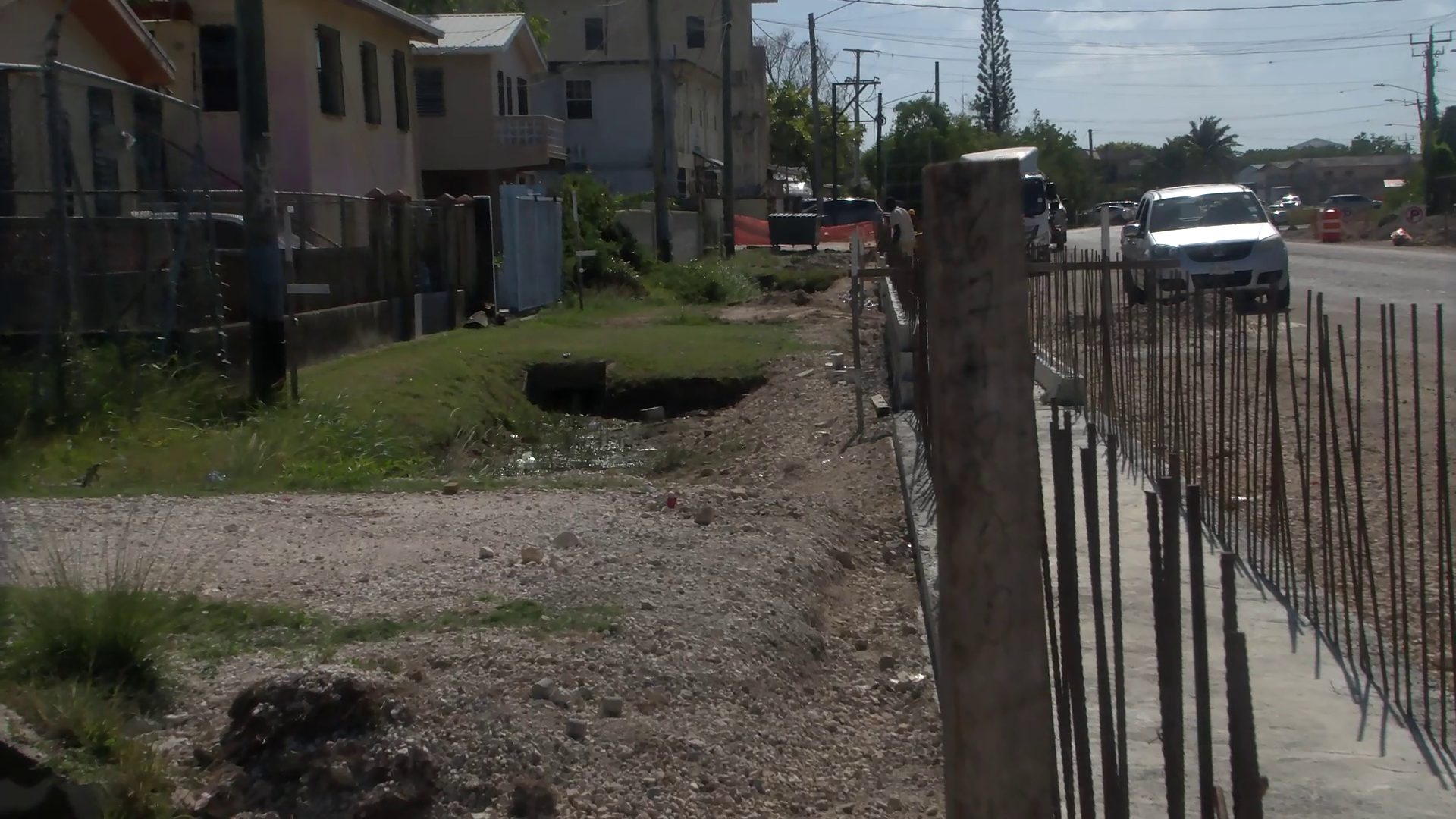
A major $65 million infrastructure rehabilitation project along two of Belize’s busiest arterial highways is facing growing public backlash after local residents raised urgent alarms over flawed drainage design that threatens to bring repeated flooding to their properties. The ongoing upgrades, covering the George Price Highway stretch from Hattieville to Belize City’s Pound Yard Bridge and the parallel Phillip Goldson Highway, were billed as a long-term improvement to regional connectivity and quality of life. But for homeowners living adjacent to the construction zones, the project has created an immediate new hazard: newly installed drainage systems along the road edge are graded higher than adjacent residential yards, leaving properties vulnerable to standing water and flood damage during heavy rain events.
As public criticism mounts, Julius Espat, Belize’s Minister of Infrastructure Development and Housing, has come under increasing pressure to address the hundreds of resident complaints. In a recent press briefing responding to the concerns, Espat pushed back against critiques while acknowledging the growing pains that accompany large-scale public infrastructure projects. He emphasized that every resident grievance is being evaluated individually by government teams, rather than being dismissed out of hand.
Espat explained that the higher road grading and redesigned drainage systems at the center of complaints are not mistakes, but intentional changes required to meet modern climate resilience standards. International financial institutions (IFIs) that provided the loan funding for the rehabilitation project mandate that all new infrastructure meet updated climate resilience criteria, a response to shifting global weather patterns that have brought more frequent extreme storm events to coastal regions like Belize.
To adapt to these changing conditions, Espat noted, the project incorporates multiple climate-focused adjustments: road beds are being elevated to reduce flood damage to the highway itself, more extensive and deeper drainage networks are being installed to handle larger rain volumes, and more durable concrete is being used in place of traditional chip seal and hot mix asphalt in high-exposure areas. He added that most complaints arise during the early construction phase, when temporary elevated grading is still in place before final adjustments are completed. To resolve individual concerns, Espat said the ministry has deployed dedicated teams of civil engineers and social outreach specialists to meet directly with affected homeowners, assess their specific flood risks, and implement targeted adjustments to address each community’s needs.
This report is a transcribed excerpt from an evening television news broadcast in Belize.