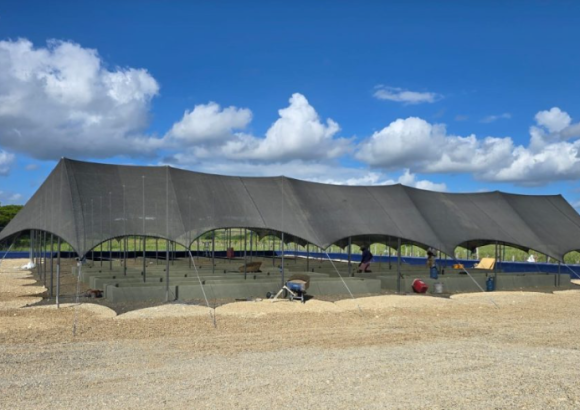
On Puerto Plata’s scenic North Coast, a landmark sustainable tourism initiative is turning conservation commitments into tangible action: the Punta Bergantín tourism development project has launched a specialized plant nursery focused on cultivating native and endemic plant species, a core step forward in its ambitious environmental sustainability strategy. The project’s ultimate goals are to safeguard regional biodiversity and repair damaged natural ecosystems along the coast, setting a new benchmark for responsible tourism development in the Caribbean.
This conservation collaboration brings together three key stakeholders: the Punta Bergantín project leadership, the Puerto Plata Provincial Directorate of Environment, and the Santiago Botanical Garden, combining technical expertise, regulatory support, and on-the-ground execution to deliver meaningful ecological impact. So far, the partnership has already integrated 355 individual specimens of at-risk native plant species into the nursery’s conservation program, and completed the planting of 1,260 native tree specimens across the project’s development area. These initial actions lay a strong foundation for scaled-up ecological restoration and long-term biodiversity conservation across the region.
Leonela Vólquez, who leads community engagement, sustainability, and research efforts for the Punta Bergantín project, framed the new nursery as far more than a temporary conservation gesture—she describes it as a strategic, long-term investment that ties environmental protection directly to the future of the region’s tourism sector. Beyond propagating rare plants, the facility will drive landscape regeneration across degraded coastal areas, create a protected refuge for vulnerable plant species at risk of extinction, offer hands-on environmental education opportunities for local communities and visitors, and strengthen the North Coast’s reputation as a premier nature-focused travel destination.
Vólquez emphasized that the nursery is fully aligned with the project’s core guiding principle: that tourism growth must go hand-in-hand with measurable, concrete action to conserve and restore natural resources, rather than prioritizing development over ecological health. The facility will serve as the primary production hub for native and endemic plant species needed for the project’s ongoing restoration work, while supporting a broader tourism model that is more climate-resilient, environmentally accountable, and deeply rooted in the region’s unique natural landscape.
In its first full year of operation, the nursery will specifically provide safe haven for 11 plant species classified by conservation experts as either endangered or critically endangered, filling a critical gap in regional plant conservation efforts. The nursery is not an add-on to the Punta Bergantín project—it is a central, required component of the development’s official Environmental Management Plan, as well as its Tree Transplanting, Compensation, and Reforestation Program, two frameworks that structure and regulate all of the project’s sustainability and environmental protection work moving forward.