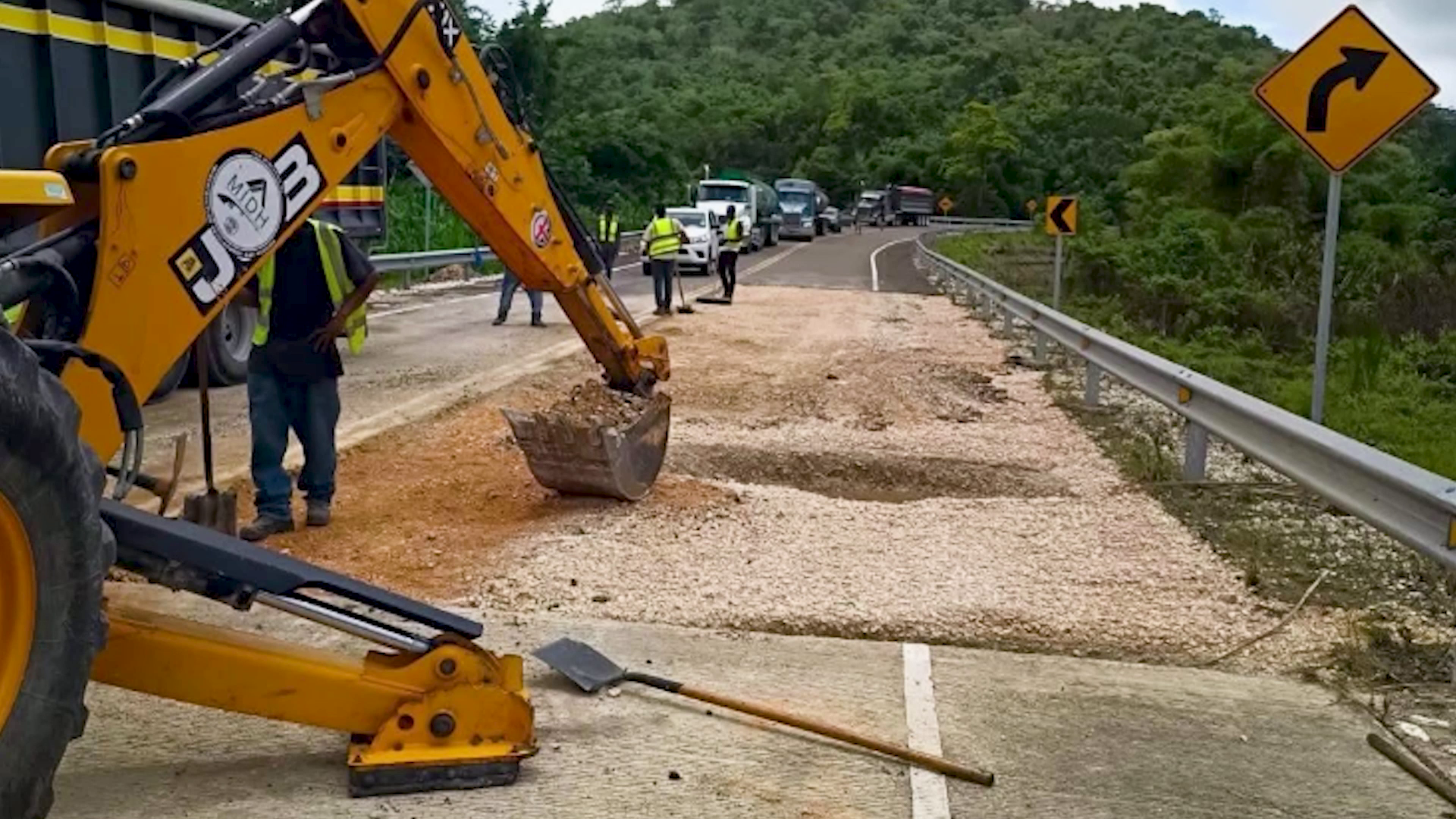
Recent severe flooding has left critical stretches of Belize’s flagship Coastal Plain Highway damaged, thrusting the years-long contentious infrastructure project back into the center of national political debate. The multi-million-dollar roadway, one of the largest public works initiatives in the country’s history, was originally planned, designed, and contracted under the previous United Democratic Party (UDP) administration, before being finalized and opened under the current People’s United Party (PUP) government. Conceived to improve inter-regional connectivity and stand up to extreme weather, the highway’s early structural damage following the flood has sparked sharp questions about whether reckless cost-cutting measures sacrificed long-term durability for short-term budget savings.
Leading the charge against the current administration’s handling of the project is UDP leader Tracy Panton, who is pushing back on claims that the PUP inherited an overpriced contract from the previous government. In comments delivered during an evening news broadcast, Panton argued that the original UDP design intentionally included extra structural reinforcements and climate-resilient features to prepare the highway for shifting global weather patterns and increasingly frequent severe natural disasters that place heavy strain on Belize’s public infrastructure.
Panton took direct aim at PUP’s Minister of Infrastructure Development and Housing Julius Espat, who he says mounted a public relations campaign claiming the original UDP contract was bloated and inflated, cutting $28 million from the project to deliver short-term budget savings. “They have bragged repeatedly about cutting tens of millions in costs, but what looks like a win on a balance sheet today is going to cost taxpayers far more in the long run,” Panton said. “This is not an isolated incident. The Coastal Plain Highway has already required repairs at least three times since it was completed, all because the current government stripped out critical durability measures to score political points against the UDP’s record of good governance.”
Panton emphasized that the latest flood damage proves her core argument: any short-term fiscal savings from cutting structural requirements will ultimately be dwarfed by the cumulative cost of repeated repairs. She questioned who actually benefits from the rushed cost-cutting, pointing out that it is ordinary Belizean drivers and taxpayers who will bear the burden of ongoing repair bills and unsafe road conditions. As of publication, the PUP government has not issued an official response to Panton’s accusations, and the full scope of the latest flood damage to the highway is still being assessed by public works officials.