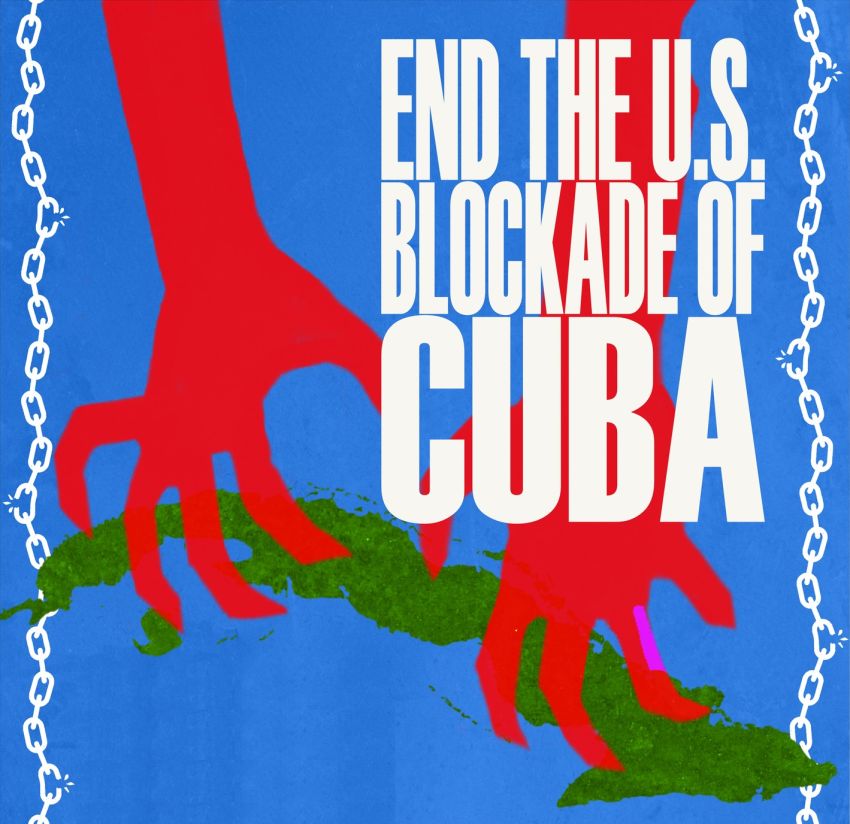
Written by Yadirys Echenique Paz, Cuba’s Ambassador to Grenada, this op-ed lays bare the coordinated, all-encompassing nature of Washington’s policy toward Cuba during Donald Trump’s second presidential term, framing it not as a collection of disconnected unilateral actions, but an intentional, systemic siege engineered to break the Cuban people, cripple the island’s economy, and coerce third nations into cutting their legitimate commercial and diplomatic ties with Havana.
The data presented underscores the scope and intensity of this pressure campaign: over a mere 18-month period, the United States implemented 36 distinct coercive measures that cut across every core sector of Cuban activity, from finance and energy to migration, culture, international cooperation and diplomacy. Each new restriction acts as another link in a steadily tightening chain designed to economically strangle the island nation.
In the financial domain, the January 20, 2025, re-listing of Cuba on the controversial, unilateral U.S. State Sponsors of Terrorism roster artificially inflated the country’s sovereign risk profile and deterred much-needed tourism investment from European and Asian markets. Just 11 days later, on January 31, 2025, the Trump administration reactivated Title III of the decades-old Helms-Burton Act, a provision that enables U.S. citizens to file lawsuits against foreign companies that operate on property expropriated from U.S. owners by the Cuban government, creating widespread legal uncertainty that discourages international investment. The U.S. government’s February 6, 2025, addition of Cuban remittance firm Orbit S.A. to its list of restricted entities pushed global money transfer giant Western Union to halt all services to Cuba, cutting off a critical lifeline for millions of Cuban households that rely on family remittances for basic needs.
The pressure campaign extended well beyond economic and financial levers, reaching into migration and cultural exchange. Between January and February 2025, Washington suspended humanitarian parole programs and entry visas for participants in academic, athletic, and scientific exchanges between the two countries. It also canceled planned bilateral migration talks scheduled for April 2025. Even youth and amateur sports delegations have been targeted: Cuba’s women’s national volleyball team was denied entry to a regional event on June 26, 2025, followed by a children’s baseball team from Cuba’s Pinar del Río province on July 13 that same year.
In the area of international cooperation, the United States imposed visa restrictions in August 2025 on officials from African and Central American nations that participate in Cuban-led medical outreach programs, a move Ambassador Paz frames as a direct attack on Cuba’s longstanding culture of international medical solidarity that has brought free healthcare to millions of vulnerable people across the Global South.
Energy security, a cornerstone of Cuba’s domestic stability, has also been a primary target. On January 29, 2026, the Trump administration authorized additional punitive tariffs on any country that supplies crude oil to Cuba, whether through direct or indirect trade routes. Two months later, on March 19, 2026, Cuba was explicitly excluded from U.S. licenses that allow third countries to trade in Russian crude oil, further cutting off the island’s access to critical energy supplies.
Even diplomatic activity has not been spared. On April 18, 2025, the United States imposed new operational restrictions on Cuba’s embassy in Washington D.C. In September that same year, Cuban delegations were blocked from participating in official activities of the Pan American Health Organization, a regional United Nations agency, denying the country its right to participate in global public health governance.
Ambassador Paz argues the overarching pattern of these actions leaves no room for doubt: this is a deliberate strategy of maximum pressure, extraterritorial coercion, and collective punishment against the entire Cuban population. This campaign is not rooted in legitimate political differences between the two governments, she emphasizes, but a deliberate strategy of economic strangulation designed to break the decades-long resistance of the Cuban people to U.S. interference.
The February 21, 2026, inclusion of Cuba alongside major global powers including Venezuela, Iran, North Korea, Russia, and China on the U.S. roster of “foreign adversaries” further confirms Washington’s goal of total diplomatic and economic isolation of the island. In response to this designation, the ambassador poses a sharp rhetorical question: Who can reasonably claim that Cuba poses any genuine threat to the national security of the world’s largest military and economic power?
In closing, the ambassador stresses that these cumulative measures are far more than routine targeted sanctions: they constitute a full-scale total blockade, an act of open economic warfare that directly violates core principles of international law and fundamental human rights. She calls on the global community to recognize that behind every bureaucratic restriction, every denied visa, and every punitive tariff, is an entire civilian population that suffers the consequences of U.S. policy, yet continues to stand firm in resistance.
*Disclaimer: NOW Grenada is not responsible for the opinions, statements or media content presented by contributors. In case of abuse, click here to report.*