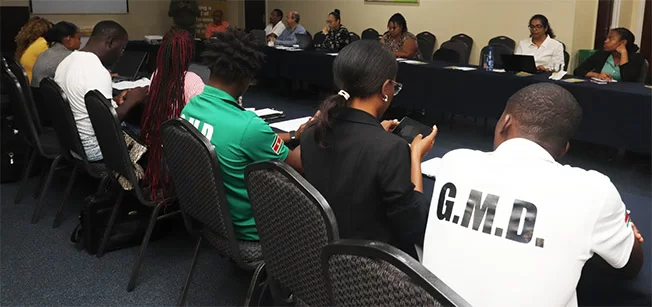
On June 17, multiple government ministries and public agencies in Suriname gathered to strengthen cross-sector collaboration focused on cutting mercury use in the country’s large artisanal and small-scale gold mining (ASGM) sector. The interdepartmental meeting, held as part of the global planetGOLD Suriname project, centered on co-developing coordinated policy frameworks designed to transition the national gold industry toward a more sustainable, productive, and ecologically responsible model.
The convening comes amid growing global and national momentum to eliminate mercury use in ASGM, a practice that has long imposed severe costs on both environmental health and human communities across Suriname. Mercury, a toxic heavy metal widely used by small-scale miners to separate gold from ore, poses persistent risks to surrounding ecosystems, contaminates water and soil supplies, and triggers chronic health conditions for miners, their family members, and residents of nearby mining communities.
Jerrel Pinas, Engagement Specialist for the planetGOLD Suriname project, outlined the initiative’s long-term vision: the total elimination of mercury from the country’s small-scale gold mining sector. Pinas acknowledged that a full phase-out will be a gradual, incremental process, but emphasized that the ongoing project is laying critical foundational infrastructure for lasting sustainable change. “By introducing improved extraction methods and proven mercury-free alternative technologies, we are not only working to reduce environmental harm,” Pinas explained. “We are also creating pathways to higher production yields and better long-term development opportunities for small-scale miners and their families.”
During the meeting, participating stakeholders received a comprehensive update on the project’s progress to date and held detailed discussions on mechanisms to deepen inter-agency coordination moving forward. Attendees split into working groups to draft concrete proposals to reduce mercury reliance and expand the adoption of sustainable mining practices across the sector.
Key topics addressed in the working group sessions included the widespread rollout of mercury-free extraction technologies, alignment of national mining practices with international environmental standards, implementation of responsible water management protocols, protection of vulnerable regional ecosystems, reduction of overall mining-related pollution, and targeted efforts to strengthen the economic stability and social position of small-scale artisanal miners.
Maureen Bottse-Brewster, project director at Suriname’s Ministry of Natural Resources, stressed that a just and successful transition to a sustainable gold sector is only achievable through coordinated action across government departments. “The challenges facing our gold sector cut across multiple policy domains simultaneously,” Bottse-Brewster noted. “That is why cross-ministerial collaboration is absolutely essential. Each ministry brings unique specialized expertise and regulatory authority that can contribute to an equitable, sustainable development of the sector.”
The recommendations and policy proposals developed during the June 17 meeting will be integrated into the next phases of the planetGOLD Suriname project and will inform the development of future national mining and environmental policy. The broader planetGOLD program is a global international initiative that supports countries around the world in reducing and eliminating mercury use in artisanal and small-scale gold mining. In Suriname, the project is implemented by the Ministry of Natural Resources in partnership with the United Nations Development Programme (UNDP), with core funding provided by the Global Environment Facility.