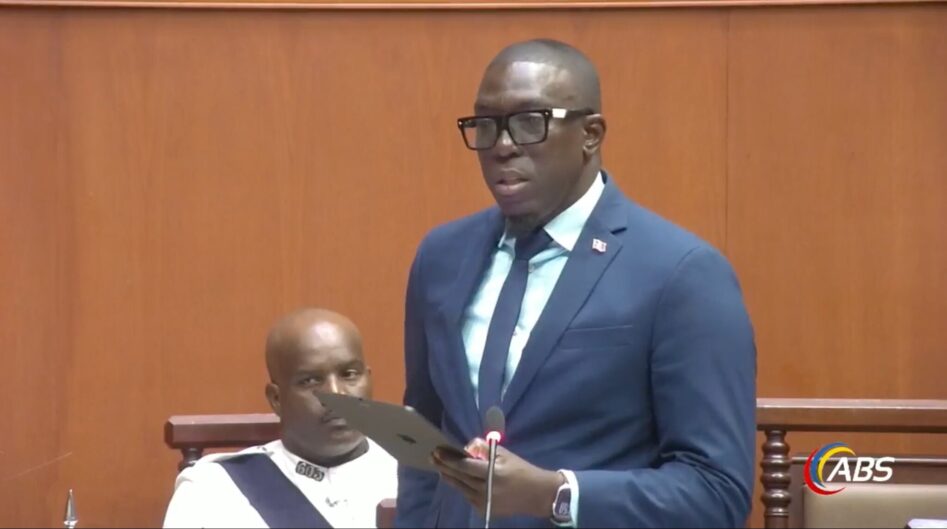
In a landmark parliamentary sitting held on Tuesday, Antigua and Barbuda’s legislative body passed the Fatal Accidents Bill 2026, a sweeping update to a legal framework that has remained largely unchanged for nearly a century. The final version of the legislation, which incorporates key adjustments proposed by the opposition, marks a significant step forward in protecting the rights of grieving families who have lost loved ones to preventable fatal accidents.
The bill was shepherded through parliament by Attorney General Sir Steadroy Benjamin, who laid out the urgent need to replace the country’s existing 1924-era fatal accidents legislation. Outdated and out of touch with modern family structures and social realities, the century-old law failed to adequately address the deep harm that surviving family members endure after a fatal incident caused by a third party’s negligence or misconduct. Under the proposed reforms, a formal, standardized framework would be created to allow eligible dependents to pursue financial compensation for their loss, including a long-overdue new provision: formal recognition of bereavement damages for the grief and psychological suffering that follows a family member’s death.
Opening the debate on the legislation, Opposition Leader Jamale Pringle announced his support for the overarching goals of the bill, affirming that updating the outdated law was a critical priority for protecting vulnerable families across the nation. However, Pringle highlighted key gaps in the original draft that he argued weakened the law’s ability to deliver justice to all affected groups.
Pringle’s first key recommendation centered on explicit recognition of children impacted by a parent’s fatal death. In his remarks, he questioned whether the original legislation’s broadly worded eligibility provisions sufficiently accounted for the lifelong emotional and financial harm that minor children suffer when they lose a parent, and called for children to be explicitly named as eligible claimants for bereavement compensation. He also raised targeted concerns around provisions covering common-law partnerships, noting that the existing qualifying period for a surviving common-law partner to be recognized as an eligible dependent failed to reflect modern relationship norms, and called on lawmakers to revisit that requirement.
In response to the opposition’s input, Attorney General Benjamin reaffirmed the core purpose of the legislation: to center the needs of surviving family members who are left to pick up the pieces after a fatal accident. He emphasized that the introduction of formal bereavement damages was itself a historic shift, noting that for the first time, the law would explicitly recognize the profound emotional trauma that families endure after fatal incidents, particularly road fatalities. “That pain and suffering endured by dependents when a family member loses his life is something that the law has failed to acknowledge for far too long,” Benjamin told parliament. The legislation, he added, would ensure that dependents and beneficiaries receive stronger protections when a core breadwinner or family member dies as a result of someone else’s actions.
During the bill’s committee stage, parliamentarians voted to adopt the opposition’s key proposed amendments. The final version of the bill explicitly expands bereavement compensation eligibility to include children directly, and raises the maximum allowed bereavement award from the original proposed amount to Eastern Caribbean dollar 20,000, providing more substantial financial recognition for families’ emotional loss.
Following the approval of the amendments, the full bill was passed by parliament. The updated legislation establishes streamlined, modernized procedures for filing fatal accident claims, and broadens the scope of eligible claimants to include spouses, children, parents, and other eligible dependents across a range of family structures.
In closing remarks after the vote, Pringle noted that the collaborative process to amend the bill had resulted in a far stronger piece of legislation, and expressed hope that the new framework would deliver on its core promise: ensuring that families devastated by tragedy receive fair treatment and meaningful support under Antigua and Barbuda’s law.