The global community breathed a collective sigh of relief on Sunday when the United States and Iran announced a breakthrough: a memorandum of understanding to end nearly four months of open military hostility between the two nations. But for ordinary residents of Tehran, who have endured decades of crippling economic sanctions and persistent geopolitical tension, the ceasefire announcement has done little to restore confidence that this long-running crisis is finally drawing to a close.
The formal signing of the agreement is scheduled for this Friday. Under its core terms, Iran will fully reopen the Strait of Hormuz, a critical global energy chokepoint that Tehran has largely controlled and restricted access to since hostilities began on February 28. The move is expected to calm rampant volatility on international energy markets, which have been roiled by disrupted shipping through the waterway that carries nearly 20% of the world’s daily oil trade. In exchange, the United States will lift its ongoing maritime blockade of Iran’s southern ports, a step that is projected to provide much-needed relief to Iran’s already battered national economy.
However, the deal leaves nearly all of the most divisive and high-stakes core issues between the two nations unresolved. Key sticking points including the future of Iran’s nuclear program, the status of long-standing US economic sanctions, and hundreds of billions of dollars in frozen Iranian assets held in overseas banks are set aside for future negotiations. This vague, incomplete framework has fueled widespread pessimism across Iran that a lasting, permanent settlement will ever be reached.
Parisa, a university student in Tehran who requested only her first name be used for security reasons, summed up the pervasive skepticism. “I don’t think this agreement will bring much benefit to ordinary Iranians, because it will never be fully implemented to deliver real stability,” she said. “It might hold for now, but both sides will eventually undermine it to advance their own competing interests.”
Mehdi, another Tehran resident, echoed that doubt, arguing the unresolved core conflicts make a long-term ceasefire unsustainable. “I don’t believe the US will accept even the most basic of Iran’s demands,” he said.
For most Iranians, any path to a durable long-term agreement must start with the full lifting of harsh US and United Nations sanctions that have gutted the national economy, pushed millions into poverty, and cut Iranian businesses off from most global markets. Beyond sanctions, Tehran continues to demand the unfreezing of its overseas assets and the right to charge tolls for commercial vessels passing through the Strait of Hormuz – a demand the US and most other maritime nations reject, insisting on unconditional free passage through the waterway.
The tentative agreement came together despite multiple last-minute disruptions: recent direct skirmishes between US and Iranian forces, and staunch opposition from Israel. Just hours before the ceasefire announcement, Israel carried out an airstrike on Beirut’s southern suburbs – a move Tehran had repeatedly called a red line – that nearly derailed negotiations and pushed the entire region back to the brink of full-scale war.
Within Iran, the deal also faces fierce pushback from hardline political factions, who demanded the Iranian government take a far more aggressive stance at the negotiating table and have pledged to challenge any perceived concessions to Washington. Iran delayed its official announcement of the deal until after midnight local time, a move widely interpreted to avoid the announcement coinciding with US President Donald Trump’s birthday, allowing Washington to announce the deal on Sunday as Trump had previously promised.
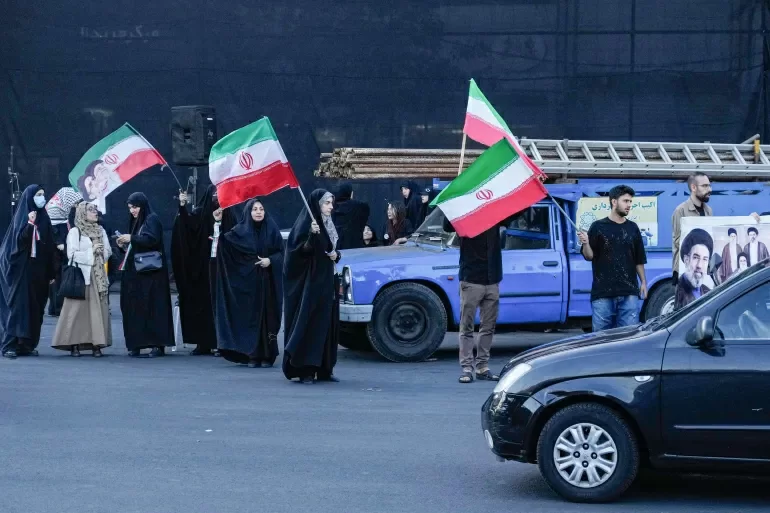
On Monday, Tehran authorities unveiled a large black mural honoring the late Supreme Leader Ayatollah Ali Khamenei, who was assassinated and will be buried in July. Khamenei spent decades preaching deep distrust of the United States, and his legacy hangs heavily over the current negotiations. During overnight gatherings held by pro-government groups across Iranian cities, many attendees expressed deep disappointment that the government did not avenge Khamenei’s death, voiced opposition to any concessions to Washington, and issued sharp criticism of Iran’s negotiating delegation and senior security officials.
Many pro-government Iranians argue the war will resume within months, and that Tehran should retain the tactical advantages it gained during more than 100 days of conflict with the US and Israel. “In my view, this agreement will not last; the US will break it again, just like they have before,” Mohadese, a pro-government woman, told Al Jazeera. “It’s better for us to hold firm, for example by keeping the Strait of Hormuz closed.”
The deal also includes a commitment to end all military operations across every front, including in Lebanon – a provision Tehran insisted be included in the final text. Shortly after the Israeli airstrike on Beirut on Sunday, Mohammad Bagher Zolghadr, secretary of Iran’s Supreme National Security Council, had warned that “the answer of Islamic fighters is near.” But just hours later, Iran’s top decision-making body confirmed the ceasefire deal with the US remained intact, and no retaliatory strike would be carried out. Iranian media reports indicate Trump agreed to immediately lift the maritime blockade, moving up the original 30-day implementation timeline, in exchange for Iran canceling its planned retaliation against Israel.
In Israel, Prime Minister Benjamin Netanyahu is facing heavy criticism from opposition groups, who frame the US-Iran deal as a major strategic failure for Israel. Israeli Defense Minister Israel Katz announced that Israel has no plans to withdraw its troops from Lebanon, Syria, or the Gaza Strip, and will respond with full force if Iran launches any attack.
The full official text of the agreement has not yet been published, but both the US and Iran have already moved to frame the deal as a political victory. Iranian state media declared in its announcement that “the US was forced to sign this agreement to end its war against the Islamic Republic and the axis of resistance.”
Despite widespread public skepticism among Iranians, Iranian financial markets have reacted positively to the prospect of an end to open hostilities and the potential economic boost from lifting the US maritime blockade. Iran’s national currency, the rial, strengthened for the third consecutive trading day on Monday, reaching approximately 1.61 million rial to the US dollar, recovering from a record low of around 1.9 million rial hit last month. Prices for gold coins in Tehran also dropped, while the Tehran Stock Exchange index closed at a new all-time high of nearly five million points. Many Iranian market participants hold out hope that lifting the blockade, eventually ending all sanctions, and unfreezing overseas assets will revitalize the struggling Iranian economy – though that outcome depends on dozens of political and economic factors, many of which remain completely outside of Tehran’s control.