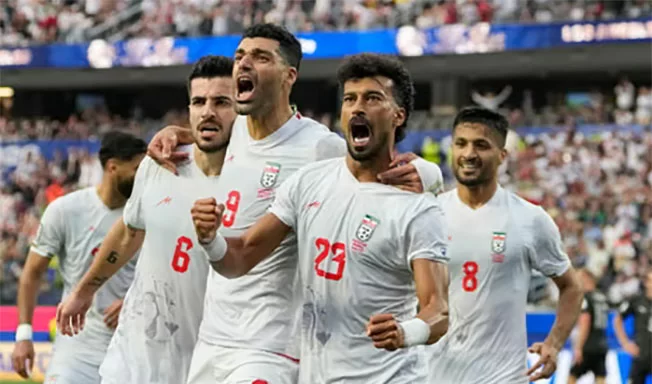
On a Monday evening at Los Angeles’ iconic SoFi Stadium, Group G of the 2026 FIFA World Cup opened with a 90-minute thriller that delivered everything fans could ask for from an opening group stage fixture. Iran and New Zealand produced an open, end-to-end contest marked by scoring chances at both ends of the pitch. New Zealand twice took the lead through winger Elijah Just, but Iran fought back on both occasions to salvage a share of the points. Right-back Ramin Rezaeian leveled the score before halftime, and midfielder Mohammad Mohebbi struck the equalizer midway through the second half to lock in a final 2-2 scoreline. The result means both nations kick off their World Cup campaigns with one point apiece.
Yet this contest is unlikely to be remembered solely for its on-pitch drama. Long before the first kickoff, a political narrative unfolding around the stadium overshadowed the 90 minutes of sport, drawing global attention far beyond the footballing world.
Hundreds of protesters gathered in the streets surrounding SoFi Stadium hours before kickoff. Their demands were clear: they called on FIFA to ban Iran from international competition and voiced widespread opposition to the current Iranian regime. Many demonstrators carried the red, white and green flag featuring the lion and sun emblem – the historic national symbol of Iran used before the 1979 Islamic Revolution. Despite FIFA’s longstanding policy to restrict political displays during tournament matches, protest symbols including the alternative flag were visible both outside the stadium concourses and inside the stands during the game.
Local law enforcement responded by closing multiple arterial roads around the venue and rolling out a large-scale security operation, preparing for potential confrontations between protesters and supporters of the Iranian national team. Ultimately, the protests concluded without any major violent incidents, but the demonstration underscored the extreme sensitivity of Iran’s participation in a World Cup match hosted on United States soil.
The choice of Los Angeles as the host venue amplified the symbolic weight of the moment. Southern California is home to the largest Iranian diaspora community outside of Iran itself, with the Westwood neighborhood earning the nickname “Tehrangeles” for decades. Hundreds of thousands of Iranian Americans call the region their second home, creating a deeply divided backdrop for the fixture.
Opinion within the local Iranian community is sharply split on the national team. Some view the squad as a unifying source of national pride separate from the country’s current political leadership, while others argue the team unavoidably serves as a representative of the incumbent regime regardless of its own stance. This divide transformed a routine group stage match into a stark reflection of the deeper rifts splitting the Iranian people both at home and abroad.
Existing political tensions were further heightened by the timing of the fixture: the match took place just weeks after a military standoff between the United States and Iran sent global diplomatic relations into crisis. While diplomatic talks ultimately secured a ceasefire, lingering political tension remained palpable throughout the build-up to the game.
The impact of geopolitics was even visible in the basic logistics of Iran’s tournament preparation. Unlike nearly all other participating nations, the Iranian squad chose not to base itself inside the United States, instead setting up their training camp in Tijuana, Mexico. The team was required to cross the international border before every group stage match. Additionally, multiple senior Iranian Football Federation officials were denied entry visas to the United States, a clear demonstration of how global political disputes can disrupt even the most well-planned World Cup logistics.
Amid all the surrounding political friction, the Iranian players and coaching staff made a deliberate effort to refocus attention on football. Head coach Amir Ghalenoei and team captain Mehdi Taremi emphasized ahead of kickoff that the national team plays for all Iranians, regardless of their political beliefs. They called on fans to avoid dragging the sport into the longstanding divisions that have shaped modern Iranian life.
The Iran-New Zealand fixture serves as a fresh reminder that the modern World Cup is far more than just a collection of football matches. When FIFA brings 48 nations together on a single global stage, it also brings along the unresolved conflicts, layered historical tensions and societal divides that define those nations. Where a neutral observer saw an entertaining 2-2 draw, thousands of attendees and viewers around the world saw a stage where questions of national identity, exile, geopolitical conflict, diplomacy and free expression all collided.
It has been decades since the World Cup was solely a competition about football, and this match in Los Angeles drove that point home. The ball rolled for 90 minutes on Monday night, but the story surrounding the match began hours before kickoff – and it will continue to reverberate long after the final whistle blows.