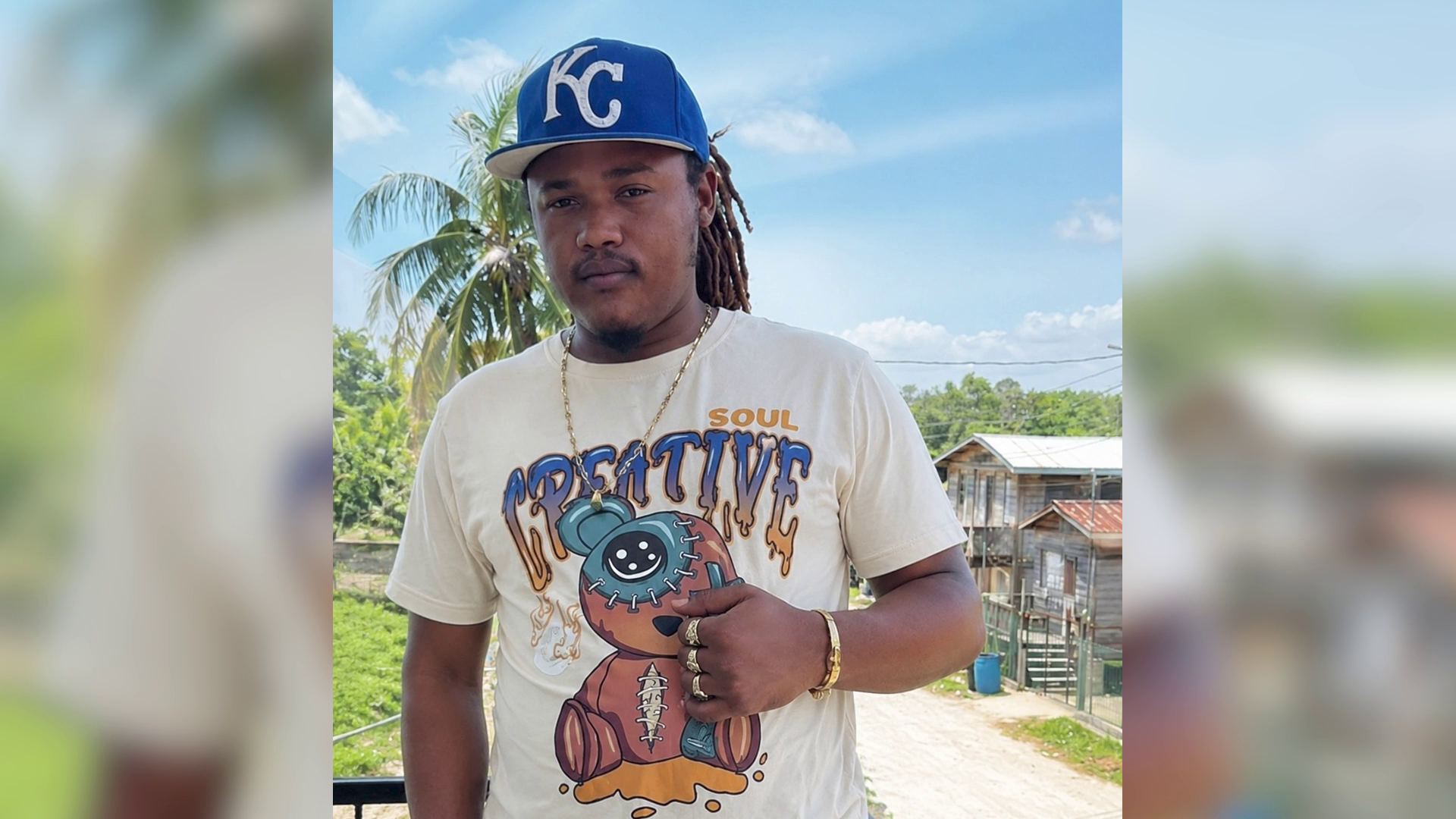
On a busy Saturday morning in downtown Belize City’s central commercial district, a brazen daylight shooting has claimed the life of 29-year-old Kiffer McKenzie, leaving the local community reeling and reigniting long-simmering debates about systemic cycles of violence and harmful community stigma. The incident marked the fourth fatal killing across the country over that single weekend, capping a period of escalating violence that has shaken public confidence in safety.
According to initial law enforcement accounts, McKenzie was seated in his parked vehicle near the Belize Bank on Albert Street, accompanied by his two young children aged 3 and 6, when an unidentified gunman approached and opened fire. In a desperate attempt to protect his children and escape the attack, McKenzie accelerated his vehicle up Albert Street, but lost control and crashed into a stationary car only moments later. He succumbed to his gunshot wounds at the scene; miraculously, his children emerged from the attack unharmed.
Investigators believe the shooter arrived and fled the scene on a motorcycle. In a promising early development, Belize police have detained one suspect in connection with the killing, thanks in part to advances in investigative technology. Stacy Smith, a staff officer with the department, explained that the crime fusion center’s digital tools allowed investigators to quickly locate the abandoned motorcycle and shooter’s helmet used in the attack. Forensic technicians have already lifted usable fingerprints from both items, and the helmet is currently undergoing additional DNA testing to build a solid case against the responsible party.
McKenzie’s killing is far more than an isolated violent incident: it lays bare the devastating intergenerational cycle of violence that has haunted his family for decades. A lifelong resident of Belize City’s Majestic Alley neighborhood, McKenzie was the son of George “Junie Balls” McKenzie, a former gang figure who was murdered in 2007. The pattern of loss continued nine years later, when McKenzie’s older brother George McKenzie Junior was also gunned down in 2016. Years before his brother’s killing, as early as 2015, McKenzie’s mother Melissa Major had made a desperate public plea for police protection after her son received explicit death threats while attending Wesley Junior College.
In that 2015 appeal, Major told authorities that her son had avoided criminal activity and was not causing trouble, begging law enforcement to intervene to protect his life. Now, nine years after that plea, Major has lost her last child to gun violence.
Close family members, speaking to local outlet News Five on condition of anonymity, say McKenzie was unfairly stigmatized from birth because of his family’s past. “If you watch the news and all, you’d never see he had any murder charges or anything like that,” the relative explained. “I feel like because his dad was who he was, they just painted him bad from the start. Nine years after they killed his father, they killed his brother, and nine years later they got him. It’s just about where you come from—they label you. You come out of Majestic Alley, you come from the hood, that’s how people see you, even when you’re not doing bad things, even when you’re trying to do right.”
Community and youth leaders who worked closely with McKenzie confirm that account, painting a portrait of a man who dedicated himself to breaking his family’s cycle of violence and building a stable, positive life for his two young children. Douglas Hyde, National Youth Program Coordinator with the Belize Police Department, has known the McKenzie family for more than 30 years, dating back to his work with Kiffer’s father in the 1990s. In recent years, he worked directly with Kiffer through the William Dawson community sports programs, which use athletics to steer young people away from violence.
“When I got to know him as a young adult, he’d finished high school and sixth form, and he was looking for work,” Hyde recalled. “I remember Kiffer telling me over the past year that he didn’t just want any ordinary job. He wanted something he could be proud of, something his kids could look up to him for. When he got the opportunity to work at the Immigration Department, that was one of his proudest achievements.”
McKenzie had worked for the Immigration Department for four years at the time of his death, and the department released a statement acknowledging his positive contributions to the agency. Andrew Dawson, Acting Director of the Leadership Intervention Unit, a program that supports people leaving high-risk lifestyles to build productive lives, added that the organization was just weeks away from hiring McKenzie as a program coordinator.
“Kiffer was one of the first people we talked about bringing onboard as a coordinator, because we all saw he had successfully transitioned into a stable, productive life,” Dawson said. “He worked in immigration, and he was incredibly instrumental in our work using sports to promote peace in the community.”
As investigators continue to process evidence and build their case against the detained suspect, McKenzie’s death adds another tragic chapter to a family story defined by generational loss. For his loved ones and community supporters, his killing stands as a stark reminder of the harm caused by systemic stigma and persistent cycles of violence—even for those who work every day to escape them. This report was compiled from original on-the-ground reporting by Paul Lopez of News Five.