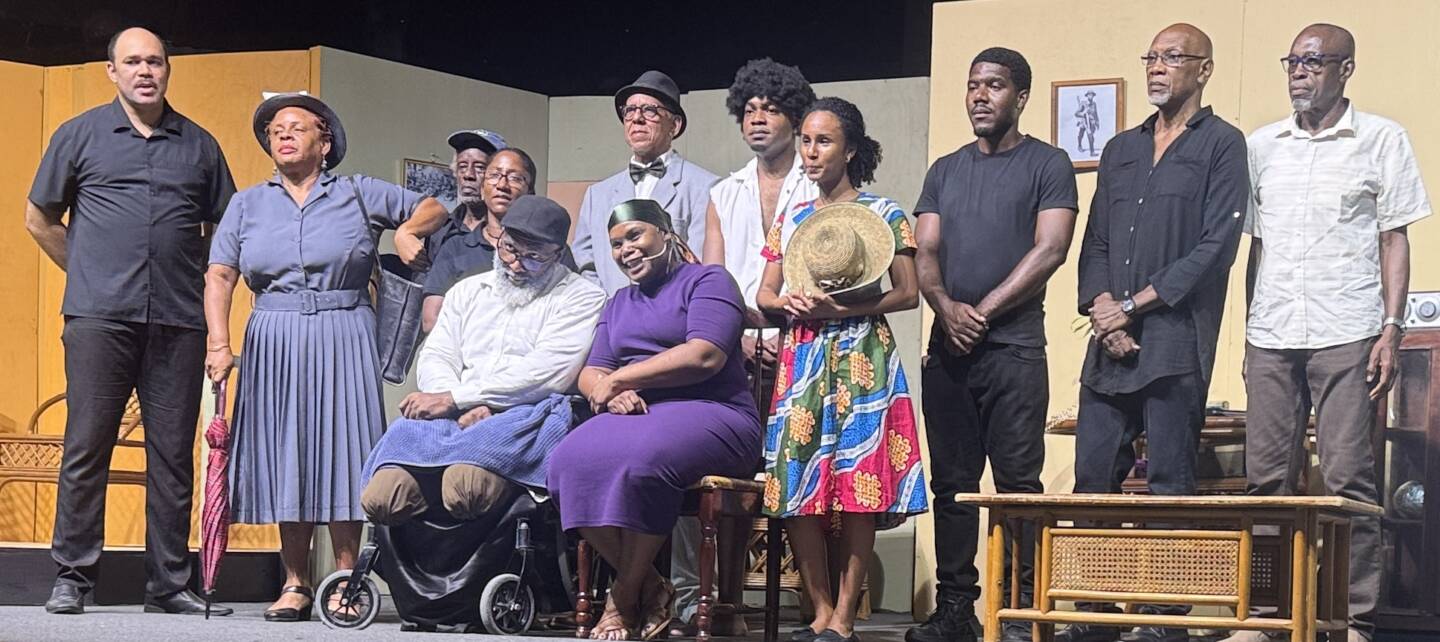
Against a cultural landscape where Caribbean narratives are too often flattened into simplistic, sun-drenched postcard clichés, Chris DeRiggs’ *Lucy’s Straw Hat* emerges as a deeply moving, culturally vital work of community theatre that reclaims forgotten local history. Rooted in a real tragedy that unfolded 82 years ago—the mysterious disappearance of the passenger vessel Island Queen, which claimed 67 lives—the production reframes a little-remembered regional disaster not as a dry entry in a history textbook, but as an intimate, human exploration of grief, collective memory, and the quiet resilience that holds communities together through unthinkable loss.
At the heart of the drama lies its namesake symbol: a simple straw hat that once belonged to Lucy DeSilva, one of the victims of the disaster. Far more than a prop, the hat haunts every scene as a layered metaphor for absence, identity, and the persistent pull of remembrance. DeRiggs, who serves as both playwright and director, deliberately avoids cheap, overwrought sentimentality. Instead of leaning on grand, sweeping historical monologues to tell the story, he lets the narrative unfold through the quiet, unvarnished voices of the loved ones the victims left behind—a choice that grounds the tragedy in lived experience rather than abstract fact.
The production’s ensemble cast delivers a series of standout performances that anchor its emotional core. Leading the company is Neila Ettienne, who brings remarkable authenticity and quiet emotional weight to the role of Agatha DeSilva. Ettienne masters the power of restraint, letting pauses, subtle gestures, and unspoken feeling carry as much meaning as written dialogue, giving audiences an accessible, human entry point into the larger narrative of communal grief. Opposite Ettienne, DeLeon Walters brings sharp, energetic tension to the role of Pa John, perfectly capturing the roiling uncertainty and frustration that follows a sudden, unthinkable community tragedy. His performance feels deeply personal while resonating with universal experiences of loss.
Rene DeRiggs’ turn as Hyacinth DeSilva adds rich, nuanced depth to the production’s central familial and communal dynamics, bringing a natural, unforced ease to the role that elevates the ensemble’s collective storytelling. This commitment to collaborative narrative, rather than individual star turns, is what sets this thoughtful community theatre work apart from hollow theatrical spectacle. Rose Bhagwan’s portrayal of Lucy DeSilva, meanwhile, balances warmth, gentle humor, and raw humanity. Far from serving merely as comic relief, Bhagwan’s Lucy becomes a vessel through which audiences experience the quiet, everyday rhythms of Grenadian life. In a production centered on grief and uncertainty, these small moments of ordinary joy and levity are essential, reminding viewers exactly what the community lost when disaster struck.
Samuel Ogilvie’s turn as the production’s narrator and reporter marks a notable expansion of his acting range. Stepping into a new, understated role far from the loud, forceful characters he has played previously, Ogilvie delivers a nearly flawless English accent and a restrained tone that fits perfectly with the production’s meditative pace. Even the production’s smaller roles contribute significant depth to the narrative: Dexter Yawching brings quiet importance to the role of W E Julien, a figure of great consequence to Grenada’s modern historical record, while Deborah Grey’s portrayal of the Matron repeatedly anchors the narrative back to the present day, reinforcing the story’s ongoing relevance.
As writer and director, DeRiggs displays a keen, intuitive grasp of Grenadian oral storytelling traditions. The entire production feels rooted in local speech, collective memory, and authentic Grenadian cultural experience, a quality that makes its universal themes feel all the more immediate. While the pacing drags slightly in a few scenes that could benefit from tighter editing, this small flaw is far outweighed by the raw emotional honesty at the work’s core. What emerges is a theatrical experience that feels unapologetically and specifically local, even as it speaks to universal truths about loss, endurance, and the ways communities hold onto the memory of those they have lost.
The production’s greatest strength is its refusal to let the tragedy of the Island Queen remain an abstract footnote in history. By centering individual people and their grieving families rather than focusing solely on the event itself, DeRiggs creates a work that lingers in audiences’ minds long after the final curtain falls. The production breaks with traditional theatrical convention in its closing moments, when Agatha turns directly to the audience to plead for the creation of a permanent memorial plaque honoring the 67 people who died in the disaster, reminding viewers that the work of remembrance is not yet done.
More than just a powerful piece of theatre, *Lucy’s Straw Hat* is a critical intervention into how Caribbean history is told. In an era that often erases or simplifies the region’s complex lived histories, this production stands as a testament to the power of centering ordinary people and unremembered tragedies. It is a landmark contribution to Grenadian theatre that feels both culturally specific and universally resonant.