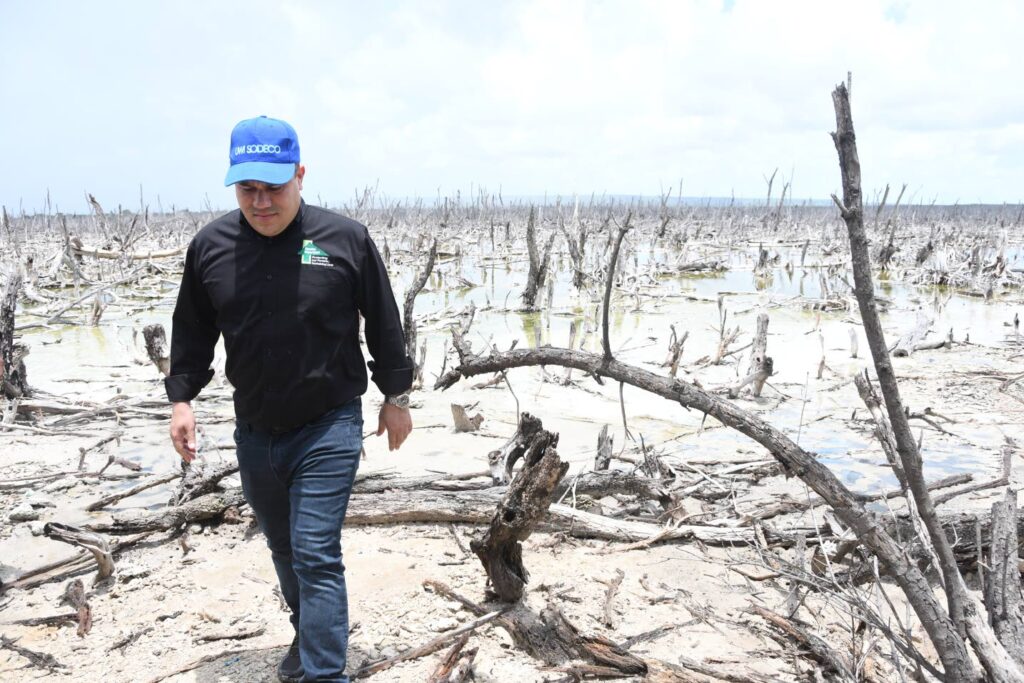
TRELAWNY, Coral Spring — When conversations turn to mangrove ecosystem decline, coastal construction and large-scale development are usually the first culprits named. But Jamaica’s top environment official is upending that common narrative, identifying unregulated illegal harvesting for charcoal production as the single greatest threat facing the island’s vital coastal mangrove forests.
Speaking at the Rotaract District 7020 Conference held Friday at the Ocean Coral Spring Resort in Trelawny, Minister of Water, Environment and Climate Change Matthew Samuda emphasized that addressing root economic inequality is non-negotiable for protecting these irreplaceable ecosystems. He told attendees that the widespread degradation of Jamaica’s mangroves stems not from residential or commercial development projects, but from the daily pressure of economic hardship that drives local communities to harvest mangrove wood for fuel and charcoal.
“The biggest issue affecting our mangroves is the illegal cutting of them to be used for firewood,” Samuda said during a question-and-answer session. “If you don’t reduce poverty, mangroves become charcoal, and that’s where we have significant degradation of our mangrove forest.”
Samuda noted that the worst mangrove loss has been concentrated along Jamaica’s south coast, rather than the tourism-heavy north coast. Hard-hit areas include southern parishes of Clarendon, St Catherine, Manchester, and St Elizabeth — regions that once held extensive mangrove coverage, where the ecosystems serve a critical role in buffering coastal communities from dangerous storm surges during hurricane season. Beyond illegal harvesting, the minister added that poor solid waste management poses a secondary major threat: accumulated trash clogs coastal waterways, preventing the natural mixing of fresh and saltwater that mangroves require to survive and thrive.
The conversation turned to collaborative solutions after a conference participant asked about opportunities for Rotaract clubs to partner with the government on mangrove nursery development and habitat restoration projects. Samuda warmly welcomed the involvement of service organizations, stressing that the scale of Jamaica’s environmental challenges far outstrips what government agencies can address alone, given existing fiscal and operational constraints.
“The scale of the environmental challenges we face cannot be managed solely by the Government. Groups like Rotaract are absolutely critical stakeholders if we’re going to mobilise all of society,” he said. He pointed out that community, faith, and civil society groups often outperform government entities in mobilizing grassroots citizen participation in national environmental initiatives.
Samuda highlighted that core maintenance tasks, such as clearing debris from water canals, regularly exceed the operational capacity of state agencies including the National Works Agency, parish councils, and the National Solid Waste Management Authority. Community-led clean-up drives and volunteer maintenance efforts fill these critical gaps, he said, and he fully supports volunteer-led projects ranging from habitat restoration to mangrove nursery establishment.
“If there’s an investment that can be made in establishing a mangrove nursery, we would certainly welcome Rotaract as a partner,” Samuda said. “I think there’s a role for Rotaract.”
He pointed to existing successful restoration projects across the island as models for future collaboration, including initiatives led by the Alligator Head Foundation in Portland and marine biology research and conservation programs at The University of the West Indies. Samuda also noted that Jamaica is a member of the global Mangrove Breakthrough coalition, an international partnership that directs dedicated funding to local restoration projects led by organizations including The UWI, the Caribbean Coastal Area Management Foundation (CCAM) in Clarendon, and the Alligator Head Foundation.