In the wake of controversial parliamentary remarks from Trinidad and Tobago’s Attorney General John Jeremie, top leaders from the American Chamber of Commerce of Trinidad and Tobago (AMCHAM T&T) have publicly pushed back against unsubstantiated attacks on societal groups, while renewing longstanding calls for systemic accountability to address white-collar crime and rebuild public trust in national institutions.
Jeremie drew widespread attention Wednesday during a parliamentary address when he revealed that the U.S. government had revoked visas for multiple individuals linked to what he labeled the “1%” group in the country. Citing the nation’s Anti-Gang Act, which defines a gang as any grouping of two or more people, Jeremie explicitly framed the so-called 1% as a criminal gang.
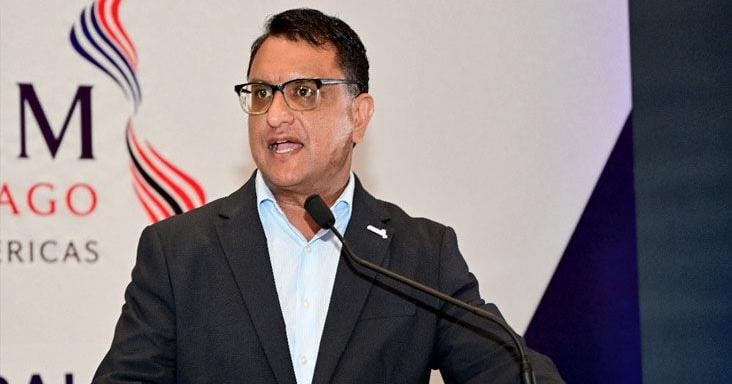
Speaking to reporters Tuesday following AMCHAM T&T’s 33rd annual general meeting and business forum held at Port of Spain’s Hilton Trinidad and Conference Centre, AMCHAM T&T CEO Nirad Tewarie pushed back against the claims, warning that baseless attacks on any organized group create unnecessary division that undermines collective progress toward a stronger Trinidad and Tobago.
“Every group, no matter how it is defined, will always have a small number of outliers who act outside shared norms,” Tewarie said. “But by and large, the Trinidad and Tobago business community is deeply invested in this country’s success, and we remain committed to working toward shared prosperity for all residents now and in the years ahead.”
Beyond its response to Jeremie’s comments, the chamber used its annual forum to amplify urgent calls for decisive action against white-collar crime, arguing that consistent, high-profile prosecutions and greater institutional accountability are the only paths to restoring eroded public confidence in the nation’s justice system and government bodies.
AMCHAM T&T President Anna Henderson noted that a small number of successful, public convictions of prominent white-collar offenders would make an outsize difference in rebuilding trust, at a moment when large swathes of the public already doubt whether core national institutions are functioning properly. Over recent years, the organization has put forward multiple policy proposals to strengthen the country’s Financial Intelligence Unit, implement robust public procurement regulations, and overhaul the criminal justice system to improve outcomes.
Henderson’s call echoes previous demands from former AMCHAM T&T president Stuart Franco, who made tackling white-collar crime a core priority during his tenure in early 2024. Franco repeatedly emphasized that transparency and accountability are non-negotiable foundations for boosting investor confidence and repairing public trust in national leadership.
A key urgent priority the chamber highlighted is addressing crippling staffing shortages in the Office of the Director of Public Prosecutions (DPP). Henderson referenced recent public comments from DPP Roger Gaspard, SC, confirming the office continues to grapple with severe understaffing that delays cases and undermines the delivery of timely, fair justice.
“We again urge the government to prioritize fully staffing the DPP’s Office, as this is a critical, non-negotiable step toward building a properly functioning criminal justice system that delivers fair, timely justice for all,” Henderson said.
Henderson explained that the push for accountability stems from broader, growing societal concerns: plummeting public confidence in institutions and rising frustration across all segments of the population.
“Families are buckling under the pressure of skyrocketing living costs, young people can see few clear pathways to economic opportunity, and communities across the country remain gripped by fear of violent crime,” she said. “Beyond the daily headlines and economic data, there is a deeper, widespread sense that meaningful progress is slipping out of reach for too many people.”
She stressed that crime, economic insecurity, public distrust, and social frustration are deeply interconnected challenges that demand coordinated, collaborative solutions from both the public and private sectors. At their core, these issues stem from a simple public desire: to know that national systems work as intended, that leadership is credible, and that hard work still creates opportunities for upward mobility.
“Trust cannot exist without transparency, and confidence cannot grow without accountability,” Henderson emphasized. “If we want citizens to believe in their institutions again, institutions must prove they are worthy of that belief. If we want businesses to invest confidently in our future, we need a policy environment that is stable, transparent, and efficient.”
Turning to the country’s economic outlook, Henderson noted that Trinidad and Tobago is entering a make-or-break period, with new projections pointing to expanded natural gas supplies over the next three years. While economic diversification remains a key long-term goal, the energy sector will continue to anchor the nation’s economy for the foreseeable future, and this emerging opportunity cannot be wasted.
“This is a critical window of opportunity for our country, but opportunity alone is not enough,” she said. “We must act immediately now to turn possibility into tangible, lasting success. That means building the stable conditions that make long-term investment viable, securing reliable markets for our natural gas, and working collaboratively across borders when needed to ensure upstream producers, LNG operators, domestic downstream industries, and all participating partner countries share in the benefits of this growth.”