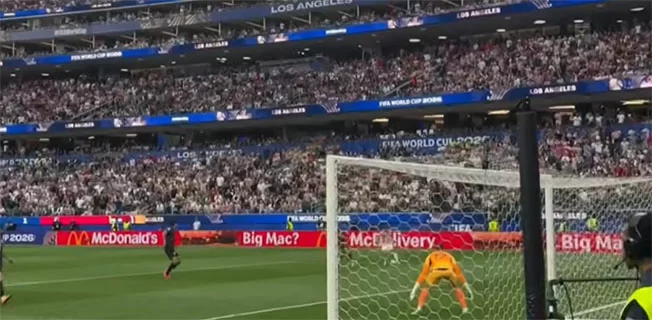
When the first kickoff of the FIFA World Cup signals the start of the world’s biggest sporting celebration, billions of viewers around the globe fixate on the on-pitch drama: the form of star players, the tactical choices of head coaches, and the fight between 32 national teams to lift the sport’s most coveted trophy. Fans cheer every goals, debate controversial referee calls, and spend weeks dreaming of their nation lifting the golden World Cup trophy. But behind this global festival of football, a far less visible, equally high-stakes competition is already underway – one that plays out not on grass pitches, but in corporate boardrooms, broadcast control rooms, advertising departments and online betting platforms. Today’s modern World Cup is far more than just a sporting event: it has evolved into one of the most valuable commercial and economic events on the planet.
For the global gambling industry, the World Cup is always a win-win proposition. While national teams can be eliminated early, and millions of supporters leave the tournament disappointed, the betting sector holds one unbeatable advantage: it almost always comes out on top. During every World Cup cycle, an estimated tens of billions of dollars are wagered on matches across the world, with bets placed not just on final match results, but also on individual goal scorers, the number of yellow cards, corner kicks, and dozens of other in-game micro-events. For bookmakers, the final winner of any given match barely matters: their business model is built on consistent, pre-structured margins baked into every bet placed.
This makes the World Cup one of the most profitable annual highlights for the global gambling industry. While players compete for glory on the pitch, bookmakers battle each other for larger market share and thousands of new first-time customers. What billions watch as a month of sport has become a massive commercial product, with an entire multi-billion dollar industry built around it.
The competition for profit extends far beyond betting, however. A brutal, high-stakes battle is also waged for exclusive World Cup broadcast rights. Governments, private television networks and global media conglomerates spend hundreds of millions of dollars to secure the rights to air matches in their regions. For outside observers, this price tag can seem bewildering: why spend such massive sums on 90 minutes of live play that becomes history as soon as the final whistle blows? In many smaller national economies, it is nearly impossible to recover the full cost of broadcast rights through advertising revenue alone. So why do media companies continue to outbid each other for these rights?
The answer boils down to one of the most valuable commodities in the modern digital economy: audience attention. No other television event on Earth draws the same massive, simultaneous global audience as the FIFA World Cup. The tournament final alone regularly draws more than one billion concurrent viewers. For advertisers, this level of unified global attention represents enormous untapped economic value. FIFA sells bulk broadcast rights to international distribution partners, which then issue sub-licenses to national public and private broadcasters. Every link in this distribution chain works to recoup its investment through advertising revenue, sponsorship deals, paid streaming subscriptions and commercial partnerships. For media companies, one simple rule holds: whoever owns the broadcast rights controls the world’s largest attention economy for an entire month.
Host nations almost universally frame the World Cup as a once-in-a-generation economic opportunity. The event spurs the construction of state-of-the-art new stadiums, major upgrades to national transportation infrastructure, and large-scale global tourism campaigns to draw millions of international visitors. For the 2026 co-hosted World Cup, the United States, Canada and Mexico expect to welcome millions of traveling fans over the course of the month-long tournament. But decades of international economic research show that direct financial returns rarely live up to the optimistic projections set by host governments. While hotels, restaurants, airlines and the local tourism sector almost always see significant short-term revenue gains, these benefits are often offset by the enormous upfront costs of expanded security, infrastructure upgrades and new stadium construction.
In some cases, host nations have struggled for years after the tournament to turn the purpose-built sports facilities into profitable, long-term assets. The most famous example remains Brazil’s 2014 World Cup, where several new stadiums built specifically for the tournament sit underused nearly a decade later. For most host nations, the biggest benefit rarely comes from direct match-related revenue, but rather from the unprecedented global visibility the event delivers. A World Cup acts as a global marketing campaign that no host nation could ever afford to fund on its own, boosting international trade and tourism for years after the final match.
One of the most underrecognized economic forces behind the modern World Cup is the outsized role of global advertisers and corporate sponsors. Major global brands across banking, telecommunications, insurance, automotive and dozens of other sectors invest billions of dollars annually in football sponsorship, not because they sell the sport itself, but because football sells something far more valuable to brands: emotional audience attention.
Academic research on sports sponsorship confirms that brands actively align themselves with football because supporters experience powerful positive emotions while watching the sport: pride, excitement, joy, a sense of collective belonging and the thrill of victory. These positive emotions are then partially transferred to the brands that sponsor the teams or the tournament, a psychological effect researchers call positive brand association. Multiple studies have shown that sports fans consistently rate brands associated with their favorite teams more favorably than identical competing brands with no sports ties. A 2020 study published in the *Journal of Sport Management* found that sports sponsorship significantly boosts consumer brand trust and long-term brand loyalty. Additional research has confirmed that fans perceive sports-linked brands as more credible, and are far more likely to actively seek out more information about products from these brands.
For advertisers, it is not just the raw number of viewers that matters – the emotional context in which their brand appears is equally critical. This explains why more brands are moving beyond just pitch-side hoardings and 30-second ad spots, to partner with in-depth content, behind-the-scenes storytelling, expert analysis and public discussion around the tournament itself.
The World Cup is often framed in public discourse as a symbolic battle between nations. In reality, multiple overlapping competitions are happening all at once. On the pitch, players fight for the World Cup trophy. Off the pitch, media companies fight for viewers, gambling operators fight for new customers, host nations fight for global visibility, and brands fight to win long-term consumer preference. This is the biggest shift in modern football: the World Cup remains one of the world’s most beloved sporting events, but it has also grown into a multi-billion-dollar global industry where audience attention is the most valuable raw material. And that is why, more often than not, the biggest winner of the World Cup never steps onto the pitch.