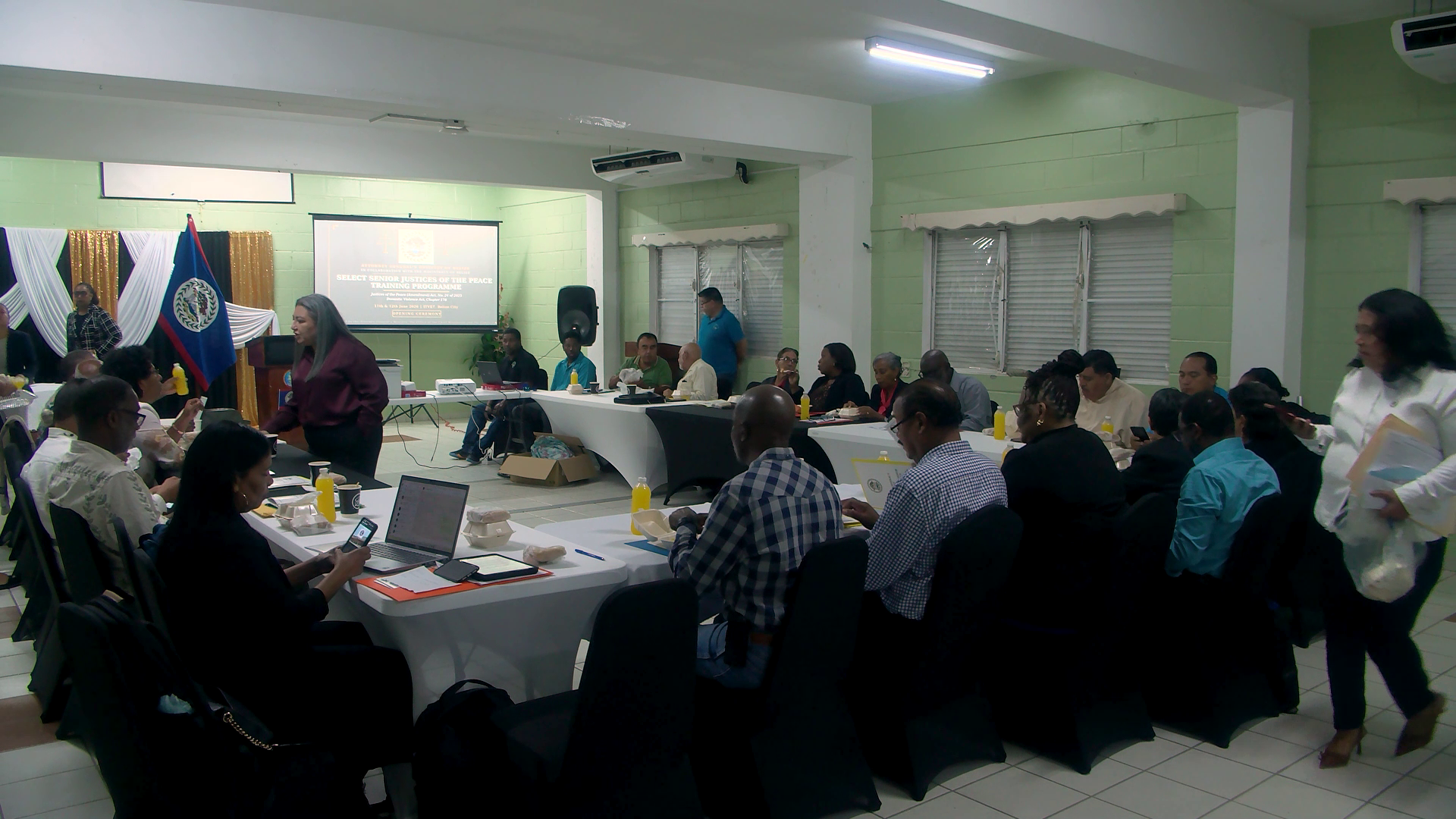
Six months of logistical hurdles and rigorous screening have culminated in a landmark shift in Belize’s domestic violence response: 30 vetted, specially trained Justices of the Peace (JPs) are now authorized to issue life-saving 72-hour emergency protection orders when courts are closed outside standard business hours. The long-delayed initiative, first mandated by legislation passed in late 2025, fills a critical gap in victim protection that advocates and officials say contributed to a devastating 2025 tragedy.
The urgency to close this gap grew after the horrific October 2025 killing of Angelita Magana and her two young children. The family was killed when Magana’s ex-partner set their home ablaze, a crime that sparked widespread public outcry after widespread speculation that timely access to an emergency protection order could have prevented the deaths. In response, the Belizean government fast-tracked implementation of the new JP authority, turning a years-old policy proposal into active public service.
Adrian “Danny” Madrid, President of the Association of Justices of the Peace, framed the program as a transformative change for at-risk Belizeans. For decades, domestic violence incidents spiking on weekends and public holidays left victims with no immediate route to court-ordered protection, since magistrate courts are closed during these periods. To address the safety concerns that kept many JPs from volunteering for the new role, all emergency order issuances will take place at local police stations, where on-site law enforcement presence can protect both volunteers and victims.
“Many times, violence against a person is done mostly on weekends and holidays where the judiciary system, the magistrate courts are closed and we have nowhere to go,” Madrid explained in an interview with News Five. “So we decided and we finalized that we’ll do it at every police station, even in the villages, go to the police station where there’s a police presence so we have to have that protection because some JPs do not want to do it because they’re afraid of their own self, of violence against them. So, we’re hoping that they do not have to use us, but we want the public to know that you could feel safer.”
The rollout faced significant delays due to the strict eligibility criteria set for participating JPs. Out of nearly 3,000 JPs serving across Belize, only a small pool met the requirements: candidates must hold senior JP status, which itself requires a minimum of 10 years of prior service, have at least five additional years of experience as a senior officer, and hold a completely clean police record. After six months of recruitment and screening, 30 qualified JPs stepped forward to complete the mandatory training.
Attorney General Anthony Sylvestre outlined the structured coordination that will make the temporary emergency system function seamlessly with the formal court system. If a victim seeks protection on a Friday evening or holiday, the JP will issue an ex parte interim protection order, with all documentation immediately shared with police, court administration, and the Ministry of Human Development. When courts reopen, the case will be immediately assigned to a magistrate, who will review the order and schedule full proceedings with both parties present to formalize any long-term protection measures. Sylvestre emphasized that while the order is temporary, the 72-hour window it provides can mean the difference between life and death for at-risk victims.
Officials acknowledge ongoing systemic challenges, including the high rate at which victims ultimately withdraw complaints against their abusers, a trend that slows justice and leaves survivors in dangerous cycles. But Minister of Human Development Thea Ramirez-Garcia stressed that the government remains committed to meeting survivors where they are, noting research showing that survivors often attempt to leave abusive situations multiple times before escaping permanently.
“On average, it takes a person, a survivor, eight times trying to leave a difficult situation before they finally make it. A lot of people don’t make it out alive,” Ramirez-Garcia said. “So what would I say? I would say keep trying. If it takes you twenty times before you break out of a situation, then we keep trying twenty times with you. Of course it might be a lot of paperwork for the person on the other end taking the reports, but that’s their job.”
Participating JPs provide their services pro bono, meaning emergency protection orders are completely free of charge for victims. To offset the out-of-pocket costs JPs incur for travel to police stations and other work-related expenses, the government has allocated a stipend of up to $100 per assignment to cover basic costs.