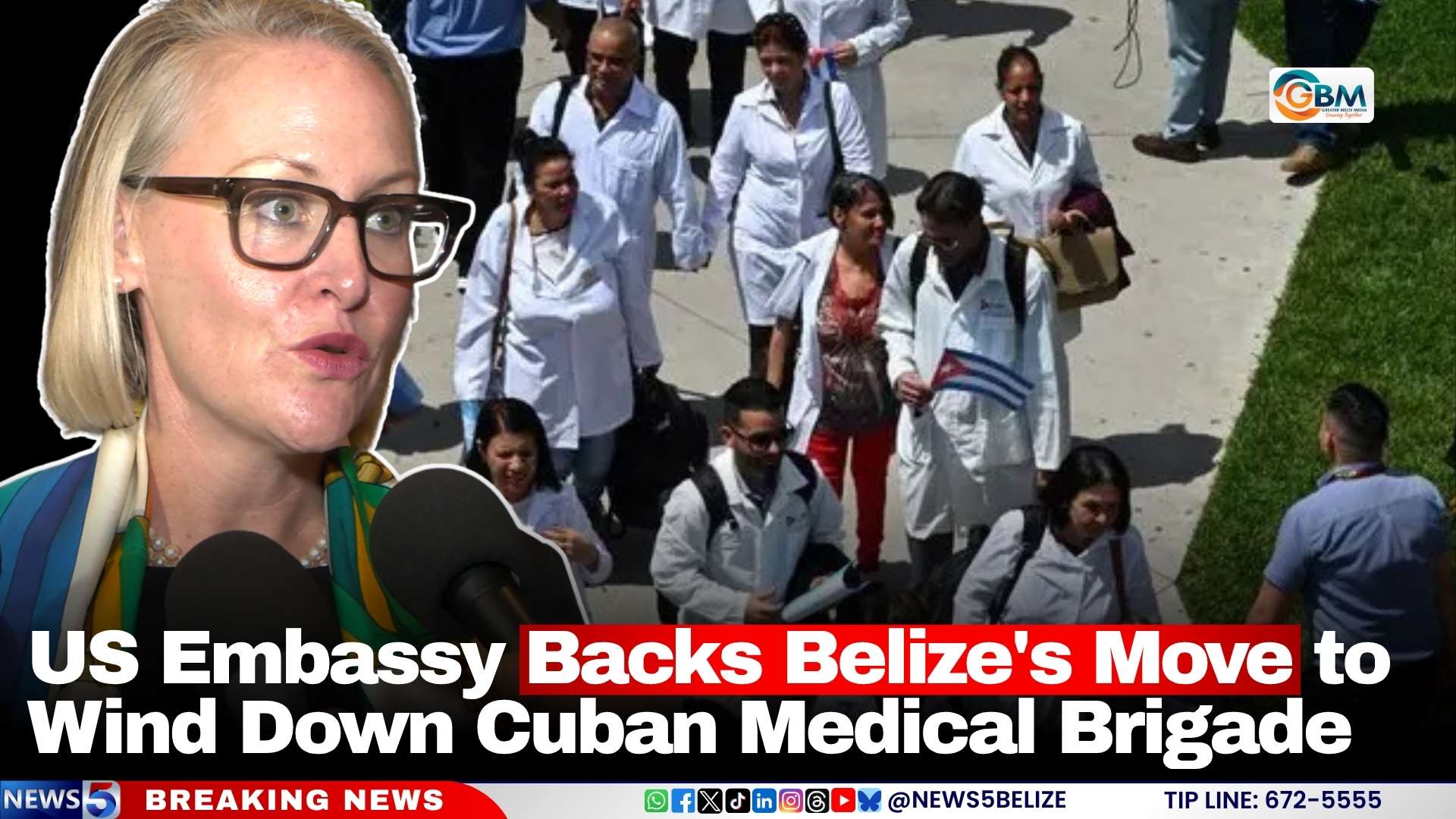
On June 11, 2026, the top US diplomatic representative in Belize publicly confirmed Washington’s backing for Belize’s decision to phase out the decades-old Cuban Medical Brigade program operating in the Central American nation.
Chargé d’Affaires Katharine Beamer, the acting head of the US Embassy in Belize, stated that the US government strongly supports Belize’s move to wind down the program, framing the step as aligned with broader US efforts to push regional nations to comply with what Washington characterizes as international labor standards. “We are very supportive of the government’s decision to wind down this programme in Belize, and we are committed to encouraging all countries throughout the region to adhere to international labour standards,” Beamer told reporters during the public appearance.
When pressed by journalists for details on whether the US has held talks to provide alternative healthcare support to fill the gap that would be left by the departure of Cuban doctors, who have served Belize’s public health system for generations, Beamer declined to share specific information. She would only confirm that both sides share a goal of maintaining strong, accessible healthcare for all Belizean residents. “I’m not going to comment on specific conversations that I’ve had with the government, but I do know that there’s a strong commitment to ensuring that healthcare in Belize remains robust and serves the Belizean people,” she added.
Belizean officials have remained tight-lipped about the final fate of the medical brigade for months. Back in March 2026, Belizean Prime Minister John Briceño refused to disclose any details about the program’s future, only noting that “delicate negotiations” were ongoing and that it would be inappropriate to comment publicly at that stage. To date, the Belizean government has not issued an official confirmation on whether the program will be partially scaled back, renegotiated with new terms, or terminated entirely.
This development fits into a broader regional trend: over recent years, multiple Latin American governments have already reduced their bilateral medical cooperation agreements with Cuba, a shift widely attributed to sustained diplomatic and economic pressure from the United States.