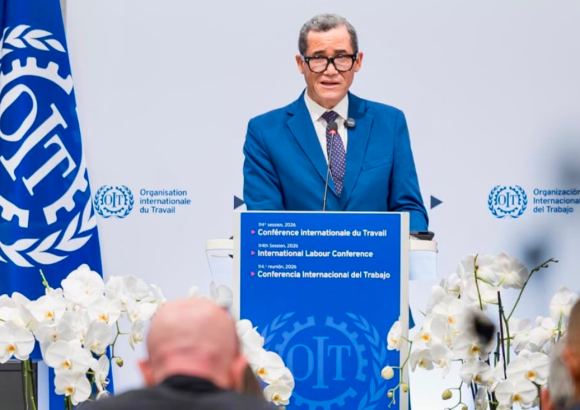
At the 114th International Labour Conference hosted by the International Labour Organization (ILO) in Geneva, Switzerland, Dominican Republic’s Labor Minister Eddy Olivares Ortega has laid out the sweeping goals of the country’s pending Labor Code reform, framing the proposal as a balanced update that will strengthen worker protections while boosting national economic competitiveness. The legislative proposal, which is currently advancing through the Dominican Congress, is designed to bring the nation’s decades-old labor framework into alignment with modern global and domestic market dynamics, Olivares explained, all while protecting hard-won progress in employment standards and collaborative labor relations.
In his address to the global gathering of labor stakeholders, Olivares reaffirmed the core commitments of President Luis Abinader’s administration: centered on inclusive social dialogue, universal access to decent work, and unwavering pursuit of labor justice. These principles, he emphasized, have guided the government’s labor policy agenda since taking office, delivering measurable results that have elevated the Dominican Republic’s standing across the Latin American and Caribbean region.
Olivares pointed to independent data to back up the nation’s progress, noting that the Dominican Republic earns strong favorable ratings in the International Trade Union Confederation’s annual Global Rights Index, placing it among the top regional performers for labor rights protection. Beyond international rankings, he highlighted a series of tangible domestic achievements: negotiated wage increases secured through collaborative tripartite agreements between government, employer groups, and labor unions, consistent year-over-year growth in formal sector employment, a national unemployment rate that has held steady below 5% in recent reports, and expanded access to collective bargaining for workers across multiple industries.
Turning to efforts to eliminate exploitative child labor, Olivares highlighted the ongoing rollout of the Model for Identifying Places with Risk of Child Labor (MITRI), a targeted monitoring tool developed in partnership with the ILO to strengthen national prevention and enforcement efforts. The framework allows authorities to proactively identify high-risk regions and work sectors, enabling earlier intervention to remove children from dangerous working conditions and expand access to education and social support.
Closing his address, Olivares reiterated the Dominican Republic’s longstanding commitment to the ILO’s signature tripartite governance model, which centers collaborative dialogue between government, labor, and employer representatives as the foundation for sustainable labor policy. He expressed confidence that this inclusive approach will remain a central catalyst for broad-based economic growth and improved social well-being for all Dominican citizens in the years ahead.